The Primitive Way
Walk the Primitive Way: 320 km along Spain's oldest Jacobean pilgrimage route, from Oviedo to Santiago de Compostela through wild mountains and ancient forests

In this article
Camino Primitivo: General Information
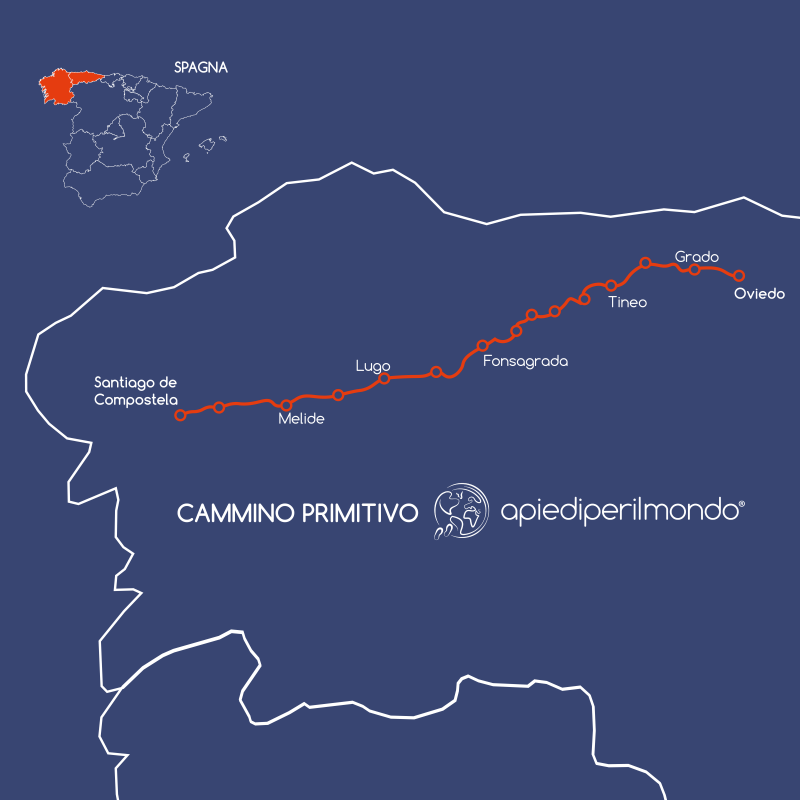
The Camino Primitivo is an exceptionally beautiful route! It is, however, one of many Spanish ways leading to Santiago de Compostela and its cathedral, where the remains of Saint James the Greater rest. Stretching 320km and typically divided into 13 stages, it departs from the magnificent city of Oviedo, capital of the Principality of Asturias. Here two other routes intersect: a variant of the Northern Way, and the Way of San Salvador, which naturally concludes in Oviedo.
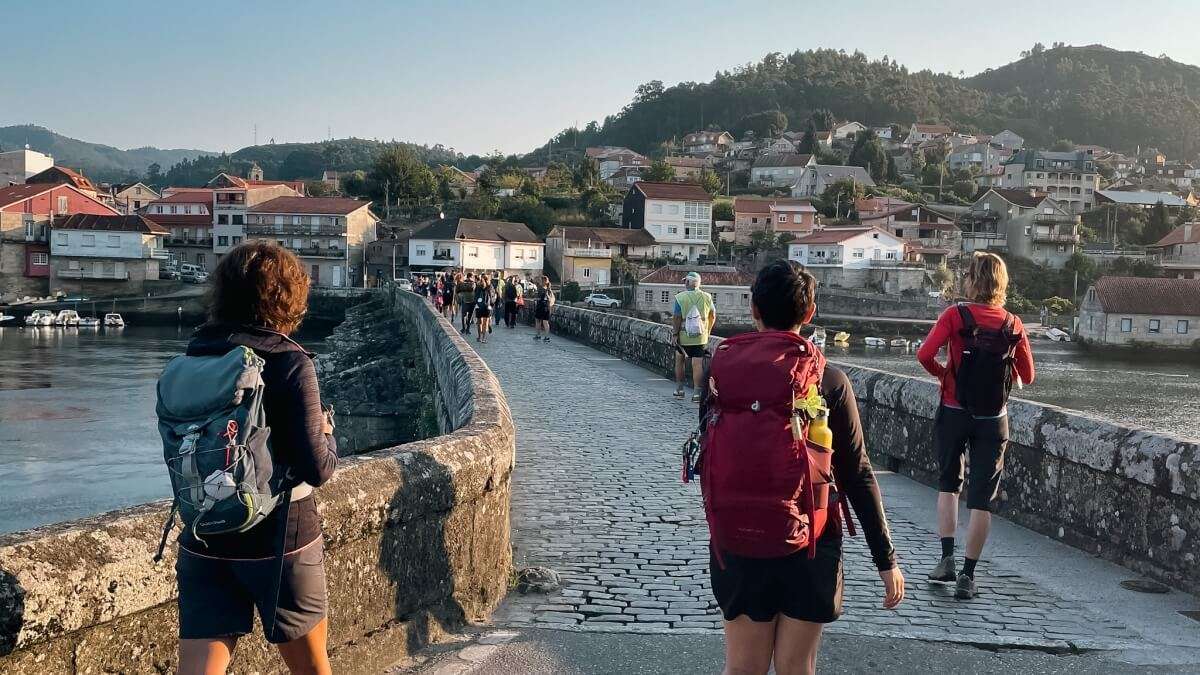
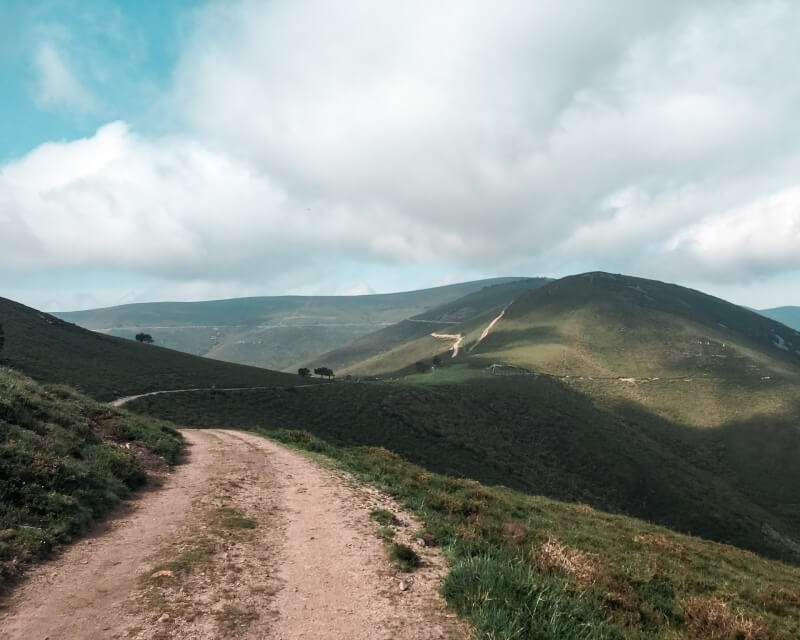
The route traverses two Spanish regions, the Principality of Asturias and Galicia, both heavily forested and mountainous. You walk for nearly the entire journey on dirt and rock trails, often alongside streams and flowing water, rarely crossing asphalt and only in the final stages.
Due to the terrain's physical characteristics, the Camino Primitivo is a challenging route with significant elevation gains, demanding stages, and limited flexibility. The scarcity of services and low number of pilgrims make it unsuitable for first-time Camino walkers lacking substantial mountain experience.
In this case, if you're embarking on your first Santiago pilgrimage, I recommend choosing the French Way instead—not necessarily because it's physically easier (difficult stages exist here too), but because it offers far more services and is filled with countless other pilgrims you can rely on if problems arise.
By the numbers, in 2019 some 15,715 people walked the Camino Primitivo, representing 4.5% of the total—consistent with previous years. When we consider that the French Way attracts nearly 190,000 pilgrims, you understand how truly remote and uncrowded the Primitivo remains.
Stages of the Camino Primitivo
As mentioned in previous sections, the Camino Primitivo covers 320km and is typically divided into 13 stages, nearly all of moderate difficulty, ranging from 15km to 30km in length.
- Stage 1 – Oviedo to Grado
- 25km +330m -430m
- Stage 2 – Grado to Salas
- 22km +1130m -900m
- Stage 3 – Salas to Tineo
- 20km +710m -310m
- Stage 4 – Tineo to Borres
- 13km +405m -445m
- Stage 5 – Borres to Berducedo via Ruta de los Hospitales
- 24km +1120m -840m
- Stage 5b – Borres to Berducedo via Pola de Allende
- 28.5km +1215m -950m
- Stage 6 – Berducedo to Grandas de Salime
- 20.5km +880m -1200m
- Stage 7 – Grandas de Salime to A Fonsagrada
- 25km +850m -470m
- Stage 8 – A Fonsagrada to O Cádavo
- 24.5km +685m -870m
- Stage 9 – O Cádavo to Lugo
- 29.5km +475m -745m
- Stage 10 – Lugo to Ferreira
- 26.5km +570m -520m
- Stage 11 – Ferreira to Melide
- 20km +340m -430m
- Stage 12 – Melide to O Pedrouzo
- 33km +615m -790m
- Stage 13 – O Pedrouzo to Santiago de Compostela
- 20km +500m -570m
Difficulty of the Camino Primitivo
As mentioned earlier, the Camino Primitivo is not suited for everyone. It presents various difficulty elements from both a physical and logistical perspective, and can be rated as grade E in terms of hiking difficulty. It is therefore not recommended for first-time pilgrims. Let's examine each challenge:
- Significant elevation changes – The Camino Primitivo presents total elevation gains and losses of approximately 17,000 metres—a substantial challenge given an average of 1,300m per stage. This also impacts walking time, which increases compared to flat or gently rolling terrain. In rain or poor weather, conditions become considerably worse.
- Mandatory stages – The Camino Primitivo's stages are virtually fixed due to the scarcity of accommodation along the route. Often there is almost nothing between the start and finish villages. The difficulty lies in being unable to adjust your daily distance according to your needs—so if you're particularly tired one day and struggling to continue, you have no choice but to push on to the end.
- Isolated terrain and few pilgrims – The Camino Primitivo traverses often very isolated areas. You walk through forests and mountains, sometimes without mobile phone coverage, potentially hiking kilometres without encountering anyone or seeing a single building. This requires greater attention and preparedness for unexpected situations. This is why I always recommend proper training and some mountain trekking experience.
- Backpack weight of 7-8kg – On a two-week journey with such elevation gains, your backpack significantly impacts your body. Carrying 7-8kg on your shoulders is never easy and requires good physical conditioning! The indicated weight refers to a backpack with essentials for summer season, including water and food for each stage. Obviously, if you depart during colder months, you'll need heavier clothing and a backpack weighing several kilograms more. Much depends on how well you select your perfect Camino gear, but that's another discussion.
When to Walk the Camino Primitivo
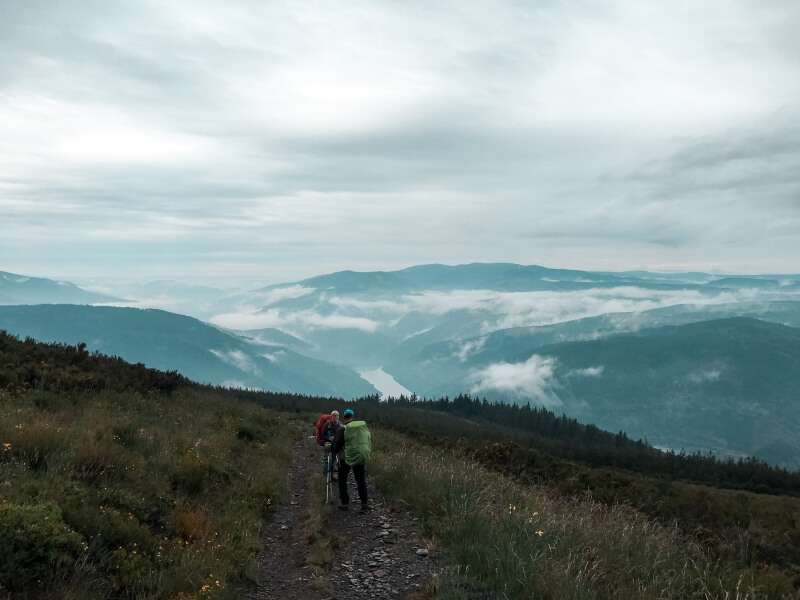
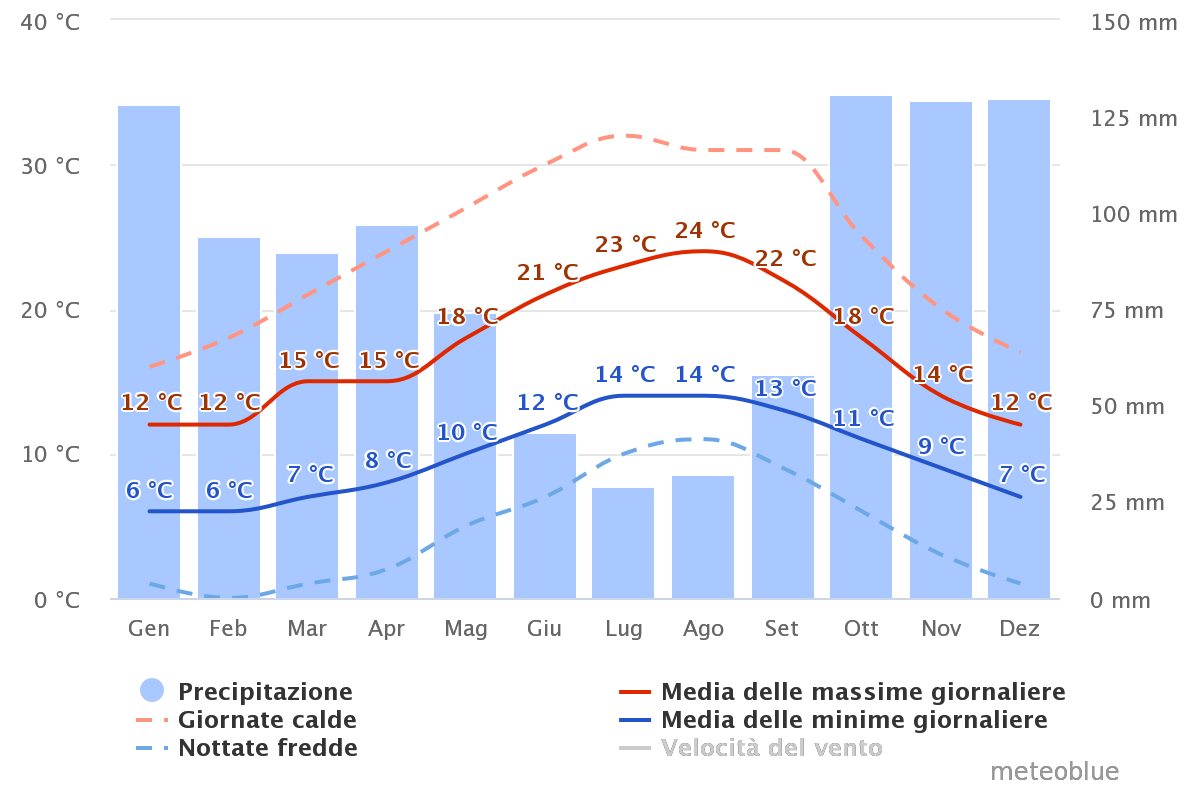
Like all routes to Santiago, the Camino Primitivo can be walked year-round. Obviously each season has its advantages and disadvantages, all of which should be considered when planning your departure. This is especially important since you're walking almost constantly in mountains and forest where conditions can be hazardous.
Generally the best time to walk the Camino Primitivo is May through September: rainfall is minimal and temperatures quite high. Certainly rainy days will occur, but warm sunshine will quickly dry mud from the trails, making walking easier. Heat won't be a problem either, as you'll often walk in the shade of forests.
From October onwards, temperatures begin dropping, daylight hours decrease, and rainfall increases. All these factors make the journey considerably more demanding and require ever greater experience and physical preparation. High elevations expose the Camino Primitivo to serious snow risk. In short, if you plan a winter departure, prepare thoroughly and be ready for anything.
Where to Sleep on the Camino Primitivo
Excluding Oviedo and Lugo, which are proper cities, the Camino Primitivo passes through very isolated areas with small villages and hamlets. Sleeping options are therefore limited and offer little variety, which means you'll need considerable flexibility. Anyone seeking upmarket hotel accommodation will certainly be disappointed.
Everything changes from Melide onwards: as this lies on the French Way, particularly its final stages, you have many more accommodation options in both quantity and variety.
Generally you'll find two types of accommodation:
- Guesthouses, small hotels and rooms to let – here you get your own bedroom with private bathroom, and sometimes breakfast. Accommodation is typically modest and simple.
- Hostels, or more properly albergues for pilgrims – there are municipal albergues, managed by local councils and accessible only to pilgrims with credentials, and private albergues, run by individuals and typically offering higher service standards. In both cases you sleep in shared dormitories and share bathrooms with other guests. Some provide kitchen facilities so you can prepare your own meals, while others offer dinner and breakfast at negotiated prices. Municipal albergues cost around €5-7, while private ones range from €10-15.
Signage on the Camino Primitivo
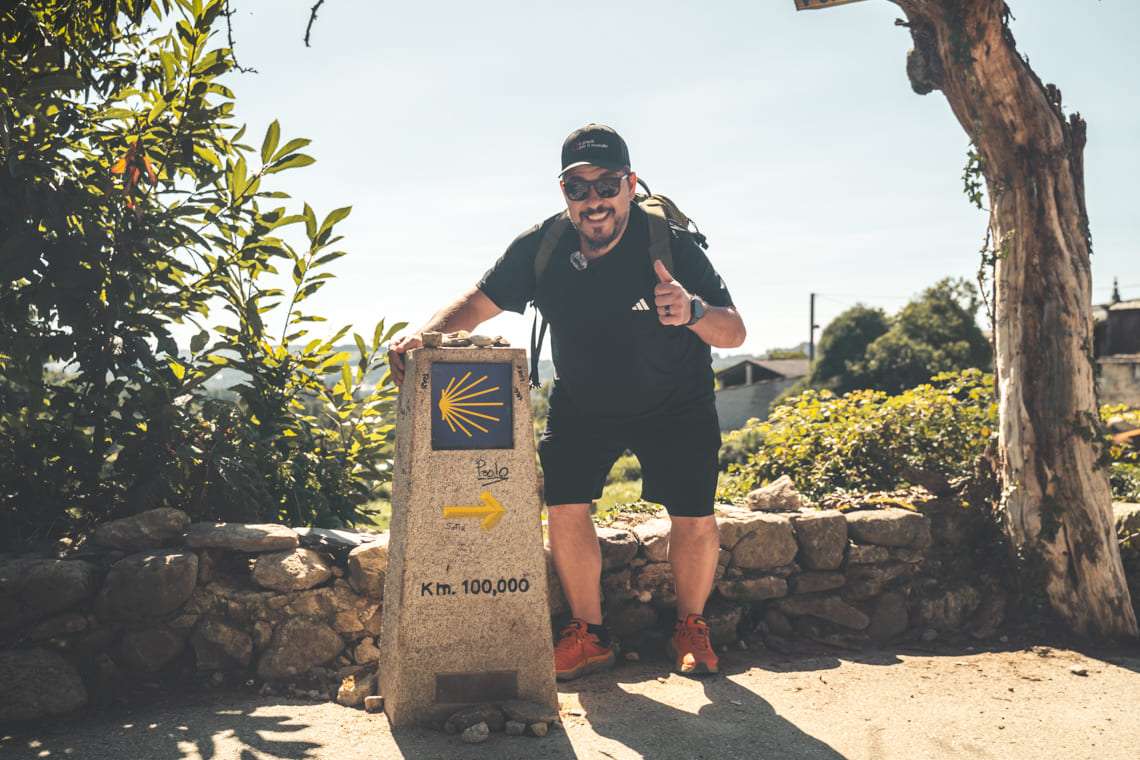
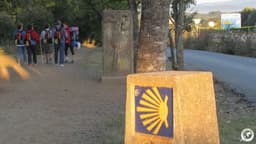
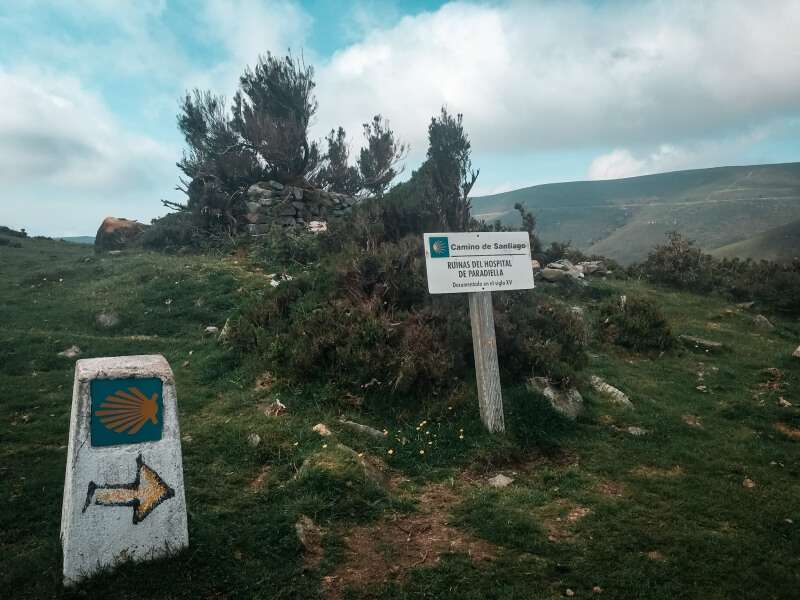
The Camino Primitivo shares the same waymarking system as all other Santiago routes. You'll find the distinctive yellow arrow pointing the way, accompanied by the scallop shell, a stylised image of the iconic symbol.
Markers may be vertical, such as wooden signs indicating direction, or painted marks on rocks, trees, buildings, walls—wherever visible and clear. Arrows are unidirectional and appear frequently, both on straight sections and at junctions. Naturally you must stay attentive and not get too distracted by scenery or conversation with fellow pilgrims.
Credential and Compostela Certificate
The rule states that anyone walking at least 100km (or 200km on horseback) to Santiago is entitled, if they wish, to receive the Compostela. The Compostela is a certificate you collect in Santiago certifying that you have completed the Camino.
To obtain it, you must stamp your credential at least once daily throughout your journey. The credential is a booklet where you collect stamps at each stage, proving to Santiago's office that you've properly completed the route and deserve the Compostela. For details on obtaining one, I recommend reading the specific article on credentials and Compostela certificates.
Variants on the Camino Primitivo
Along the route you'll encounter two variants, each well-marked and worth exploring:
- Ruta de los Hospitales – arguably the Primitivo's most beautiful stage. At 16.4km versus 19km on the official route. This was historically the path taken by early pilgrims, featuring two hospices—Fanfarón and Valparaíso, now sadly reduced to ruins. We deviate from the official route at Borres and arrive at Puerto del Palo.
Most of this variant runs above 1,100 metres elevation, offering panoramic vistas and scenic beauty that ranks among the Primitivo's finest stages. The nearby Somiedo Natural Park offers the remote possibility, with good fortune, of spotting a brown bear in the distance, though chances are extremely slim.
Before deviating, stock up generously with food and water, as you'll find no albergues or other services for 5km after Puerto del Palo. During winter or in bad weather and fog, this route is strongly inadvisable.
The standard route, by contrast, is safely walkable year-round with adequate towns and refreshment points. However, you'll face the steep descents to Pola de Allande and climbs to Puerto del Palo.
- Friol Variant: a three-day journey from Lugo to Arzúa or Santa Irene, recommended for those who've already walked the French Way, as it allows you to skip the Melide section.
At 73km versus 61km on the official route. The junction point is at Lugo: continuing on the official route brings you to Melide, where you join the French Way; deviating toward Friol connects you with the Northern Way and reaches Arzúa in three stages.
Stage 1 – Lugo to Friol – 25km
Shortly after the junction, at Santa Maria Alta, a fork leads either toward Retorta and Cotà or toward Monte Facoi. Don't worry though—both paths lead to Friol, where you must stop for the night due to limited albergue availability in the area.
Stage 2 – Friol to Sobrado dos Monxes – 27km
Mostly on trails, marked with both yellow and green arrows. No refreshment points appear for the first 20km, so leave Friol with adequate food and water supplies. By Sobrado, pilgrim numbers begin increasing noticeably. Here the Primitivo variant meets the Northern Way, and the ancient monastery of Sobrado, with its 120 beds, welcomes travellers.
Stage 3 – Sobrado dos Monxes to Arzúa – 21.5km
You join the French Way here
What to Eat on the Camino Primitivo
The Camino through Asturias and Galicia is more than nature and scenery—it's a journey into the culture and gastronomy of these lands.
Away from the Asturian coast, fish specialities are scarce except in Oviedo. Cheeses, legumes and meat dominate local dishes, which are naturally rich in fats and proteins. A prime example is the fabada asturiana, a typical hearty soup made with white beans, chorizo, morcilla (blood sausage), ham and lard.
Among cheeses, Queso de Cabrales stands out: distinguished by its characteristic blue veining, it's made from goat, sheep and cow milk, aged in high-humidity, low-temperature caves creating the perfect habitat for fungal development.
In Galicia, fish dishes featuring shellfish, cod, crabs and crayfish accompany exquisite meat preparations, often prepared in the typical "a la gallega" style.
Absolutely worth trying are:
- Pulpo a la gallega, stewed octopus with paprika, oil and salt;
- Cocido gallego, a stew with ham, sausage, beef, chicken, cabbage, potatoes and chickpeas;
- Lacón gallego, a cured ham made from the front quarters of pork;
- Empanada gallega, a savoury pastry with either fish or meat, peppers, anchovies, tomatoes and onions.
- Percebes, a peculiar crustacean commonly called "dragon's claw", especially common along the Costa da Morte near La Coruña.
- Arroz con bogavante, lobster rice.
Among the sweets of both regions, almonds feature prominently, used in Asturias for carbayones (pastry cases), and in Galicia for Tarta de Santiago, a simple almond tart.
Finally, cider in Asturias and the grape spirit Orujo in Galicia.
What to See on the Camino Primitivo
The Camino Primitivo, characterised by mountainous and forested terrain, doesn't pass through major cities but rather through small villages and towns, likely following the ancient Roman road that ran from Lucus Augusti (Lugo) to Lucus Asturum (Lugo de Llanera).
Apart from Melide, a lively, modern city and junction point with the French Way, and Santiago de Compostela, your destination, the largest and most significant city is
Share
apiediperilmondo by wayure
New articles on walks, trekking and hiking trips. Free, no spam.
Co-fondatrice, Apiediperilmondo
I've been organising walks since I discovered that walking slow is the fastest way to know a place. I take care of every logistical detail so you can focus only on the steps ahead.
Profilo e tutti gli articoli di Deborah