Northern Way or Coastal Route: Spain's Atlantic Pilgrimage
Walk 850km across Spain's northern coastline, from the Basque Country to Galicia. This Atlantic route combines dramatic coastal scenery with authentic cultural encounters on one of Europe's most rewarding long-distance trails.

In this article
Camino del Norte in the Basque Country – 190km / 7 days
190km from Irún to Pobeña through breathtaking coastal scenery, where unspoiled nature blends seamlessly with charming cities steeped in the distinctive Basque culture.
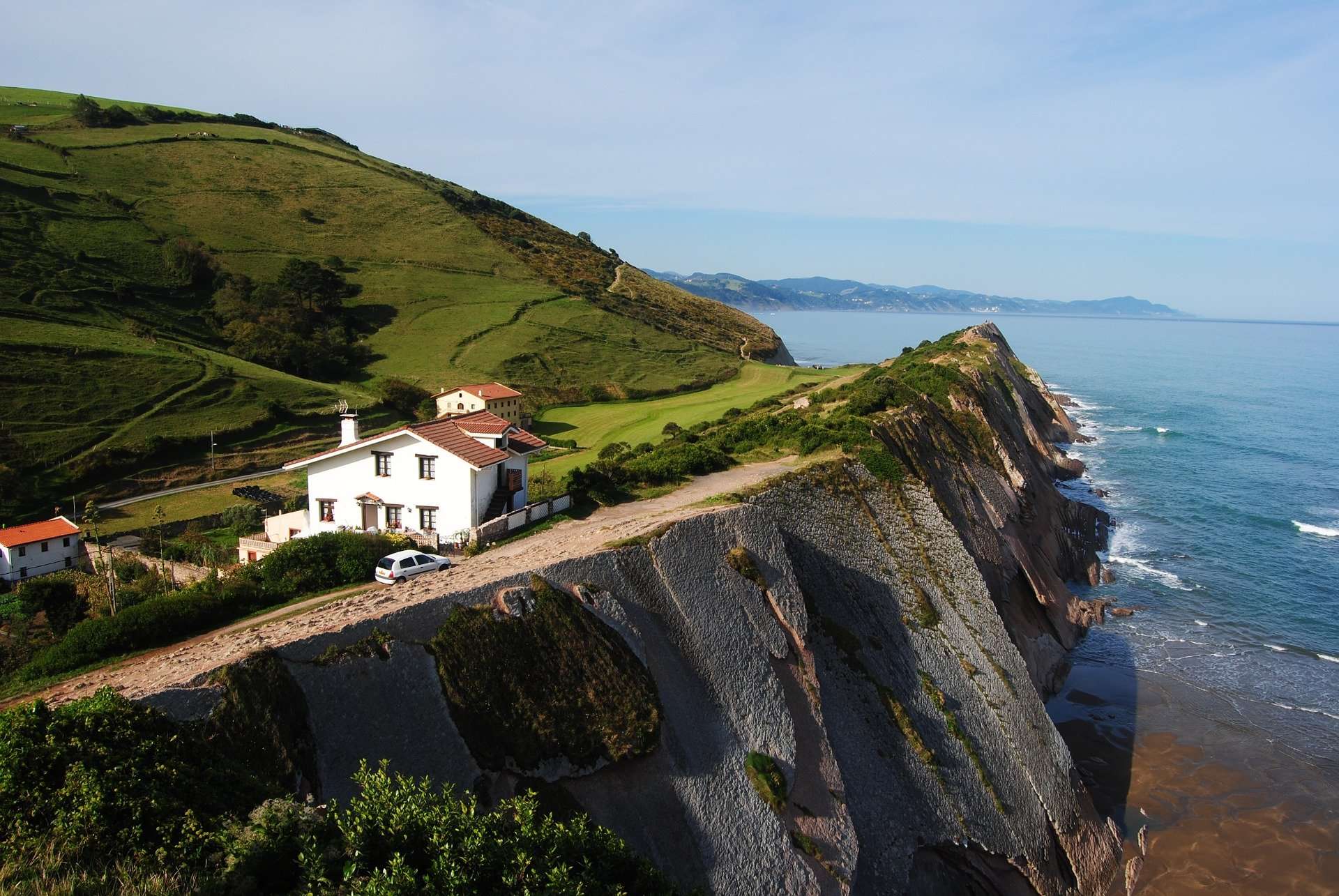
Our pilgrimage begins in the distinctive Basque territory, known as Euskadi in the local language. Its unique character sets it apart from the rest of Spain, offering an authentic and remarkable experience.
As we walk the route, we venture through verdant valleys and rolling inland hills, following river courses that cascade from the mountains into the Bay of Biscay.
Yet we never stray far from its rugged coastline and towering sea cliffs, which accompany us throughout most of the 190km through the Basque region.
The Camino del Norte, or Coastal Way, officially begins in the town of Irún, in the Gipuzkoa region.
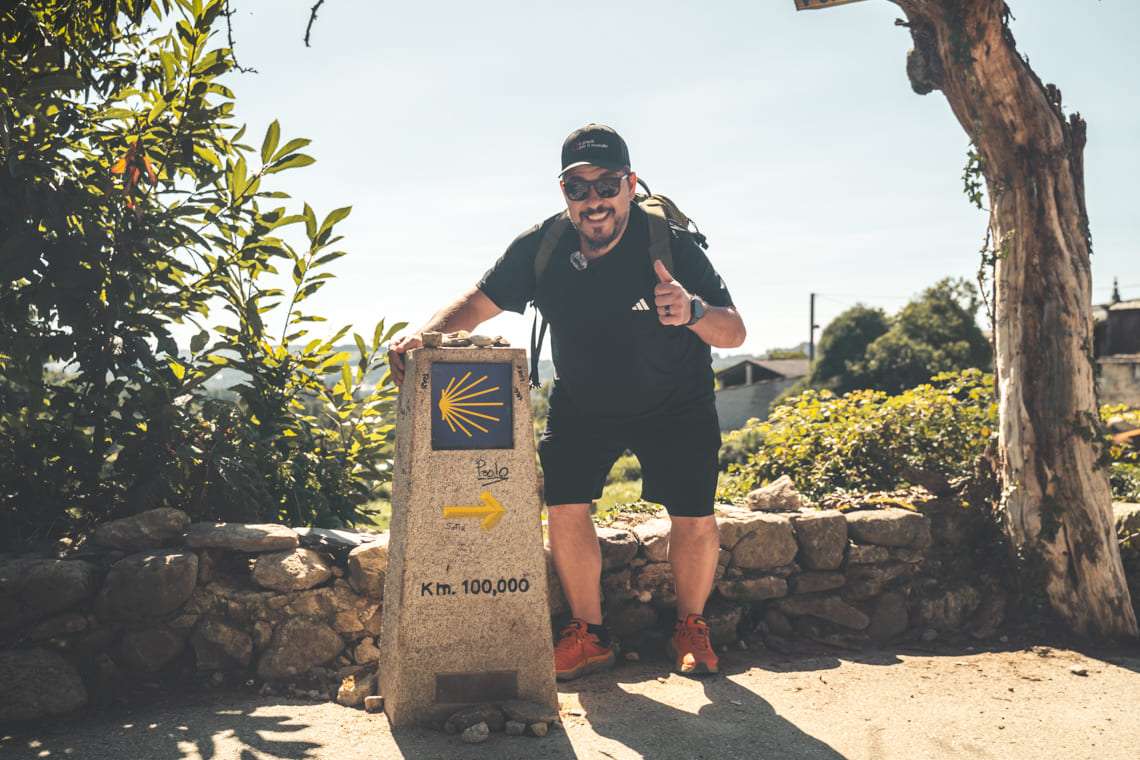
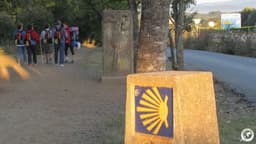
We find the first yellow arrow marking on the Spanish side of the Puente de Santiago, called Pont Saint-Jacques on the other side. This bridge spans the mouth of the río Bidasoa, the natural border between Spain and France.
Just a few kilometres from Irún, overlooking the sea, stands Hondarribia, which many guides, particularly Basque ones, identify as the official starting point of the trail, despite lacking a dedicated pilgrim hostel.
Scenic Climbs
Every stage features constant ups and downs, and although elevation gains can be challenging in certain sections, they rarely exceed 200m.
This demanding walk, with its relentless ascents and descents, rewards pilgrims with truly spectacular panoramic views. The most memorable climbs include the Sanctuary of Guadalupe, the Alpinists' Path, and the ascent to Faro de la Plata lighthouse.
While all climbs offer that satisfying sense of accomplishment, some provide truly outstanding vistas. These include:
- Climb to Guadalupe Sanctuary, in Hondarribia, where 150m of elevation gain over just 1km reveals the stunning Txigundi bay below.
- The "Alpinists' Climb" beyond Guadalupe Sanctuary, featuring spectacular hill views. Before us stand the ancient ruins of Erramuz and Santa Barbara towers, along with the remains of San Enrique castle.
- Faro de la Plata Lighthouse climb, atop Mount Ulía beyond Pasai Donibane. Once a prime whale-watching vantage point, it now offers sweeping views across the bay, dramatic sea cliffs, and the vast Atlantic. Truly enchanting.
Basque Country Climate
This region enjoys the typical temperate climate of Atlantic coastal areas. Temperatures remain moderate year-round – winter rarely dips below freezing, and summer highs seldom exceed 26°C. Due to high humidity levels, you'll encounter the fine mist locals call Txirimiri.
Towns Along the Camino del Norte in the Basque Country
The major settlements we encounter along the route hold significant importance for the entire Basque region.
For strategic economic and defensive reasons, medieval rulers promoted the development of urban centres along waterways at river mouths, coves, and promontories. The trail passes numerous examples of this pattern.
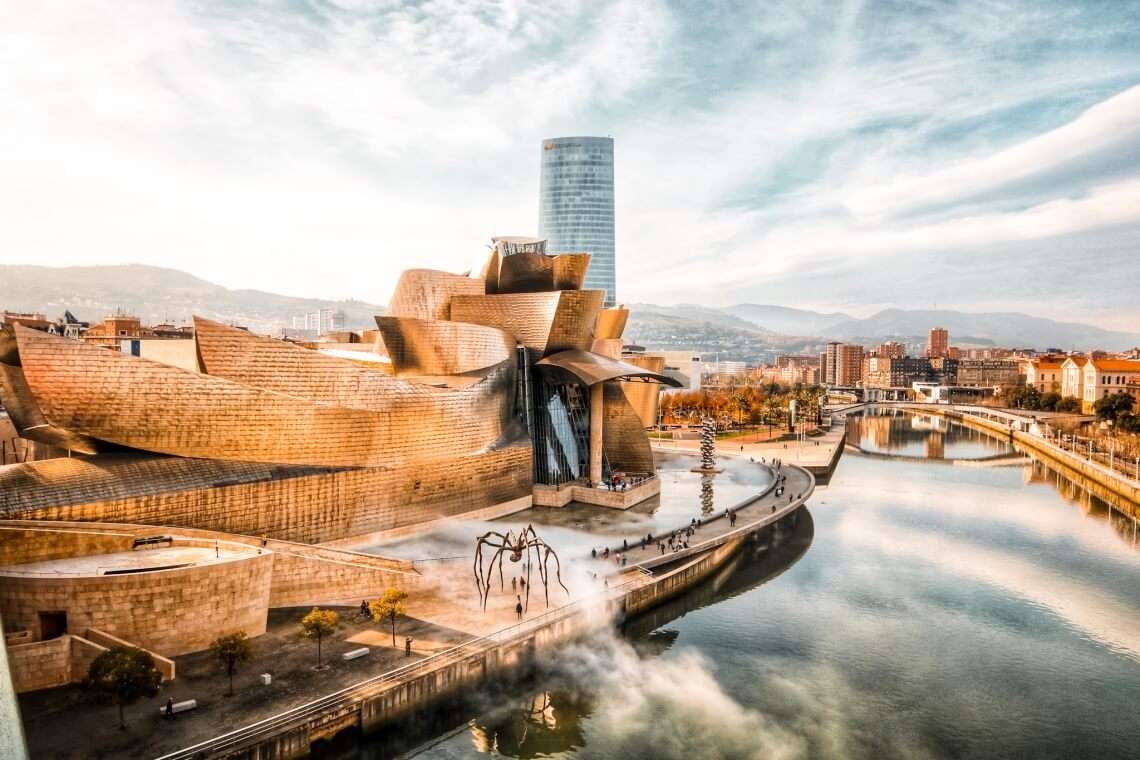
Many of the Basque Country's finest towns flourish on riverbanks and coastlines. Prime examples include Hondarribia and Irún, the trail's starting points; San Sebastian and its famous La Concha beach; the historic ports of Zarautz and Getaria; Guernika, immortalised in Picasso's masterpiece; and the cutting-edge metropolis of Bilbao with its iconic Guggenheim Museum.
Hondarribia and Pasai Donibane
Irún and Hondarribia exemplify this strategic location principle perfectly.
Hondarribia especially, as the peninsula's most northern gateway and one of Europe's most renowned commercial ports, witnessed countless battles and sieges, evidenced today by its imposing fortified walls and distinctive royal palace architecture.
An important tourist destination that honours its heritage, it celebrates traditions such as the September 8th pilgrimage to Guadalupe Sanctuary, attracting thousands of devotees.
Pasai Donibane, a small fishing village nestled in a picturesque cove, possesses undeniable charm. It captivated the acclaimed dramatist Victor Hugo, who described it thus: " magnificent and enchanting place, like everything bearing the double character of joy and grandeur".
San Sebastian – Donostia
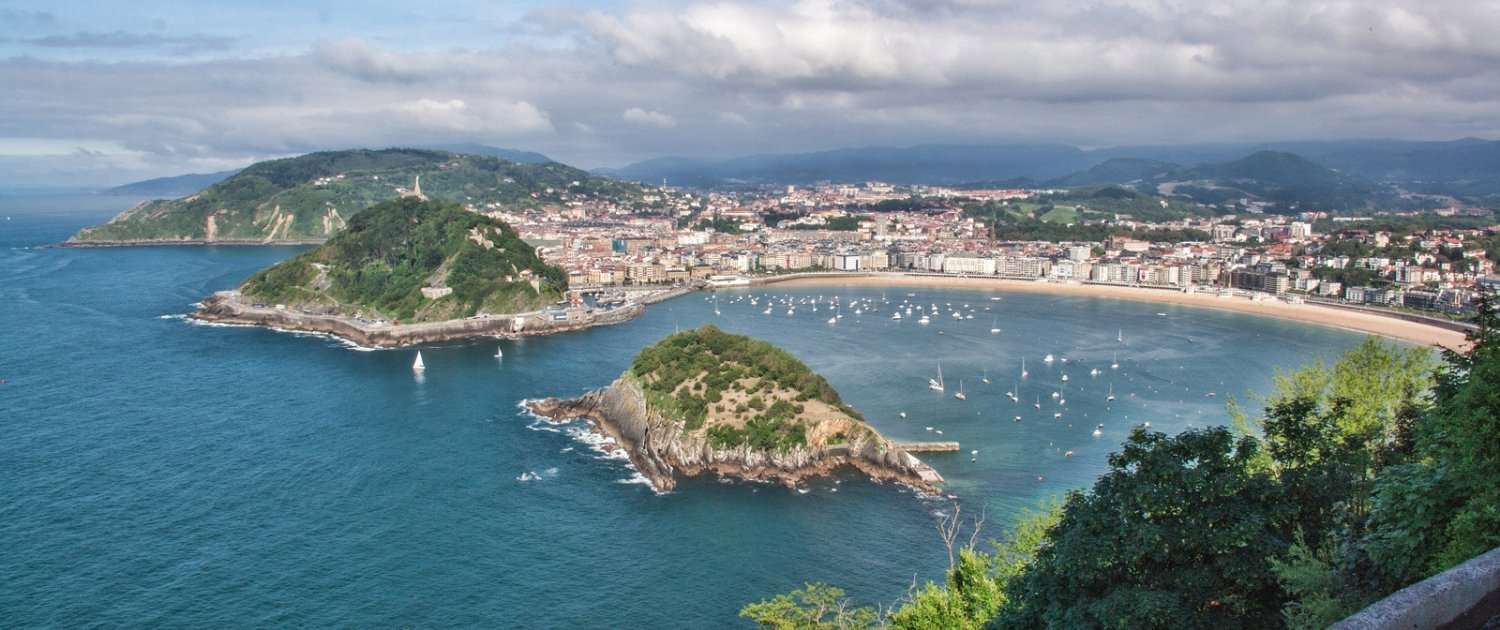
San Sebastian-Donostia, just kilometres from Donibane and capital of Gipuzkoa province, is a substantial city famous for La Concha beach. This distinctive shell-shaped bay encloses a verdant islet at its centre.
Flourishing in the 19th century after Queen Maria Cristina of Spain chose it as her summer residence, the "Pearl of the Ocean" has maintained its cultural prestige over generations.
A symbol of sophistication and exclusivity, and an exceptional tourist hub, it now hosts the International Film Festival, Michelin-starred restaurants, historic palaces, and avant-garde architecture.
Zarautz and Getaria
Zarautz resembles a miniature San Sebastian. Once a whaling port, its beaches now attract surfers, food enthusiasts, and those seeking Spain's vibrant nightlife.
Nearby stands Getaria, a quintessential fishing village that, while not courting jet-set tourism, harbours profound historical significance.
Guernika
Leaving the coast and entering Vizcaya province, we venture inland, where Guernika-Lumo commands prominence.
Achieving worldwide renown through Pablo Picasso's eponymous masterpiece, the city held deep significance for the Basque people centuries before, as the birthplace of their legal autonomy and self-governance.
Bilbao
Bilbao the regional capital and final noteworthy stop, deserves careful exploration. Situated on the Nervión river just kilometres from the Atlantic, it exemplifies 21st-century Spain through its Guggenheim Museum, where heritage meets forward-thinking vision. It represents art, vitality, exceptional cuisine, and above all, outstanding quality of life.
We leave Bilbao and head toward nearby Portugalete, a seaside town celebrated for hosting the world's oldest still-functioning transporter bridge.
En route to Portugalete, another bridge captures attention—not for size, being a modest single arch, nor architecture, quite simple, but for the legend surrounding it, earning it the nickname Devil's Bridge.
A few more kilometres of coastline and we bid the Basque lands farewell, ready to begin our journey through the autonomous community of Cantabria.
A Glimpse into Basque Culture – Euskera
A people's culture reveals itself through their language, which shapes their identity and showcases their evolution across centuries.
Euskera possesses the rare distinction of being a linguistic isolate—unique and unrelated to any other known language family worldwide.
Now taught in schools and recognized in Spain as a co-official language since the end of Franco's dictatorship, it appears on street signs, in newspaper articles, and shop windows.
This language binds the Basque people together, bridging what geographic and political borders divide.
The Basque Autonomous Community, the Navarre Community, and the small French region of the Atlantic Pyrenees constitute a single cultural entity, united by an exceptionally powerful sense of identity.
The Basque flag, Ikurrina, in red, white, and green, flutters from house balconies and official buildings, hangs behind café counters. Everywhere, festivals, folklore, and traditional dress reinforce this unity.
The Camino del Norte thus offers a rare window into an absolutely singular culture.
Camino del Norte in Cantabria – 185 Km / 7 days
The Camino del Norte through Cantabria: 185 km from Ontón to Unquera, traversing historic towns and stirring landscapes where mountains meet sea.
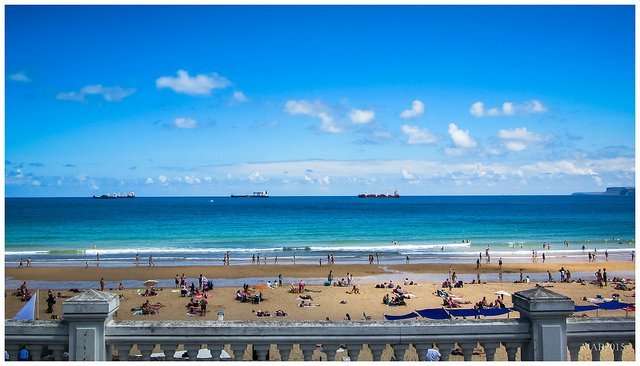
Landscape Along the Camino del Norte in Cantabria
The Camino del Norte through Cantabria traverses truly exceptional terrain. We frequently find ourselves completely immersed in pristine nature, walking unpaved and grass paths, perhaps through agricultural fields with grazing livestock, amid forests and rolling hills.
While the inland areas possess undeniable beauty, nothing surpasses the views of the sea and its imposing coastal cliffs. Feeling golden sand beneath your feet, soothing weary legs in the cold Atlantic waters, enjoying a refreshing swim after a day's walk, or simply admiring the panorama from above—these moments define the experience.
The path leading to Islares embodies this perfectly: a verdant meadow caressing the clifftops, which rise dramatically and plunge vertically into intensely blue waters, creating an unforgettable emotional experience.
Towering sea cliffs, emerald meadows, and golden sand make the Camino del Norte in Cantabria truly exceptional.
At Santoña, the Marismas Natural Reserve encompasses 6,600 hectares, representing one of Spain's most significant wetland complexes and a delicate ecosystem defined by its extraordinary diversity of migratory bird species.
As kilometres accumulate, rolling hills give way to mountains.
We approach the Picos de Europa, whose snow-capped summits reward San Vicente de la Barquera with breathtaking vistas. Rising majestically close to the shoreline, they appear even more imposing, accompanying us until beyond the Asturias border, only kilometres away.
Trail Variants and Travel Tips
Along the route we encounter numerous alternatives to the official path. Some allow time and energy savings, though at the cost of tarmac instead of grassy trails. Others, like the coastal variant toward Somo, offer distinctly superior scenery compared to the standard route.
Choose thoughtfully, embrace adventure, and remember that pilgrimage isn't about rushing or shortcuts, but about the joy and emotions we experience as we walk.
One variant I particularly recommend, found nowhere else, leads from Santoña to Berria beach.
The official section spans 3.5 km and runs alongside the Boo river, while the alternative route measures approximately 7 km longer. Following the Monte Buciero Trail, it hugs the ocean side of the entire peninsula, passing the Caballo and Pescador lighthouses.
The 400m elevation change—both up and down—might intimidate, but the scenery more than justifies the effort.
Apart from this detour, elevation gains remain gentle, nearly imperceptible, and the few climbs remain gradual. An easy walk that allows us to add extra kilometres to daily distances if desired.
At San Vicente de la Barquera, we encounter more than yellow arrows. Red arrows, accompanied by Cantabria's distinctive red cross, mark the start of another pilgrimage route: the Lebaniego Path, which extends 72 km deep into Cantabria's heartland.
Traces of the Past: Palaeolithic Discoveries Along the Camino del Norte
Cantabria, like the entire northern Spanish coast, abounds with Palaeolithic archaeological sites, among which Altamira ranks among the most significant.
Just 2.5 km from Santillana del Mar, the Camino del Norte passes directly nearby, offering an unmissable opportunity to visit. Also known as the Sistine Chapel of the Quaternary Period, the Altamira Caves preserve rock paintings dating from 13,000 to 35,000 years ago, spanning over 270 metres, exceptionally preserved, and of major technical and artistic importance to the international archaeological community.
Comillas also hosts significant rock art in the La Meaza Caves, 3 km from town centre, with paintings dating back 18,000 years, though regrettably, public access remains restricted for now.
Towns: The Four Maritime Villas and Beyond, from Medieval Times to Present
During the early centuries of the Christian Reconquest against Muslim invaders, power dynamics throughout the p
Share
apiediperilmondo by wayure
New articles on walks, trekking and hiking trips. Free, no spam.
Co-fondatrice, Apiediperilmondo
I've been organising walks since I discovered that walking slow is the fastest way to know a place. I take care of every logistical detail so you can focus only on the steps ahead.
Profilo e tutti gli articoli di Deborah