The 5 Best Treks in New Zealand
Seeking an adventure from the other side of the world? Trekking in New Zealand offers an extraordinary experience that combines breathtaking landscapes, cultural encounters, and the kind of solitude that transforms the soul.

In this article
Table of Contents
New Zealand is a distant destination that, once you factor in the long-haul flight, is surprisingly easy to reach. It's a country brimming with travel opportunities, particularly for active travel, thanks to its residents' passionate commitment to outdoor pursuits. English is widely spoken, Western culture predominates, and yet the experience remains genuinely exotic.
Like Australia, incorporating several days of trekking into your itinerary allows you to make the most of New Zealand's remarkable landscapes while helping to offset travel costs.
New Zealanders are so devoted to trekking that they've adopted their own term for "the activity of walking on long, uneven trails": tramping! The walkers themselves are trampers. This term encompasses all the associated discomforts (and rewards!) that come with it: heavy backpacks, long daily distances, camping, mud, unpredictable weather, and everything in between. It's therefore highly recommended to include some tramping days in your antipodean adventure, whether you opt for easier short walks or tackle the famous Great Walks. The important thing is to walk!
New Zealand comprises two main islands: the North Island and the South Island, separated by the Cook Strait. The North Island is the smaller of the two but more densely populated (3.7 million inhabitants, 77% of the total population); major cities including Auckland and the capital Wellington are located here. The South Island has a population of just 1.1 million, with a third concentrated in the island's main city, Christchurch.
The best time to visit New Zealand for trekking is October to March. It's advisable to avoid January and February as these are peak season, meaning higher prices and more crowded trails. Winter months are ideal for skiing and whale watching, but may be too cold for serious tramping. That said, each official track page specifies the ideal season and any seasonal closures.
Your starting point for planning a trek in New Zealand should be the excellent official website of New Zealand Tourism: www.newzealand.com. Under "Things to Do," you'll find walking options conveniently sorted by length and location. There's also a dedicated section for guided treks.
Beyond personal preference, guided treks offer two significant advantages over independent tramping. First, since many trails (especially the Great Walks) operate under strict daily quotas, guided treks receive reserved allocations—a valuable option if your preferred Great Walk is fully booked for your chosen dates. Second, most Great Walks and multi-day routes are equipped only with basic huts, requiring trampers to carry all their own gear. This can be challenging for international travellers. Using a local operator means equipment is available on-site. A compromise option is to rent equipment (particularly cooking gear) locally and trek independently.
Another invaluable resource for finding suitable New Zealand treks is the Government website, where a convenient search engine lets you filter trails by region, duration, and difficulty level.
While New Zealand boasts thousands of kilometres of walking tracks, those truly worth flying to the other side of the world for are the Great Walks—a carefully curated selection of nine routes (eight on foot, one by canoe) of multiple days, distributed across both islands. The Great Walks are managed by the Department of Conservation, which controls access and facility usage. The official website provides information on what to bring, how to prepare, and crucially, how to book.
Places fill up quickly, so it's essential to book well in advance (up to a year ahead for popular routes like the Milford Track). Costs vary depending on the route, your chosen accommodation (hut or campsite), and trek duration.
Also worth mentioning, though not strictly tramping, is the NZ Cycle Trail, a network of cycling routes spanning 2,500 km. The official site helps you identify suitable routes and provides rental contacts.
Below is a selection—by no means exhaustive—of some of New Zealand's finest tramping routes.
Milford Track (Great Walk)
Perhaps New Zealand's most famous trek, the Milford Track regularly features in rankings of the world's best trails. Personal tastes aside, it's undoubtedly one of the Southern Hemisphere's greatest treasures. It stretches through the south-eastern part of the South Island for 53 km between Lake Te Anau and Milford Sound, reaching a maximum elevation of 1,140 metres at Mackinnon Pass. The walk is designed to be completed over 4 days and 3 nights.
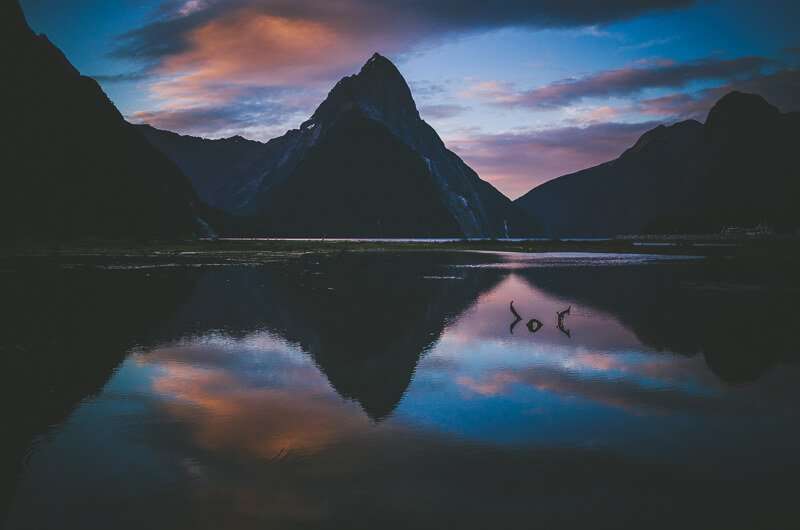
The route was first established in 1888 by Quintin McKinnon (after whom the Pass is named), effectively the area's first commercial guide. The trail crosses an alpine ecosystem featuring towering rock faces, glaciers, alpine lakes, and waterfalls. Your destination, Milford Sound, is a fjord surrounded by soaring peaks reflected in crystalline waters, creating a spectacular mirror-like effect.
The Milford Track features three equipped huts with 40 bunks, gas cookers, heating, lighting, and mattresses. The ideal season runs from mid-October to late April. From May to mid-October, the track remains open and accessible (for a fee), but the huts offer minimal facilities and some river crossings are removed. Winter months carry significant avalanche and hypothermia risks due to extreme cold and limited shelter.
As one of the most sought-after treks, finding availability is virtually impossible. However, private lodges run by authorised operators accept bookings for guided treks. Whilst pricier, this may be your only option for experiencing the Milford Track.
Official website: Milford Track
Routeburn Track (Great Walk)
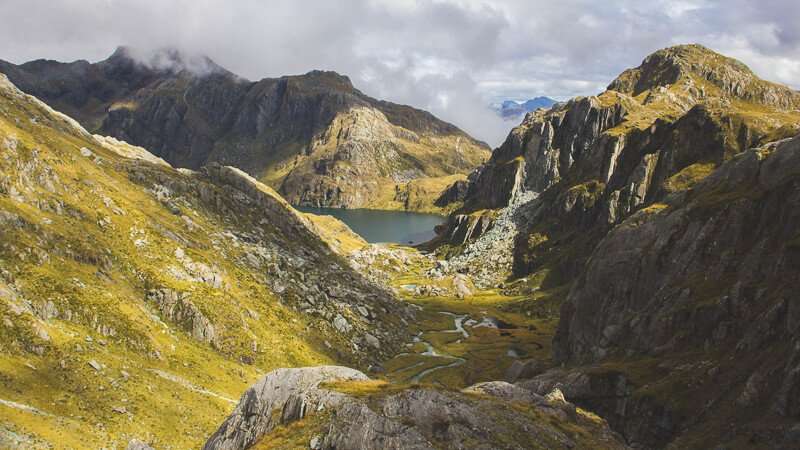
The Routeburn Track is among the Great Walks and, like Milford Track, lies in the South Island. It spans 32 km from Lake Wakatipu to the Divide, traversing two national parks: Mount Aspiring and Fiordland. The highest point is Harris Saddle at 1,300 metres.
The terrain here is predominantly open, offering panoramic 360-degree views of the surrounding landscape. The route is dotted with lakes and waterfalls, and on clear days you can see all the way to the Tasman Sea.
The track is equipped with four huts (with bunks, gas cookers, lighting, and heating) and an emergency shelter. Camping is permitted in designated zones and is also subject to compulsory booking and strict daily limits. Most trampers complete the route in 3 days and 2 nights. You can combine this Great Walk with the Greenstone and Caples Tracks, a 4-day/3-night circuit that can itself be extended with various detours. The tramping possibilities in New Zealand truly are endless!
The best season for the Routeburn Track is, like Milford Track, late October to April. The track remains open in winter but conditions are challenging and hut facilities are minimal. In general, weather is highly variable, so pack layers to handle rapid temperature changes, especially at night.
One logistical challenge is transport: the two trailheads are 5 hours' drive apart, so international visitors typically need to arrange a local shuttle service to collect them at trail's end.
Official website: The Routeburn Track
Abel Tasman Coast Track
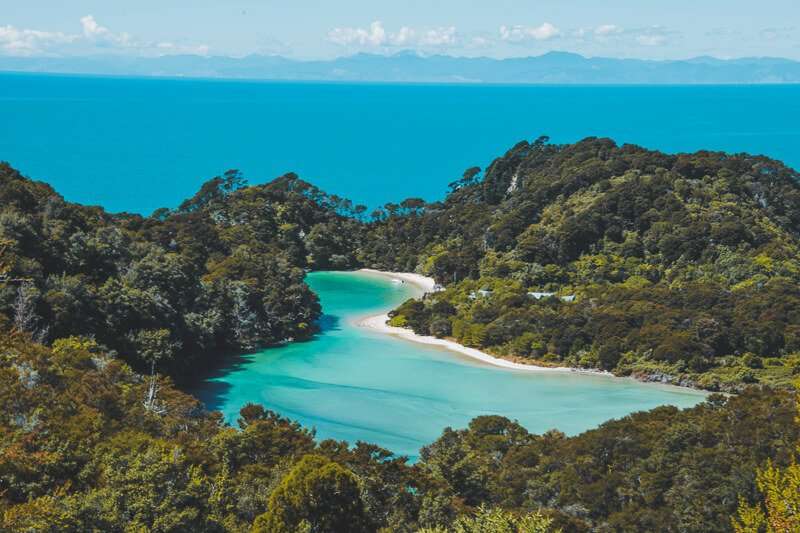
The Abel Tasman Coast Track is a Great Walk located in the northern part of the South Island. It stretches 60 km within Abel Tasman National Park from Marahau to Wainui. The entire route takes 3-4-5 days to complete, though you can tackle specific sections as day walks. One particularly popular section features a suspension bridge spanning 47 metres above the Falls River.
Being a coastal route, elevation gain is minimal, never exceeding 200 metres above sea level. The trail offers expansive coastal vistas, sandy beaches, and native coastal forest. Seal sightings are common.
The track is equipped with 4 huts and 18 campsites. Access here is also regulated and booking is mandatory under the quotas system. Notably, this track is more user-friendly for independent walkers compared to other Great Walks, with several scenic day walk options available, making it ideal if you're short on time or prefer testing the waters before committing to a longer multi-day trek.
Share
apiediperilmondo by wayure
New articles on walks, trekking and hiking trips. Free, no spam.
Redazione
La redazione di Apiediperilmondo. Guide, itinerari e storie nate camminando: consigli pratici, cammini in Italia e nel mondo, letture e spunti per chi viaggia a piedi.
Profilo e tutti gli articoli di ApiediperilmondoTurn this inspiration into a real journey.
Tell us about your dream walk: we will build the itinerary together.