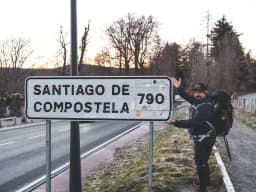
Camino de Santiago – French Way
The world's most iconic pilgrimage route, the Camino de Santiago is a transformative journey on foot and an essential experience for every walking pilgrim seeking authentic adventure.
A Piedi Per Il Mondo
In this article
- Starting point: Saint Jean Pied de Port
- Distance: 800km
- Difficulty: E
- Number of stages: 33
Camino de Santiago: General Information
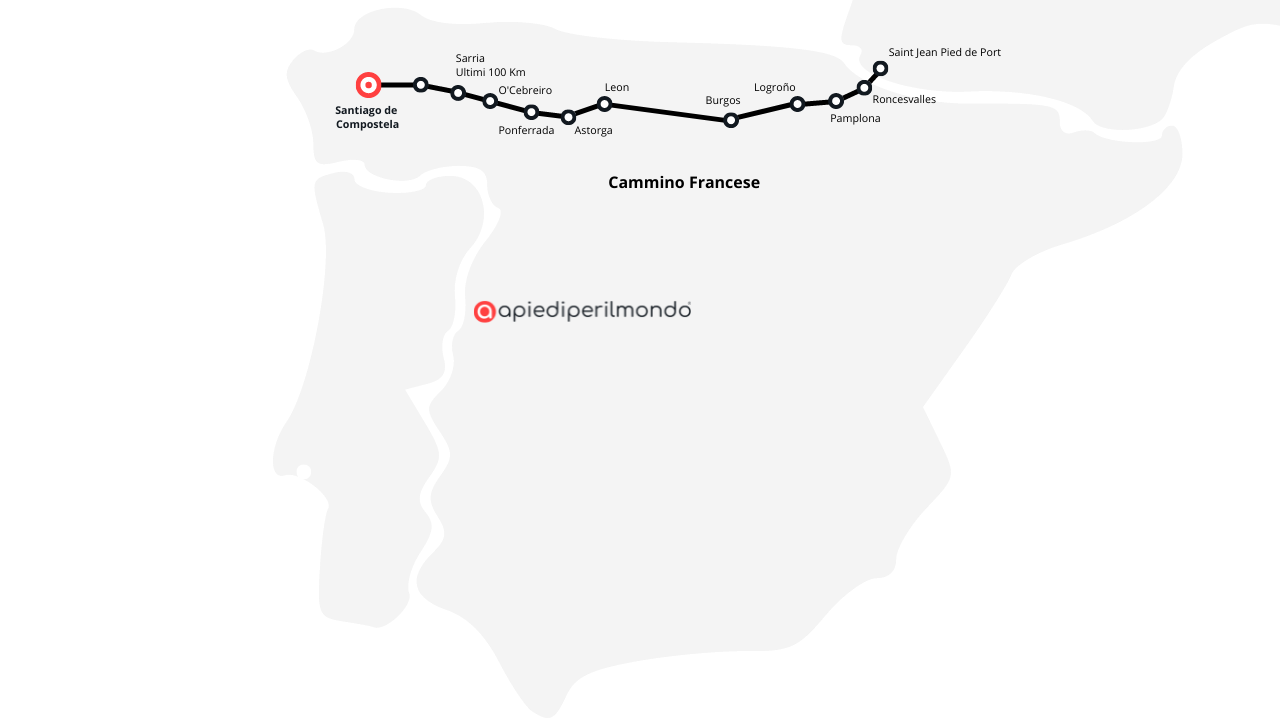
The Camino de Santiago, or French Way, departs from Saint Jean Pied de Port, a small Basque-heritage village in French Navarre, and arrives at Santiago de Compostela, in the heart of Galicia, at the opposite end of the Iberian Peninsula.
The Camino, stretching approximately 800km, traverses northern Spain from east to west, unveiling four magnificent regions rich in history and charm: Navarre, La Rioja, Castile and León, and Galicia. From landscapes to gastronomy, from agriculture to local architecture, you'll discover a fascinating cross-section of Spain while enjoying an exhilarating adventure.
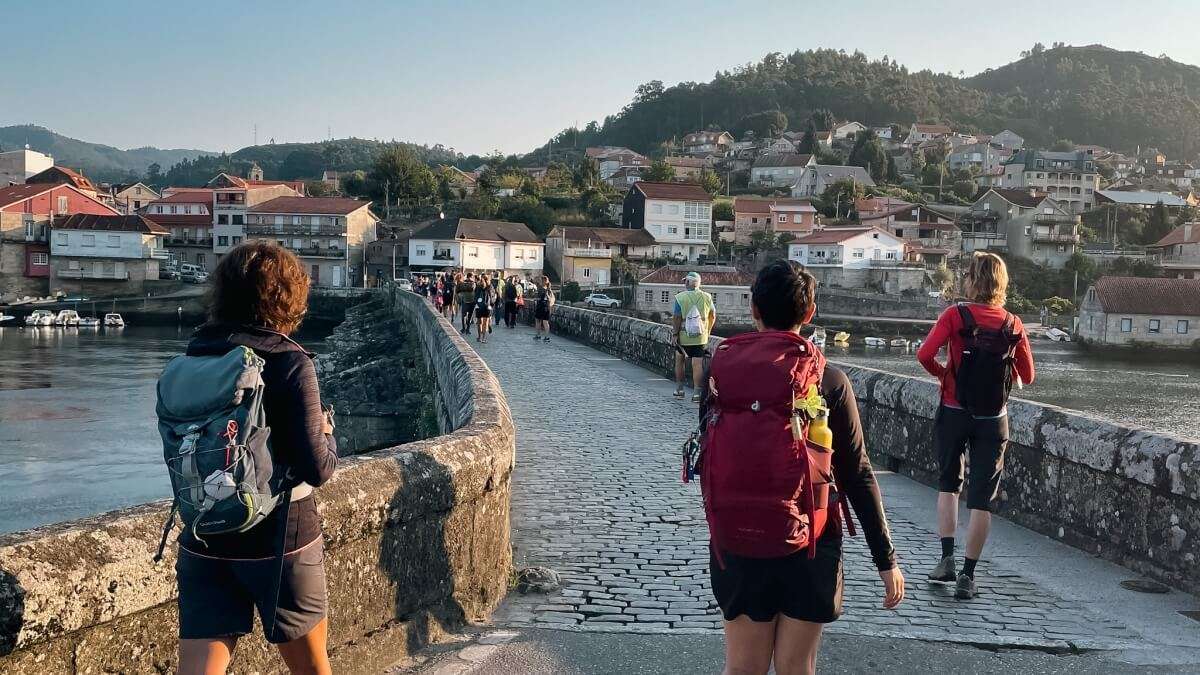
The number of pilgrims undertaking the Camino de Santiago increases each year, peaking during the summer months of July and August. While a good percentage of people start from Saint Jean Pied de Port, the vast majority of pilgrims choose Sarria as their departure city, to undertake the so-called "Last 100 Kilometres".
Beyond SJPDP and Sarria, many decide to start from intermediate cities such as Pamplona, Burgos, and León. For this reason, we've created detailed articles for each starting point. Here are all our in-depth guides:
➜ The Camino de Santiago from Saint Jean Pied de Port
➜ The Camino de Santiago from Pamplona
➜ The Camino de Santiago from Burgos
➜ The Camino de Santiago from León
➜ The Camino de Santiago from Sarria
However, I recommend first reading the general description below before exploring the dedicated articles.
Camino de Santiago or French Way?
First, it's important to clarify the term "Camino de Santiago".
In common understanding, Camino de Santiago refers to the pilgrimage route from Saint Jean Pied de Port to Santiago de Compostela. However, this specific route is actually called the French Way.
The term Camino de Santiago encompasses any pilgrimage route, in Spain or worldwide, that ends in Santiago de Compostela and at the tomb of Apostle James.
The Pilgrimage on the Camino de Santiago
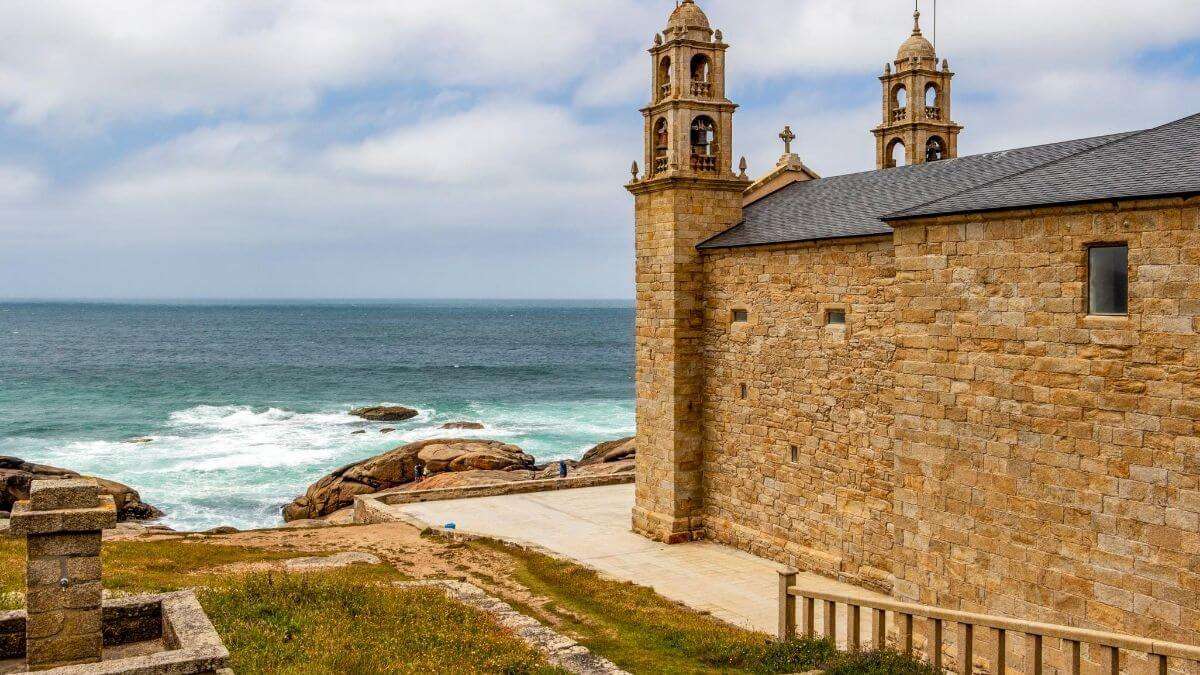
The Camino de Santiago is one of the oldest and most renowned Christian pilgrimage routes in the world. Regardless of where pilgrims begin their journey, the final destination is Santiago de Compostela, specifically the tomb of Apostle James the Greater, to whom pilgrims dedicate their entire journey.
The origin of the Camino de Santiago is shrouded in a powerful blend of history and legend, making the whole story far more intricate and fascinating. Is James really in that sepulchre? According to whom? What does legend say about the tomb's discovery? And what political influence shaped this phenomenon? There are countless intriguing questions about this sacred place and its history.
➜ To learn more, read our article "Origins of the Jacobean Paths"
Landscapes on the Camino de Santiago
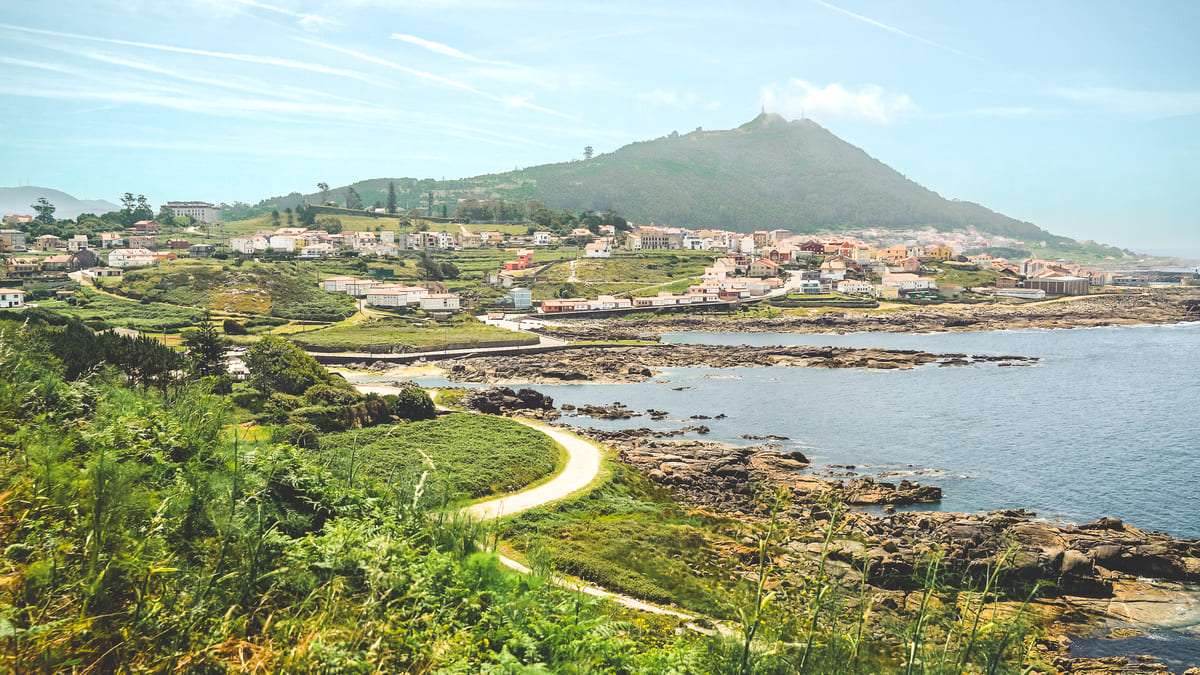
The Camino de Santiago offers incredible landscape diversity, changing according to the season, altitude, region, human intervention, and the unique characteristics of each location.
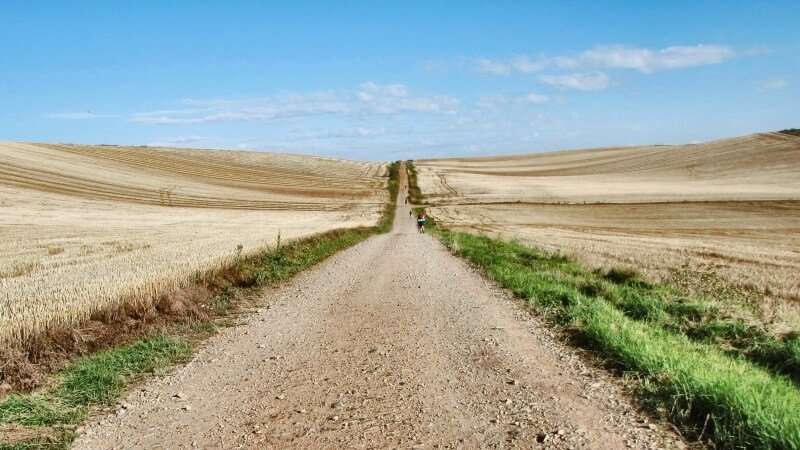
Many have learned about the Camino de Santiago through photos shared by previous pilgrims. The route has become famous for its sunflower fields, endless vineyards, sun-scorched meseta plains, verdant Pyrenean pastures, and the lush eucalyptus forests of Galicia.
Weather conditions make the greatest difference. Imagine how vastly different it feels to walk through snow or, conversely, amid green grass with grazing animals. Different colours, different scents, different sensations. This is why understanding the environment you might encounter during your chosen season is essential.
What's certain is that whatever month you choose to walk, and from whichever region you depart, the Camino de Santiago delivers, with every step, postcard-perfect scenery.
Difficulty of the Camino de Santiago
The Camino de Santiago can be walked by anyone, provided you undertake basic physical preparation beforehand and adopt certain precautions regarding organisation and equipment during your journey.
You'll be covering 800km on foot, walking almost daily for approximately a month. It's clear this isn't a leisurely weekend mountain stroll or a short hiking trip. Here you're facing considerable physical and mental exertion. Starting with some basic preparation is the best choice for experiencing the journey with greater confidence and peace of mind.
Generally, there are no particular difficulties.
Elevation gains are typically gentle and in some sections negligible. However, you'll encounter several particularly challenging stretches:
- First stage, from Saint Jean Pied de Port to Roncevaux, 1270m of elevation gain over nearly 20km. The difficulty lies not so much in the climb itself, but in tackling it on the first day when you're not yet fully acclimated.
- From Astorga to O'Cebreiro, and particularly through Foncebadón and Cruz de Hierro, you'll reach the highest elevations of the entire Camino de Santiago.
Services, including accommodation and food stops, are present throughout the French Way with remarkable regularity. In recent years, with increased pilgrim numbers, new and modern reception facilities have emerged, many open year-round, ensuring excellent support and availability.
Climate presents challenges both in summer and winter, depending on the section:
- In winter, walking through Galician forests in heavy rain can be tedious, and navigating mountain passes is decidedly dangerous, with serious risks of snow, fog, and wind. Consider the Puerto de Lepoeder on the Pyrenees at 1432m, which closes from 1 November to 31 March for safety reasons, or locations like Foncebadón and O'Cebreiro, which accumulate metres of snow annually.
- In summer, the greatest risk is the scorching heat across the mesetas in Castile. More generally, you'll cover many kilometres on dirt paths with no shade or water sources. This challenge is manageable with proper precautions: carry abundant water, wear a hat, bring mineral sachets, fruit, and energy bars.
Backpack weight isn't a major obstacle. The abundance of food stops along the Camino and the nature of the accommodations mean you needn't carry much, with 7-8kg maximum being ideal.
Trail Markers: Yellow Arrow and Scallop Shell
When discussing Camino de Santiago signage, one can't help but picture the iconic yellow arrow, which has become the symbol of the path itself! Indeed, the yellow arrow is the primary marker guiding pilgrims along the Camino de Santiago.
It's unidirectional and always points forward towards Santiago. It's ubiquitous—on house walls, stones, tree bark, wooden signs—essentially everywhere it could be painted.
Initially, you might miss some arrows, but as days pass, you'll develop an eye for spotting them, even those hidden beneath shrubs or faded by time.
Careful! If you start early, while it's still dark, you risk missing markers and getting lost. Exercise extra caution, especially at junctions.
Where the yellow arrow is absent, it's replaced by the scallop shell, which has similarly become a symbol of the Camino de Santiago. You'll find it in yellow on blue backgrounds, on house walls in ceramic form or on mojones—concrete posts up to a metre high positioned alongside the road.
The scallop shell is depicted as a fan radiating outward from a central point. The direction to follow is indicated by the rays' positioning, but beware: in Galicia, the shell's orientation is reversed. Thus:
- On the Camino de Santiago (except in Galicia), imagine yourself as one of the rays, following it to its apex where all paths converge—Santiago de Compostela.
- In Galicia, the logic inverts: follow the direction the rays point, as if emanating from that single point to multiple rays.
Given the hundreds of thousands of people who've walked the Camino de Santiago in recent years, signage has been substantially reinforced where it was lacking. Using a GPS track is therefore absolutely unnecessary—trust the markers!
Climate on the Camino de Santiago
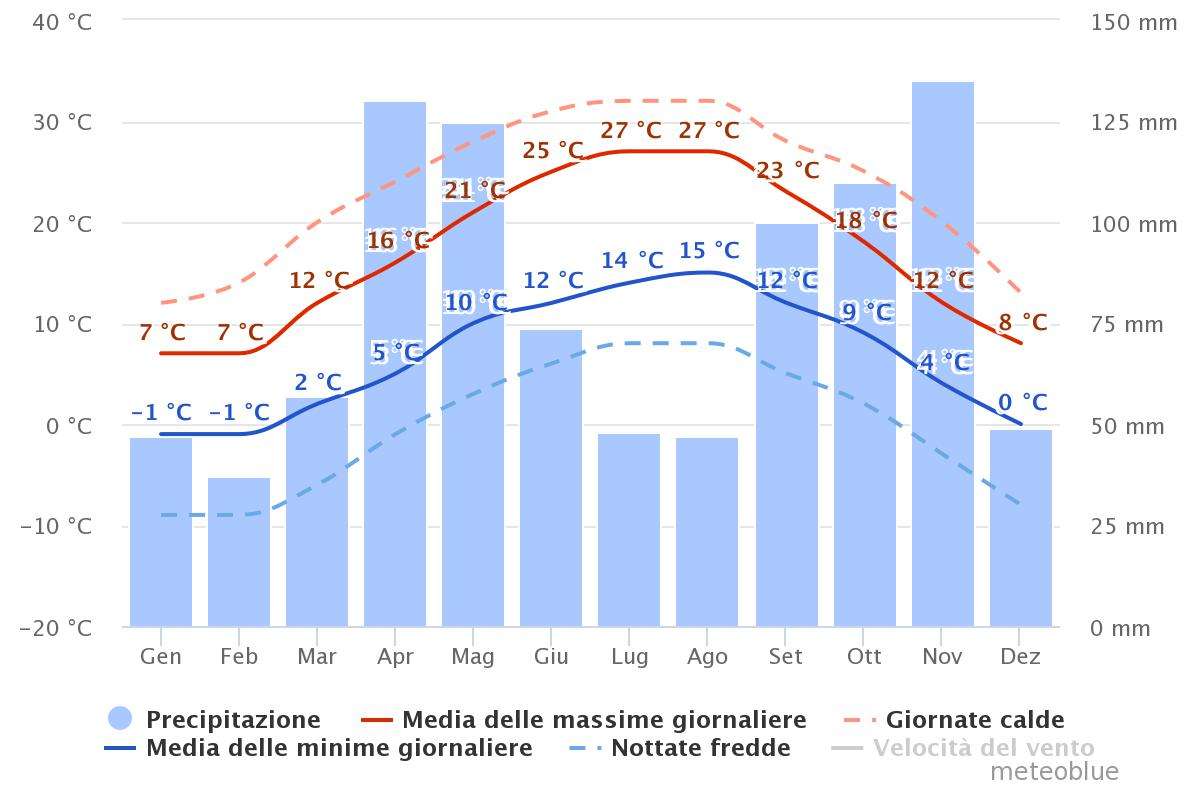
On the Camino de Santiago, the climate is highly variable, determined fundamentally by three factors:
- Time of year
- Altitude
- Region
Depending on your chosen season, the altitudes you reach, and the regions you traverse, climate varies considerably, making certain Camino sections challenging to safely navigate.
Consider, for instance, the Lepoeder Pass, connecting Saint Jean Pied de Port to Roncevaux: due to poor winter conditions, it closes from 1 November to 31 March.
Similar difficulties exist at other high-altitude locations, such as the section beyond Astorga, the Cruz de Hierro area, or O'Cebreiro.
In summer, the primary challenge is the intense heat near the mesetas: vast, barren stretches offer neither shade nor water, testing even experienced pilgrims severely.
For location-specific climate details, please refer to individual Camino de Santiago articles.
➜ The Camino de Santiago from Saint Jean Pied de Port
➜ The Camino de Santiago from Pamplona
➜ The Camino de Santiago from Burgos
➜ The Camino de Santiago from León
➜ The Camino de Santiago from Sarria
Where to sleep on the Camino de Santiago and how much it costs
On the Camino de Santiago, you can stay in various types of accommodation.
Those seeking privacy and preferring private en-suite rooms will find ample hotels and B&Bs. While larger towns offer quality establishments, smaller villages along the route may have limited options, requiring flexibility and adaptability.
For those comfortable sharing dormitories with fellow pilgrims, the Camino offers unconventional resting places similar to hostels. These facilities, purpose-built for pilgrims, are called Albergues and cater to a walker's basic needs: shelter, a bed, a shower, and little else. Organised in large and small dormitories, they enhance the authenticity of the experience of sharing and meeting with others undertaking the same journey.
Recently, accommodation quality has improved significantly: dormitories have become smaller, often with 4-6 bunk beds; many feature equipped kitchens for self-catering, offering opportunities to share homemade meals with friends and save on budget; cleanliness has improved; amenities previously unimaginable are now standard, such as wifi.
Pilgrim albergues fall into three categories, accessible by showing your pilgrim credential or passport:
- Municipal albergue, run by the local council, costing €5-6;
- Parochial albergue, managed by the parish priest, typically donation-based or €5-8;
- Private albergue, run commercially, generally better maintained and higher quality, costing €10-15.
➜ For more on credentials, read our dedicated article "Credentials, Compostela, and Pilgrimage Certificates".
What to eat on the Camino de Santiago and how much it costs
Spanish cuisine is a concentrate of flavour and goodness, similar in many respects to Italian food, though slightly richer and heartier. As with Italy, Spanish cuisine varies considerably by region and location.
For each Camino section, I've identified a signature dish you won't want to miss.
Generally, eating on the Camino de Santiago is not only enjoyable but also economical. Spain is considerably less expensive than Italy, and even dining à la carte offers remarkable value and quality. You can save even more by taking advantage of the abundant menú del día (menu of the day), equivalent to our set lunch menus.
Comprising a first course, main course, side dish, water or wine, and dessert, all for around €10, it will provide the energy and sustenance needed after a day's walking.
Spanish Language
On the Camino de Santiago, communication with locals should be in Spanish. Certainly, English will work, but you risk occasional misunderstanding. You'll often pass through small villages, sometimes inland areas, populated more by elderly residents than young people. English won't always help here.
For an Italian speaker, Spanish is relatively straightforward, at least for comprehension, so learn the most important words and strategic phrases. Locals will appreciate your effort and be more inclined to help and enable communication.
For this purpose, I recommend carrying an Italian-Spanish phrasebook.
While Spanish—specifically Castilian—is the main Camino language, in some areas you'll encounter different dialects and languages. The most evident example is Basque, spoken from Saint Jean Pied de Port through Pamplona and throughout Navarre.
Attention: Basque is not a dialect but a full language with its own vocabulary and notoriously complex grammar. It's the language of the Basque people and, besides hearing it spoken, you'll see it on road signs and in newspapers and magazines. Believe me, it's far closer to Klingon than Spanish.
```
Share
A Piedi Per Il Mondo
New articles on walks, trekking and hiking trips. Free, no spam.