The Way of Saint James from Saint Jean Pied de Port
Walk 800km on one of the world's most transformative pilgrimage routes. Starting from Saint Jean Pied de Port, the Camino de Santiago offers an unforgettable journey through the Pyrenees and across Spain's stunning landscapes.

In this article
Saint Jean Pied de Port is the official starting point of the Way of Saint James, or the French Way.
We find ourselves in a small village nestled in the French Pyrenees, in the Basque Country's Lower Navarre or Département Pyrénées-Atlantiques. From here, during 2019, exactly 33,197 people set out on their pilgrimage—nearly 10% of all those who walked the various routes to Santiago.
Although anyone can choose to begin their pilgrimage journey from wherever they wish—even from their own doorstep if they prefer—starting from SJPDP continues to represent the authentic Camino experience for many. After all, the further you walk, the more time you gift yourself for reflection, contemplation, and meditation; you immerse yourself deeply in the spirit of the pilgrimage and enrich yourself with days and memories of real life. Beginning from here offers something truly unique and extraordinarily powerful.
In this article, I describe the Way of Saint James from Saint Jean Pied de Port to Pamplona. What I'll do throughout this and future articles is describe sections of the Camino—groups of stages—with precision and clarity. I won't tell you how many blades of grass are in the meadow, but I'll focus on what matters, so you can gain a clear and complete understanding of what awaits you.
➜ Go to the next article to read about the Way of Saint James from Pamplona to Burgos.
The 3 Stages from Saint Jean Pied de Port to Pamplona
If you're starting the Way of Saint James from Saint Jean Pied de Port, you should know that the distance to Pamplona is approximately 67km, easily manageable over 3 days of walking.
Generally, this opening section of the French Way is beautifully varied. Beyond the French border, you enter the ancient Navarrese forests, filled with streams and rivulets. Here vegetation grows lush, and the many earth trails you traverse can become muddy and somewhat challenging during winter months or on rainy days.
The canonical stages are:
- Saint Jean Pied de Port – Roncevaux | 25 km
- Roncevaux – Zubiri | 21km
- Zubiri – Pamplona | 21km
The first day is one of those initial experiences that will remain imprinted in your mind forever. That's why I've decided to dedicate a separate section to it below and give it the emphasis and importance it deserves. Naturally, I won't do this for every stage, otherwise I'd be writing a book instead!
Challenges on the Way of Saint James from Saint Jean Pied de Port to Pamplona
It's true that this brief section comprises only 3 stages, yet it holds its share of challenges. The main ones are:
- The fact that this is the opening stage of the Camino itself! As we all know, the first time we attempt something is always a leap into the unknown—we're nervous, excited, ready to go yet fearful of the endeavour. Added to this tension is, here on the French Way, a genuinely demanding first stage that requires you to approach it with calm and intelligence.
- The elevation gain of the first stage is therefore the factor most likely to challenge less experienced walkers. We're talking about a total elevation change of almost 1800 metres, with 1270m of climbing and 500m of descent spread across just 25km. Unless you're someone exceptionally fit—someone who hikes mountains every weekend and is accustomed to such elevation gains—my advice is to set out slowly, take frequent breaks, and always listen to your own pace.
- Harsh winter weather with high snow risk makes crossing the Pyrenees very challenging for pilgrims. If you're unaccustomed to mountain walking in snow, or if this is your first time on the Camino, I'd recommend skipping the Saint Jean Pied de Port section and starting directly from Pamplona instead.
These are the most technical and obvious difficulties concerning the Way of Saint James from Saint Jean Pied de Port. However, if we include challenges related to your own person, it's evident that as a unique life experience, the Camino tests every aspect of ourselves. Facing this adventure with serenity and the right preparation is far from simple.
To help you, we've compiled "10 Tips to Get the Most from Your Camino," which should provide you with the right inspiration to respond positively to this extraordinary experience.
Weather, Rain and Temperatures at Saint Jean Pied de Port
Anyone setting out on the Way of Saint James from Saint Jean Pied de Port must first understand that here, the weather can change in an instant—you might find yourself suddenly enveloped in thick fog after walking in blazing sunshine for hours. So always remember to respect the mountains, approach them with reverent caution, and never underestimate their dangers.
Over the years, many have braved poor weather conditions, putting themselves and their rescuers at serious risk. The greatest danger isn't the snow on the trail, but rather the fog, which strips you of all landmarks and can lead you astray: imagine being lost in unfamiliar terrain as darkness falls rapidly—a situation best avoided, wouldn't you agree?
It was precisely to prevent such occurrences that in 2015 the authorities decided to close the Lepoeder Pass during months of high snow and storm risk. The Pyrenees are a place with a decidedly treacherous and dangerous winter. Temperatures can drop below freezing, and precipitation can be abundant, especially in December.
In summer, however, the probability of rain is offset by mild temperatures, with highs of around 25°C in July and August. In short, winter is certainly not the ideal season to tackle SJPDP and the Pyrenees, though I admit it can prove to be an equally intense experience—just more challenging, naturally, if you limit yourself to the Low Route.
So if you ask me when the best time is to walk the Way of Saint James from Saint Jean Pied de Port, I'd say certainly spring and early autumn. In any case, I strongly recommend always keeping a sturdy waterproof poncho within easy reach.
From Saint Jean Pied de Port: High Route or Low Route?
From Saint Jean Pied de Port, you can reach Roncevaux using two different itineraries, called the Low Route and High Route, distinguished by the different altitudes they reach.
- The Low Route is essentially the valley-floor route, also called the Alto de Ibañeta variant, simpler and less demanding than the High Route. Alternating mountain trails with many kilometres of paved road, it crosses the border at Las Ventas, reaches the locality of Valcarlos, and then arrives at Roncevaux from the Puerto de Ibañeta pass.
- The High Route, or Route Napoléon, reaches the Lepoeder Pass at 1432m elevation, subjecting the pilgrim to considerable effort on their first walking days: 1270m of climbing over 20km, and nearly 500m of steep descent in just 5km. What's certain is that the spectacle and emotion of the ascent repay all the effort with interest.
If during spring and summer months you can choose which of these two routes to take, in winter you're forced to opt for the Low Route: the Lepoeder Pass is closed from November 1st to March 31st due to severe weather and environmental conditions that make passage too risky.
Where to Stay on the Way of Saint James from Saint Jean Pied de Port
Let's start with Saint Jean Pied de Port. When you consider that last year over 30,000 people departed from here, you'll realize how much the Camino represents an important economic resource for this small village.
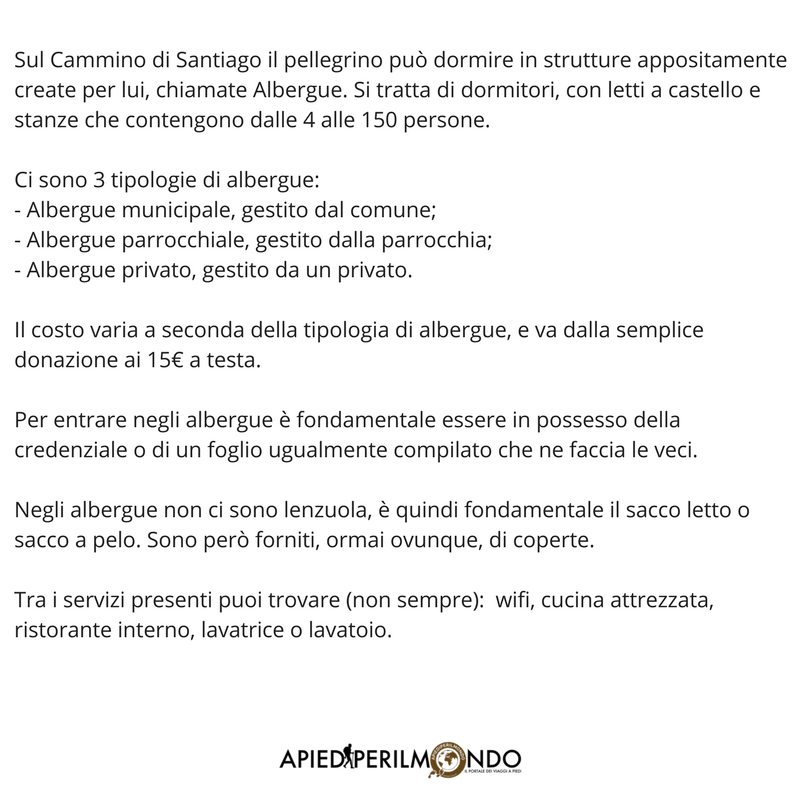
For this very reason, there are countless accommodation options for overnight stays: albergues for pilgrims, hostels, rooms, hotels, B&Bs, guesthouses—in short, whatever solution you're looking for, you'll find it here. Booking isn't necessary; in fact, finding a place to sleep on the spot is an excellent opportunity to quickly familiarize yourself with the Camino. Naturally, during July and August it's more challenging to find accommodation, but don't worry—you'll always find a roof over your head!
The first stage is Saint Jean Pied de Port – Roncevaux, with no intermediate accommodations. The only way to break up the stage is to stop, 7km from the start, at Cabanne D'Orisson, at the private albergue of the same name. Roncevaux is an essential finishing point for the day. The large pilgrim albergue, still housed in the ancient 16th-century hospital, is today very modern and comfortable and equipped with all amenities.
From Roncevaux onwards you'll find albergues and private facilities every 5-10km. You don't have to strictly follow the stages I've outlined above, but can adapt them according to your needs.
Be careful! The albergues on the Camino aren't always open year-round. Many close during winter months, so if you're walking the Way of Saint James from November to April, I recommend checking which albergues are open before you depart. This will allow you to plan your journey better and avoid unpleasant surprises.
Your First Day on the Way of Saint James: A Concentrated Experience of Pure Emotion
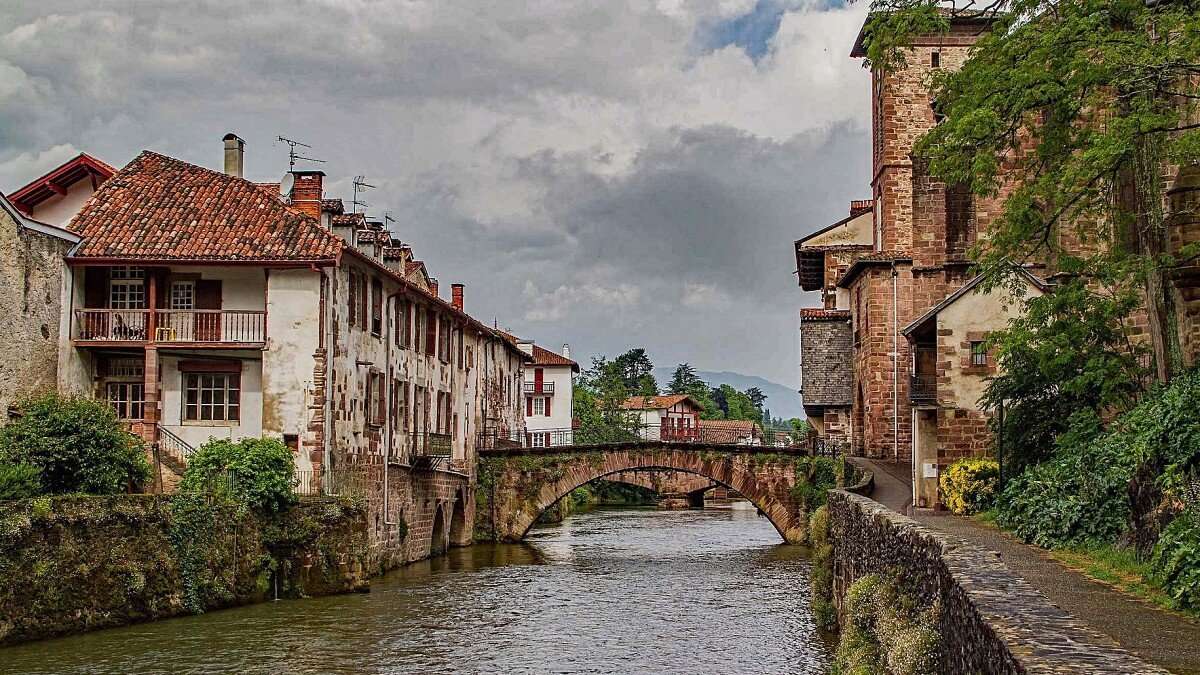
The first kilometres in France stretch out as an endless expanse of green meadows and pastures. Saint Jean Pied de Port strikes you with its renowned historic centre, and the stream flowing through it adds a distinctly charming touch. You feel as though you're in one of those idyllic, almost bucolic landscapes.
Around you, the mountains don't seem terribly high. Perhaps it's the gentleness of their curves that leads us to underestimate their height and, above all, their hidden dangers. Moreover, all those people who, like you, will set out the following day bring an unprecedented energy and the awareness that, with proper pacing and without forgetting to listen to yourself, you can absolutely do this!
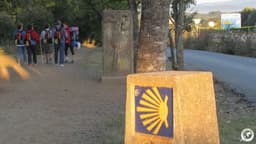
The walk begins with an uphill climb, a slow, gentle, continuous ascent. We walk on asphalt for a few kilometres, until the road gives way to an earth and grass trail. The bikes begin to struggle, and on steeper sections, we see cyclists dismount and push their bikes uphill. The landscapes are completely dominated by the green mantle covering all the surrounding mountains and by the intense, deep blue of the sky. Grazing animals keep us company with our steps, while beautiful, solitary hawks circle above our heads.
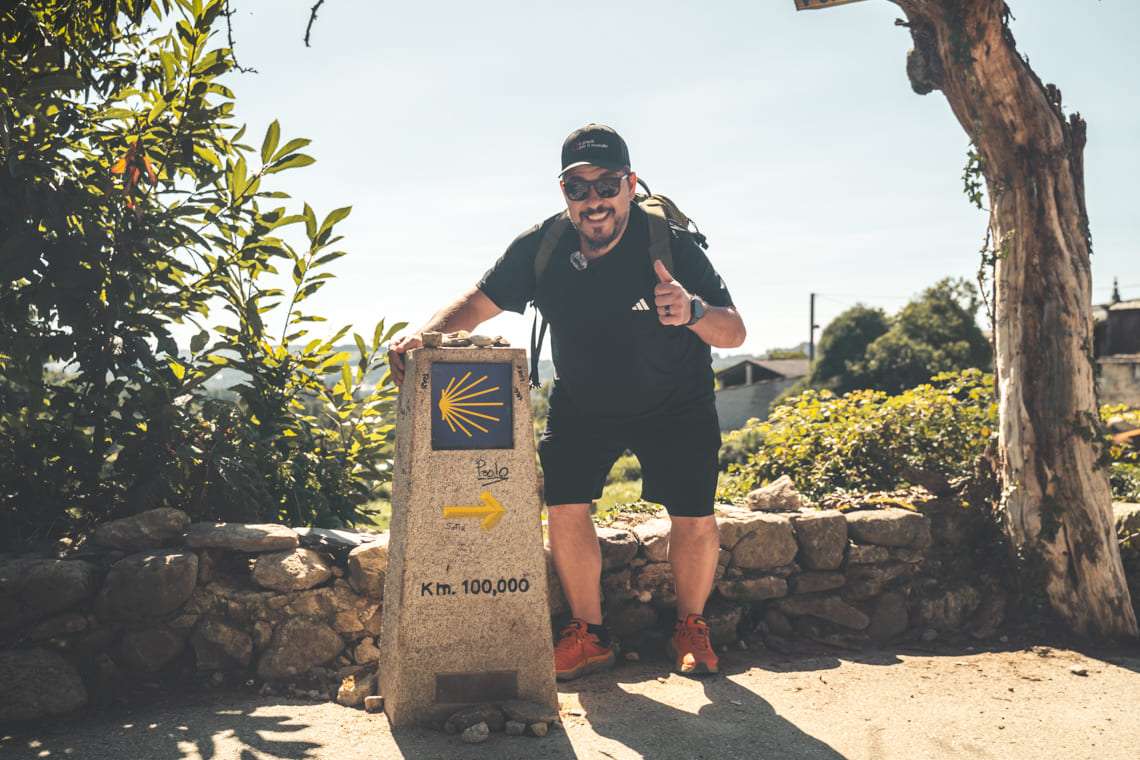
In the middle of the first stage, a stone marker alerts us that we're crossing the border and entering Spain, the region of Navarre. From here on, the landscape changes; forests replace the smooth green French meadows, and houses, from mountain chalets, become more rural constructions. Thus you arrive, surrounded by dense woodland, right before the magnificent Collegiate Church of Roncevaux, beside which we still find today, after centuries, a welcoming albergue for pilgrims.
You take a bunk, shower off, wash the dirty clothes from the day, chat with some new friends, scribble a few lines in your travel diary, take a walk around the village, and perhaps, if you're Christian, attend the pilgrim mass and receive a blessing. Fatigue begins to set in. The next day you set off again for another fantastic adventure.
Saint Jean Pied de Port, Roncevaux and Zubiri: What to See Along the Opening Stages of the Way of Saint James
Walking the Way of Saint James from Saint Jean Pied de Port is an experience truly rich in emotion, allowing you to immerse yourself in and discover the history of peoples and lands. No encyclopedia would suffice to describe its richness and convey its complexity. That's why I wanted to offer just a glimpse of the places you'll traverse, leaving a more detailed description for a dedicated article titled "Things to See on the Way of Saint James."
Let's start with the beautiful Saint Jean Pied de Port. Forever linked to the Way of Saint James like its neighbour Roncevaux, it shares with it a common past dating to the medieval period, transformed in the present into a shared connection with Basque culture and community. It's no coincidence that both display the same emblem on their flags: chains symbolizing the victory of the King of Navarre over the Caliph Miramolin during the Christian Reconquest in 1212. At Roncevaux you can see these chains in person, preserved in the beautiful Collegiate Church.
But their history isn't only medieval. The Low Route, for example, is closely linked to an event that occurred in 778, featuring the legendary figures of Charlemagne and Roland. And then there's Napoleon, who in 1808 gave his name to today's High Route. In short, so much, so very much history, almost always intertwined with a strong thread of mystery and legend.
Consider for example Zubiri and its Bridge of Madness, so called because it was believed to cure animals of rabies if they circled around it three times. The reason lies in a curious legend!
How to Reach Saint Jean Pied de Port
Reaching Saint Jean Pied de Port isn't straightforward. Being a small village in the French Pyrenees, it's connected to nearby cities by train and bus. Those coming from far away, like an Italian for example, must find "combined" solutions linking plane, train, and car. In the article "How to Reach Saint Jean Pied de Port" you'll find several complete solutions with costs and departure locations.
Where to Get Your Credential at Saint Jean Pied de Port
As the official starting point for the Way of Saint James, SJPDP has an efficient pilgrim office right in the heart of its historic centre, at Rue de la Citadelle, 55. Here you can purchase the official Camino credential for €2.
Walking the full Camino Francés with everything arranged
We run it self-guided over 36 days and 35 nights, 800 km and 33 stages, from EUR 4,480: Camino de Santiago from Saint Jean Pied de Port. Places to stay chosen one by one, bags moved between stages, credencial, roadbook and support throughout.
Share
apiediperilmondo by wayure
New articles on walks, trekking and hiking trips. Free, no spam.
Co-fondatore di Apiediperilmondo e Wayure | Camminatore, imprenditore, costruttore
A hundred times the Camino de Santiago. Eight times the Kumano Kodo. Dozens of times the coasts of Portugal, then the Via Francigena, Ireland, England, Normandy: every walk you find here I have done on my own two feet, in every season, alone and with private groups and companies. I do not offer a single step I have not walked.
Profilo e tutti gli articoli di Vincenzo