Long-distance walks in Italy: which route is right for you
Italy has thirteen multi-day walking routes that match the Camino for landscape and history, and almost nobody on them.

In this article
Most people who walk in Italy have already walked the Camino. That is the usual order, and it explains the question we get most often: what comes after Santiago?
Italy has thirteen multi-day routes that hold their own for landscape and history, and on which you will meet five people on a Wednesday in May rather than five hundred. They are not a consolation prize for the Camino. They are a different thing, with different strengths and different gaps.
We are based in Santiago de Compostela and we run both, so take that comparison as it is meant: practical, not patriotic.
All the routes compared
| Route | Days | Stages | km | miles | Difficulty | From |
|---|---|---|---|---|---|---|
| Via del Sale, Varzi to Portofino | 5 | 4 | 85 | 53 | strenuous | 485 € |
| Via degli Dei in 5 stages | 6 | 5 | 130 | 81 | strenuous | 585 € |
| Cammino Materano, Bari to Matera | 8 | 7 | 170 | 106 | moderate | 705 € |
| Via degli Dei in 7 stages | 9 | 7 | 130 | 81 | moderate | 750 € |
| Franciscan Way of the Marche | 10 | 8 | 170 | 106 | moderate | 845 € |
| Via Francigena, Siena to Bolsena | 6 | 4 | 130 | 81 | moderate | 1.020 € |
| Via Francigena, Lucca to Siena | 7 | 6 | 132 | 82 | moderate | 1.140 € |
| Way of St Francis, La Verna to Assisi | 11 | 9 | 190 | 118 | strenuous | 1.245 € |
| Via Francigena, Bolsena to Rome | 8 | 7 | 145 | 90 | moderate | 1.345 € |
| Way of St Francis, Assisi to Rome | 15 | 14 | 190 | 118 | moderate | 1.845 € |
| Via Francigena, Siena to Rome | 13 | 12 | 275 | 171 | moderate | 1.995 € |
| Way of St Francis, Città di Castello to Assisi | 7 | 5 | 110 | 68 | moderate | on request |
| Grande Traversata Elbana, Elba | 5 | 3 | 60 | 37 | strenuous | on request |
Prices are per person sharing a double room and cover accommodation, luggage transfer between stages, a roadbook and support throughout. Flights are not included.
The Via Francigena: the road to Rome
This is the Italian route with the longest paper trail. In 990 Archbishop Sigeric of Canterbury wrote down his 79 stages on the way home from Rome, and that list still defines the course.
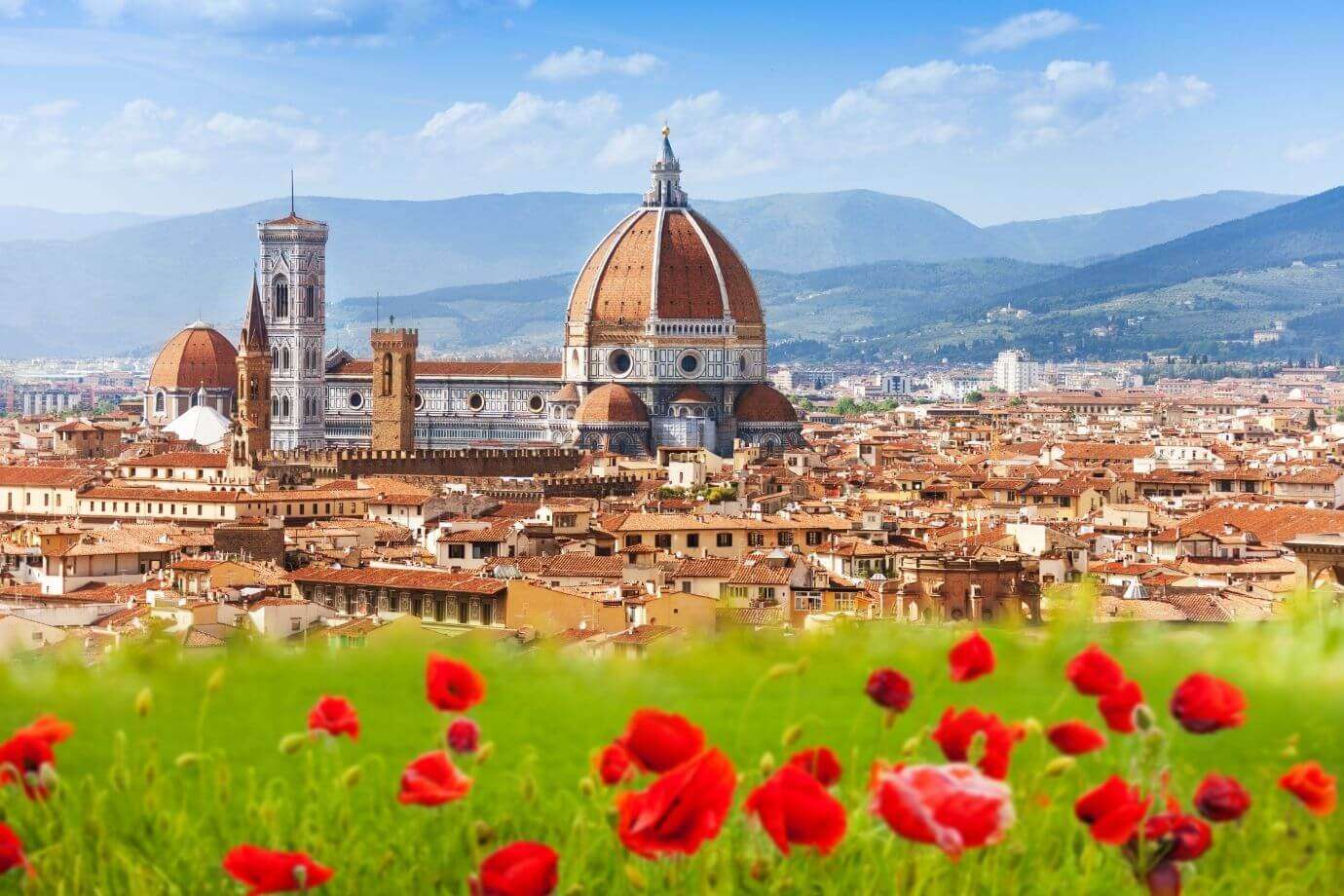
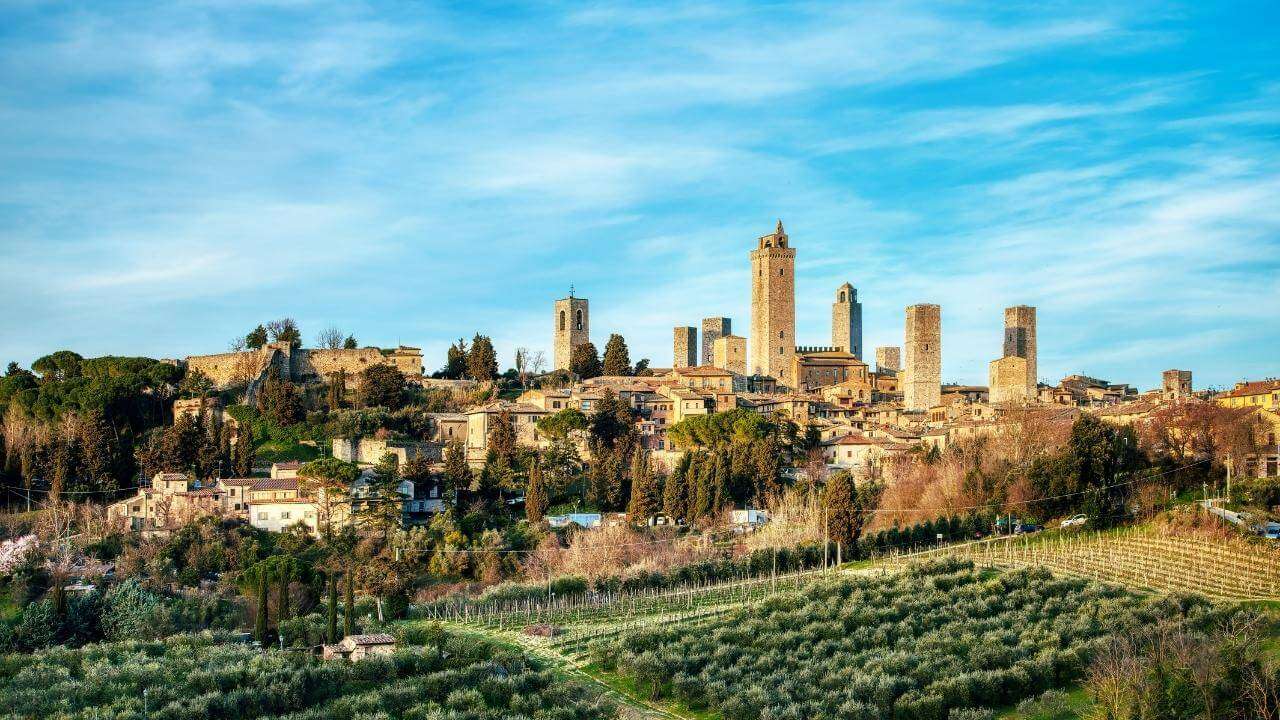
Lucca to Siena is 132 km through the hills of the Val d'Elsa, past the towers of San Gimignano and through Monteriggioni, which Dante put in the Inferno. Siena to Bolsena turns harder and emptier: the Val d'Orcia, then Lazio. Bolsena to Rome is the final 145 km, and walking them earns you the Testimonium in the Vatican, the Roman equivalent of the Compostela.
There are full guides to Lucca to Siena, to Siena to Rome and to the last 100 km into Rome.
The Way of St Francis: Umbria
If you want the Italian route that feels closest to the Camino, this is it. It links the places where Francis of Assisi lived and crosses Umbria, the green heart of the country.
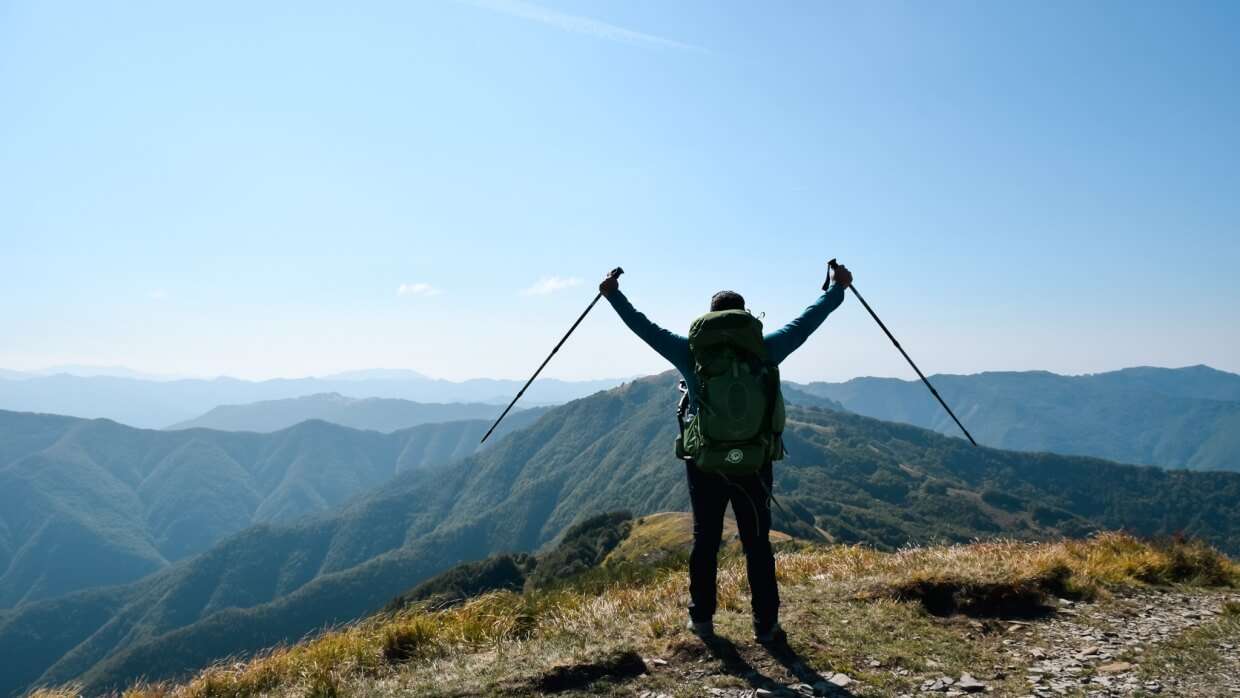
The northern section from La Verna to Assisi is the finest and the hardest: 190 km along Apennine ridges, starting from a monastery at 1,100 metres. The southern half from Assisi to Rome is longer in days but gentler underfoot, and ends in the Vatican. There is also the Franciscan Way of the Marche, Assisi to Ascoli Piceno, through a region almost no foreign walker sees.
The northern section is described in detail in La Verna to Assisi, and the Marche route in the Franciscan Way of the Marca.
Via degli Dei: Bologna to Florence
130 km across the Apennines on a line that in places follows the Roman Flaminia Militare. In several stretches the original paving from the second century BC is still there, uncovered in the woods.
The name comes from the peaks it crosses: Monte Adone, Monzuno, Monte Venere. It has more ascent per kilometre than anything else on this list. In five stages it is a sporting proposition. In seven it becomes a walk you enjoy.
All the stages are set out in the Via degli Dei guide.
Cammino Materano: Puglia and the Sassi
Bari to Matera, 170 km across Puglia and Basilicata, over limestone plateaus, through olive groves and past trulli. At the end stands Matera, a city carved into rock, called the shame of Italy until the 1950s and a UNESCO site today.
This is the south, and it behaves differently: thinner walking infrastructure, real heat, and hospitality you will not expect. Do not walk it in high summer. The route is covered in Bari to Matera.
Two short routes for one long week
The Via del Sale runs in four stages from Varzi in Lombardy down to Portofino on the Ligurian coast. It is the old salt road between the Po plain and the sea, 85 km, and the moment the Mediterranean opens up below you after days in the Apennines is hard to beat.
The Grande Traversata Elbana crosses the island of Elba from west to east, 60 km along the ridge with sea on both sides. Short, not easy. Details in the Grande Traversata Elbana guide.
Which one suits you
Three questions usually settle it.
How much time do you have? Under a week points to the Via del Sale, the Via degli Dei in five stages, or Elba. A week to ten days opens up Tuscany and the Cammino Materano. Two weeks or more is what the Via Francigena from Siena to Rome and the Way of St Francis from Assisi to Rome need.
How do you feel about climbing? The Via degli Dei, the Via del Sale and the La Verna to Assisi section involve serious ascent. The Tuscan Francigena and the Cammino Materano are hilly but never alpine.
Do you want an arrival that means something? Then walk to Rome. The last 100 km from Bolsena earn the Testimonium, and St Peter's Square after eight days on foot is not the same square you reach by coach.
How it differs from the Camino
This is where we should be straight with you, because most of our English-speaking guests come from Santiago.
There are far fewer walkers. On the Francigena in May you may pass five people in a day; on the Camino Francés, five hundred. If what you loved about the Camino was the community, the evenings in albergues, the same faces reappearing, you will not find it in Italy.
The infrastructure is thinner. There is no continuous network of pilgrim hostels, waymarking varies in quality from section to section, and the gap between two places to sleep can be longer than you would like. These routes need planning in a way the Camino Francés no longer does.
What you get in return is what the Camino has largely lost: stretches where it is only you and the landscape, and villages where you are treated as a guest rather than as traffic.
When to go
April to October, with two warnings.
July and August are too hot for multi-day walking in central and southern Italy. On the Tuscan Francigena, and far more so on the Cammino Materano, midday temperatures pass 35 degrees and there is little shade.
The best months are May, June, September and early October. In Umbria and Tuscany October is often the finest month of all: clear light, the grape harvest, empty paths.
Getting there
Fly into Florence, Pisa or Bologna for Tuscany and Umbria, into Rome for the final Francigena stages, into Bari for the Cammino Materano. Bologna is the start of the Via degli Dei and the easiest of the lot to reach by train from elsewhere in Europe.
Walking with the logistics handled
We run these routes self-guided. You walk at your own pace, with no group and no guide, but the accommodation is chosen one place at a time and booked, your bag is moved between stages, and you carry a roadbook with GPS tracks plus a number that someone answers in the evening.
Self-guided does not mean alone: who you walk with is your choice, and about a third of our guests walk solo by design.
In ten years we have looked after more than 30,000 walkers, and we have walked the routes on this list ourselves.
If you want to see what yours could look like, tell us here and we will come back with a plan built around your dates.
Frequently asked questions about walking in Italy
What is Italy's best known long-distance walk?
The Via Francigena, the medieval pilgrim road from Canterbury to Rome. In Italy most people walk the Tuscan section from Lucca or Siena.
Is there an Italian equivalent of the Compostela?
Yes, the Testimonium. You collect it in the Vatican after walking at least the final 100 km of the Via Francigena, so from Bolsena or Viterbo, with stamps in your pilgrim passport.
Which Italian route is the hardest?
By ascent per kilometre, the Via degli Dei in five stages and the Via del Sale. By total effort, the Way of St Francis from La Verna to Assisi: 190 km along Apennine ridges.
Which route is best for a first long-distance walk?
The Via Francigena from Lucca to Siena. Six stages, no alpine terrain, reliable services and somewhere good to eat every evening.
How busy are the Italian routes?
Far quieter than the Camino. A day in May on the Francigena might bring a handful of other walkers; the Camino Francés brings hundreds.
When is the best time to walk in Italy?
May, June, September and early October. July and August are too hot in central and southern Italy, especially on the Cammino Materano and in Tuscany.
Do I need a pilgrim passport?
For the Testimonium on the Via Francigena, yes. On the other routes it is not required, though many walkers collect the stamps anyway.
How fit do I need to be?
You need to be used to walking, not athletic. A few outings of 15 to 20 km with a pack in the weeks beforehand will do. The Via degli Dei and the Via del Sale deserve a little more preparation.
Share
apiediperilmondo by wayure
New articles on walks, trekking and hiking trips. Free, no spam.
Co-fondatore di Apiediperilmondo e Wayure | Camminatore, imprenditore, costruttore
A hundred times the Camino de Santiago. Eight times the Kumano Kodo. Dozens of times the coasts of Portugal, then the Via Francigena, Ireland, England, Normandy: every walk you find here I have done on my own two feet, in every season, alone and with private groups and companies. I do not offer a single step I have not walked.
Profilo e tutti gli articoli di Vincenzo