Via Francigena, the last 100 km: from Bolsena to Rome with the Testimonium
The last 100 km of the Via Francigena: from Bolsena to Rome in 6 stages, the Testimonium at St Peter's and alternative starting points if you have more time.

In this article
The Camino de Santiago has Sarria. The Via Francigena has Bolsena. Same idea: the final stretch of the pilgrimage, the 100 km threshold on foot, and at the end a document with your name on it. There it's the Compostela, here the Testimonium, and waiting at the finish not a cathedral but St Peter's.
The difference is that everyone knows about Sarria, and almost no one knows about Bolsena. So the Francigena hands you what you have to go looking for on the Camino Francés: quiet roads, real villages, the Italy you never see from the motorway. We've walked it several times. Here's how the final stretch works.
The Testimonium and the 100 km rule
The Testimonium is the certificate of the pilgrimage to Rome: St Peter's Basilica issues it to anyone who walks at least the last 100 km of the Via Francigena on foot, documented by the stamps on the pilgrim credential. Starting from Bolsena you cover roughly 120: you clear the threshold with room to spare, and the whole journey fits comfortably into a week.
The stages from Bolsena to Rome
Six days of walking through the Tuscia, one of the most underrated corners of Italy:
- Bolsena → Montefiascone: you leave the volcanic lake behind, climbing toward the Rocca dei Papi, with a view that takes in the whole crater.
- Montefiascone → Viterbo: stretches of the ancient Roman Cassia road as far as the city of the Popes and its medieval quarter.
- Viterbo → Vetralla: woods and farmland of the deep Tuscia.
- Vetralla → Sutri: on to one of the oldest towns in Italy, with its amphitheatre carved out of the tufa rock.
- Sutri → Campagnano di Roma: the Roman countryside starts to make itself felt.
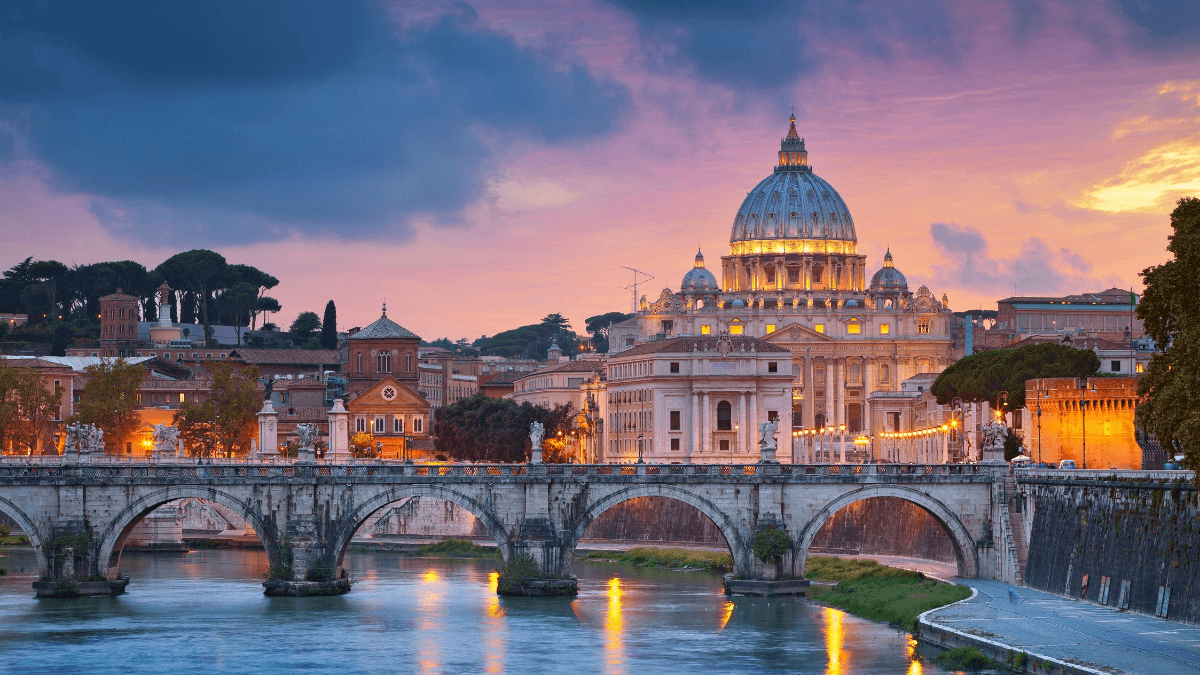
- Campagnano → La Storta → Rome: the entrance into Rome from Monte Mario, with St Peter's appearing all at once. An arrival worth the whole journey on its own.
If you have more time
The Italian Francigena is a 1,000 km route, and every stretch has a character of its own:
- From Siena to Rome: 275 km over two weeks, the grand journey through the Val d'Orcia and the Tuscia.
- From Siena to Bolsena: 130 km in the Val d'Orcia, through San Quirico, Radicofani and Acquapendente.
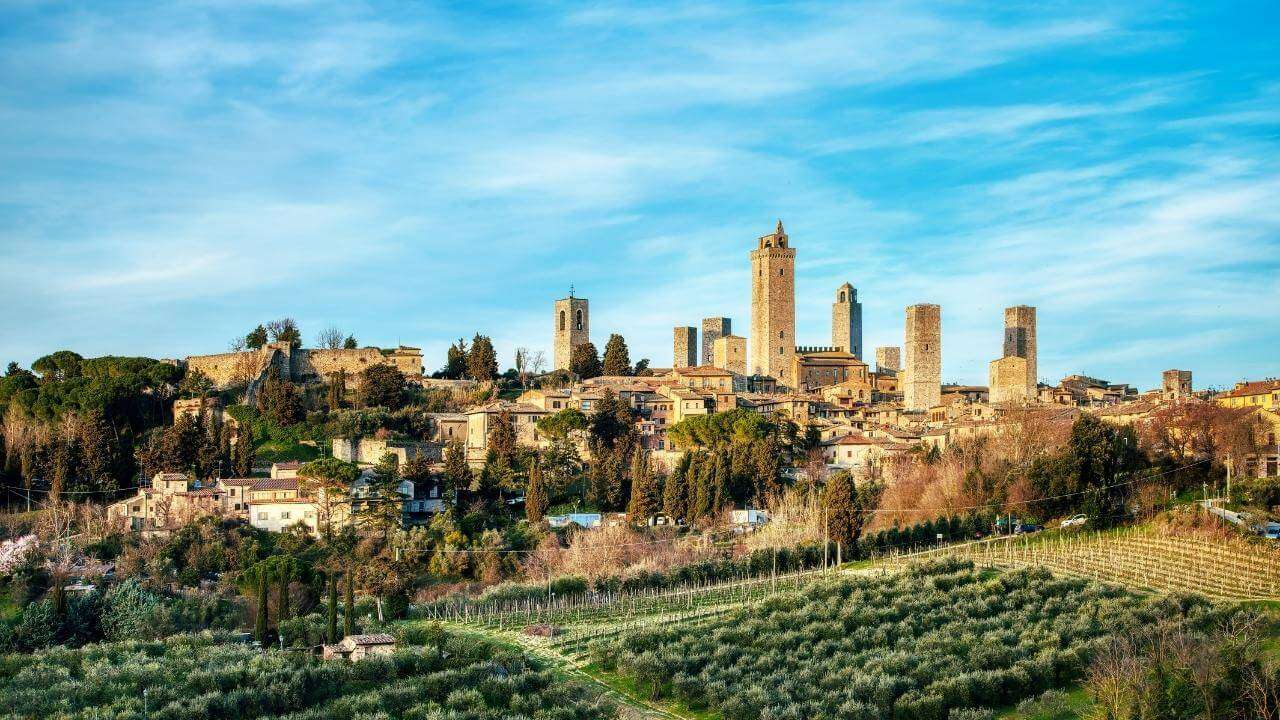
- From Lucca to Siena: the stretch of hilltop towns, with San Miniato, San Gimignano and Monteriggioni.
Francigena or Santiago: what changes in the last 100 km
On the Camino de Santiago from Sarria you'll find the most well-worn network of services in Europe and the energy of pilgrims from all over the world. On the Francigena you'll find the silence, the Etruscan and medieval villages, the cooking of the Tuscia, and the feeling of arriving at St Peter's. Neither one is better: they're two different journeys. People who've done both usually can't say which they prefer.
How we build it for you
Hand-picked places to stay in the villages at the end of each stage, luggage transfer, GPS tracks, credential and daily support: the format of our journeys, organised but without groups, brought to the Francigena. Antonella puts it this way: "We felt guided by the hand throughout the whole Camino. The advice we were given turned out to be honest and invaluable."
Tell us how many days you have: we'll tell you where to start, from Bolsena or further back.
Frequently asked questions
Where do you start for the last 100 km of the Via Francigena?
From Bolsena: roughly 120 km and six walking stages to St Peter's, above the 100 km threshold required for the Testimonium.
What is the Testimonium?
The certificate that attests to the pilgrimage to Rome, issued to anyone who walks at least the last 100 km with the credential stamped along the way.
How many stages does it take from Bolsena to Rome?
Six days of walking, plus the arrival and the journey home: a full week of travel.
When should you walk the Francigena toward Rome?
From March to June and from September to November. Summer in the Tuscia is hot: you set off early and walk in the cool hours.
Is the Via Francigena waymarked?
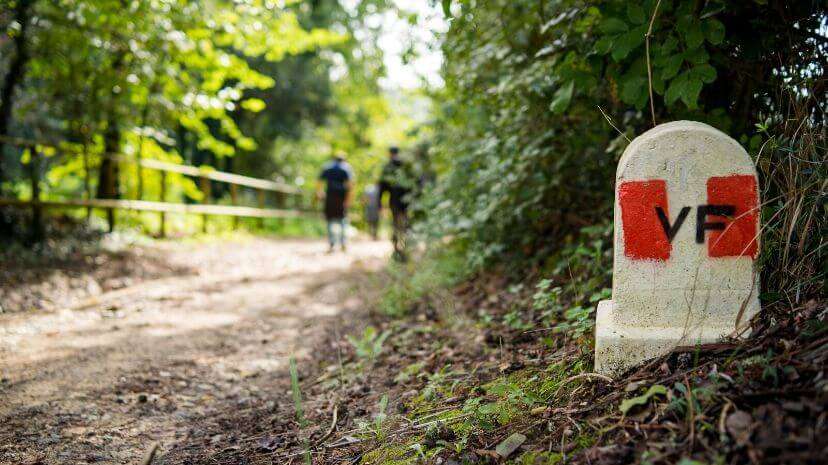
Yes, with the official white and red pilgrim signage. On our journeys we add GPS tracks and a roadbook, so navigation is never something you have to worry about.
Share
apiediperilmondo by wayure
New articles on walks, trekking and hiking trips. Free, no spam.
Co-fondatore di Apiediperilmondo e Wayure | Camminatore, imprenditore, costruttore
A hundred times the Camino de Santiago. Eight times the Kumano Kodo. Dozens of times the coasts of Portugal, then the Via Francigena, Ireland, England, Normandy: every walk you find here I have done on my own two feet, in every season, alone and with private groups and companies. I do not offer a single step I have not walked.
Profilo e tutti gli articoli di Vincenzo