How to organise the Kumano Kodo: a practical guide from people who walk it
Organising the Kumano Kodo: why it is hard to do alone, a 7-day itinerary on the Nakahechi route, when to go, and the Dual Pilgrim.

In this article
The Kumano Kodo is the Japanese twin of the Camino de Santiago: a thousand-year-old pilgrimage through cedar forests and shrines, a UNESCO World Heritage site, officially twinned with the Camino through the Dual Pilgrim programme. Walking it is simple. Organising it is not.
That is not a clever line: it is why so many people reach it after weeks of trying. The lodgings along the route are tiny family inns with four or five rooms, they fill up months ahead, and many take bookings only in Japanese. We walk it and we build it, year after year. Here is what you need to know.
What the Kumano Kodo is
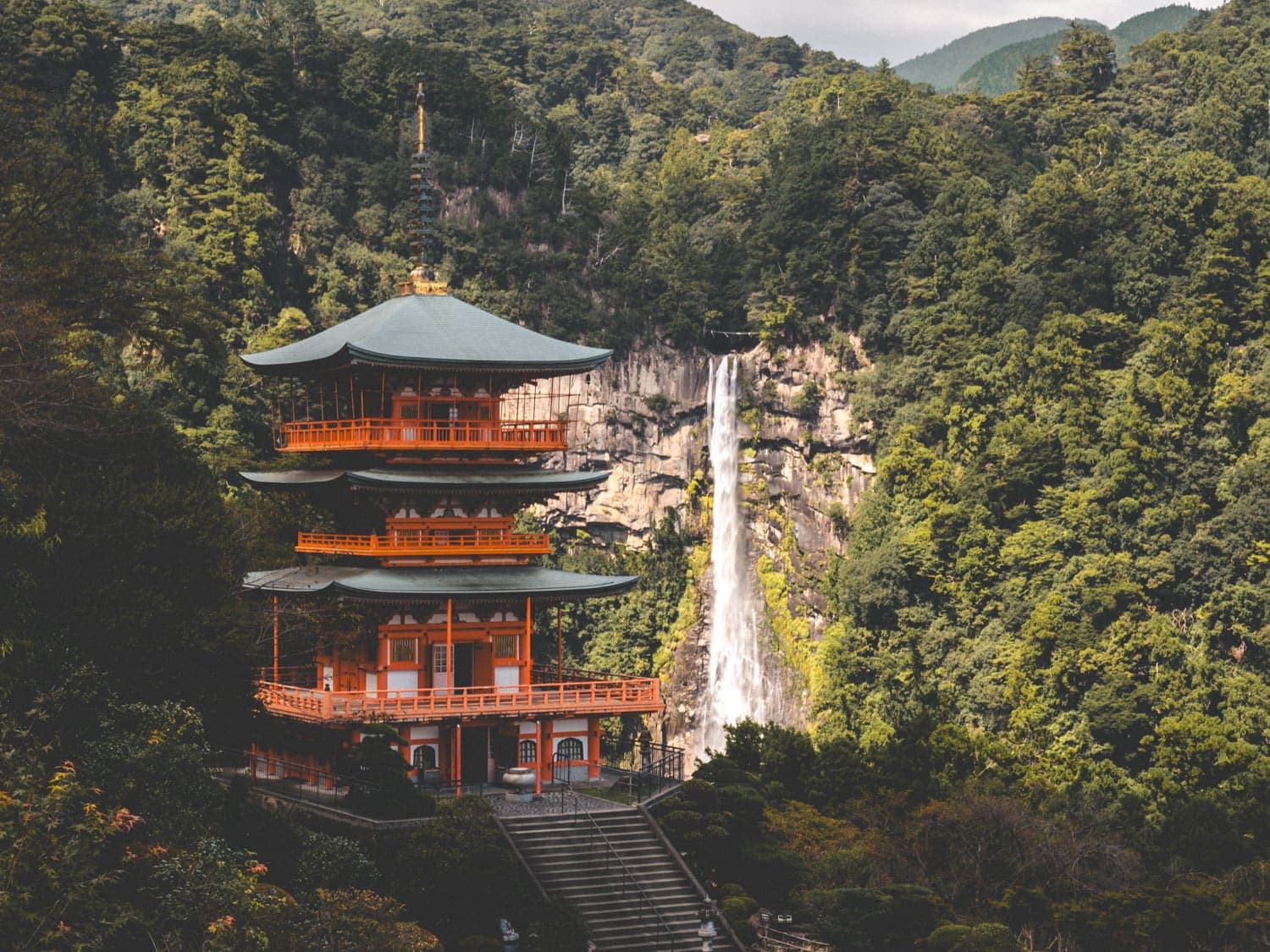
A network of ancient pilgrimage routes on the Kii Peninsula, south of Osaka. The classic route is the Nakahechi, the "imperial route": 75 km from Tanabe through cedar woods, rural villages and the great Kumano shrines, all the way to Japan's tallest waterfall and the Seiganto-ji temple.
Why organising it alone is hard
The lodgings. There are no hotels along the Nakahechi: there are family-run minshuku and ryokan, few beds, dinner and breakfast included because there is nothing else in the village. They fill up months ahead, and one wrong night breaks the whole chain of stages.
The language. Many inns answer only in Japanese, some only by phone. Local booking systems help, but the best beds go first.
The logistics. Luggage to move between villages linked by local buses with bare-bones timetables, connections to plan to the minute, and the return from the coast after the Nachi waterfall.
This is the journey where organisation counts for most: once it is solved, the walk is pure wonder.
The itinerary: 7 days, 75 km
You arrive in Tanabe and step onto the route through its main gateway: the first day climbs steeply through cedars and ancient shrines, with views over the Hatenashi valley. Then come days through mountain forests and rural villages, then the longest and toughest stage, among rivers and tea fields, leading to the first great shrine. The grand finale crosses the forest to the Nachi shrine: the pagoda, the waterfall, the Seiganto-ji temple. Six nights, five real walking days.
The Dual Pilgrim: if you have already walked the Camino
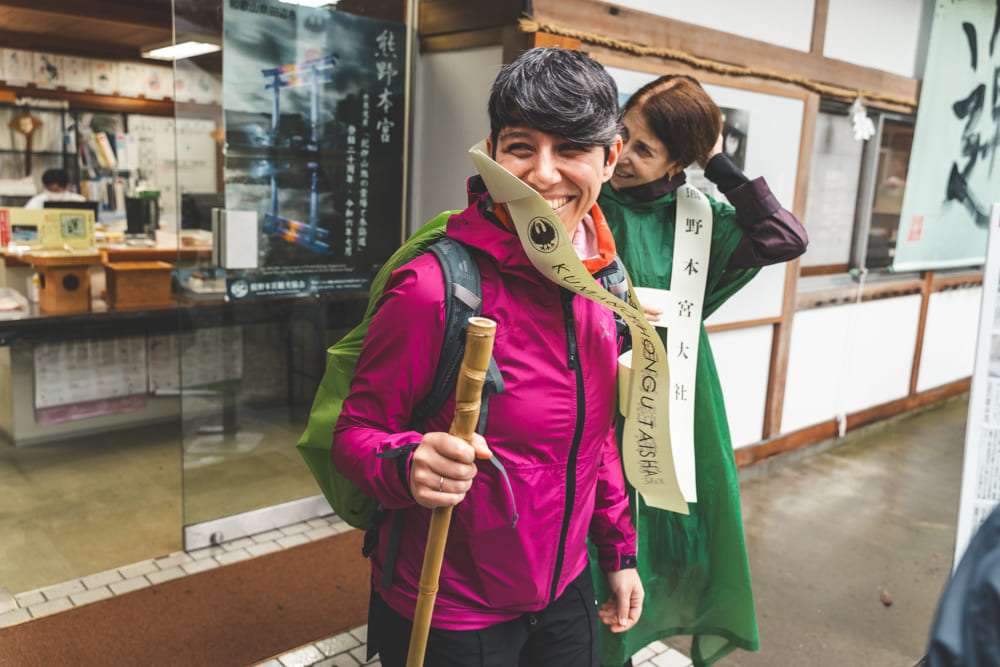
The Kumano Kodo and the Camino de Santiago are twinned: anyone who completes both becomes a Dual Pilgrim, with official registration in Tanabe and, for those who wish, the Taiko drum ceremony at the shrine. If the Camino left something in you, this is the natural sequel.
When to go
Spring and autumn: the cherry blossom between late March and April, the colours of the maples between October and November. The Japanese summer is hot and humid, winter is possible but the days are short. Beds in the inns must be locked in well ahead in the good seasons.
If you want more of Japan
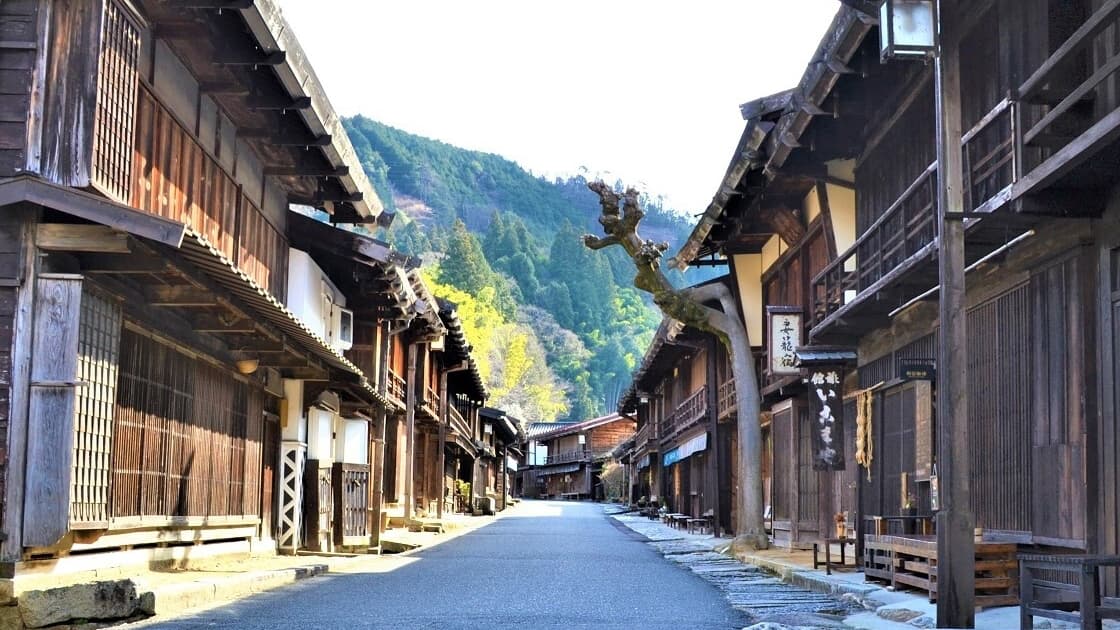
The walk fits into the rest of the country: our 12-day journey pairs the Kumano Kodo with Osaka, Hiroshima, Miyajima, Koyasan, Kyoto and Nara, with stays in traditional ryokan with onsen. As an alternative there is the Nakasendo, the samurai route in the Kiso valley, among the post towns of Magome, Tsumago and Narai.
How we build it for you
We book the right inns at the right moment, arrange luggage and transfers, prepare tracks and a roadbook, and stay reachable every day even across the time difference. The format is the one behind our organised journeys without groups: you walk at your own pace, in Japan. Monia sums it up better than we can: "The organisation was flawless, and all I had to worry about was managing my mind and body."
Tell us when you would like to leave: we will tell you whether the right beds are still there and build the journey.
Frequently asked questions
How long is the Kumano Kodo?
The classic Nakahechi route is 75 km: a 7-day journey, with five walking days from Tanabe to the Nachi waterfall.
How hard is it?
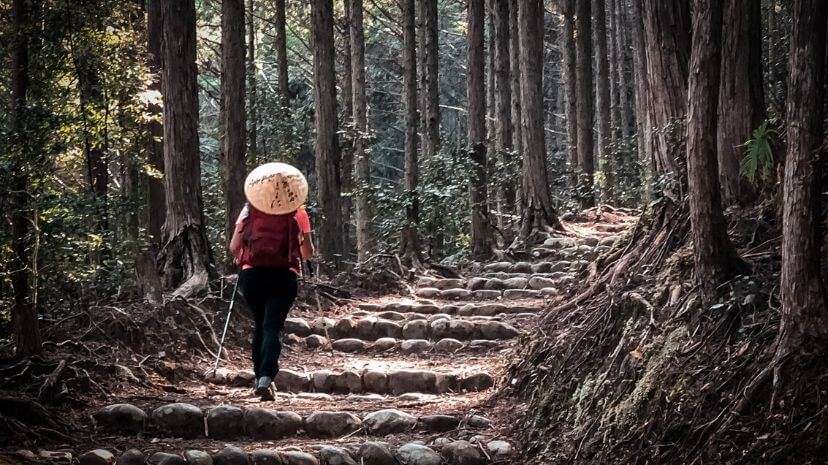
It is a mountain walk: steep climbs, stone staircases, ground that is slippery at times. The stages are contained, though, and anyone who walks regularly handles it well.
Where do you sleep along the Kumano Kodo?
In family-run minshuku and ryokan in the villages, with Japanese dinner and breakfast included and often an onsen. They are small and must be booked months ahead.
Do you need to speak Japanese?
Not to walk: the signage is bilingual. To book the lodgings, often yes, and that is the main reason it pays to leave with a journey built by people who do it for a living.
What is the Dual Pilgrim?
The official recognition for anyone who completes both the Camino de Santiago and the Kumano Kodo, with registration in Tanabe and a dedicated ceremony.
Share
apiediperilmondo by wayure
New articles on walks, trekking and hiking trips. Free, no spam.
Co-fondatore di Apiediperilmondo e Wayure | Camminatore, imprenditore, costruttore
A hundred times the Camino de Santiago. Eight times the Kumano Kodo. Dozens of times the coasts of Portugal, then the Via Francigena, Ireland, England, Normandy: every walk you find here I have done on my own two feet, in every season, alone and with private groups and companies. I do not offer a single step I have not walked.
Profilo e tutti gli articoli di Vincenzo