Which Camino de Santiago to choose: a guide from people who have walked them all
Seven Caminos de Santiago, one that's right for you: French, Portuguese, Primitivo, English, Northern, Finisterre. How to choose based on your time, fitness and character.

In this article
The French Way isn't "the Camino de Santiago". It's one of the Caminos de Santiago. There are at least seven that reach the cathedral, and most people pick the French one only because it's the only one they've heard of.
We've walked them all, more than once. Across over 90 journeys to Santiago we've learned something simple: there is no best Camino. There is the right Camino for you, at this point in your life. This guide is here to help you find it.
The first real question: how many days do you have
Before we talk about landscapes and atmosphere, there's one concrete fact: time. To receive the Compostela you have to walk at least the last 100 km, and each Camino has its own "from 100 km" starting point:
- French from Sarria: 5 stages, by far the most chosen
- Portuguese from Tui: 5 stages, quieter
- Primitivo from Lugo: the most silent
- English from Ferrol: the only one you can walk in full in a week
If you have a week, the choice comes down to these four. We compared them in detail in our guide to the last 100 km of the Camino de Santiago. If you have two weeks or more, everything else opens up.
French Way: the route of people
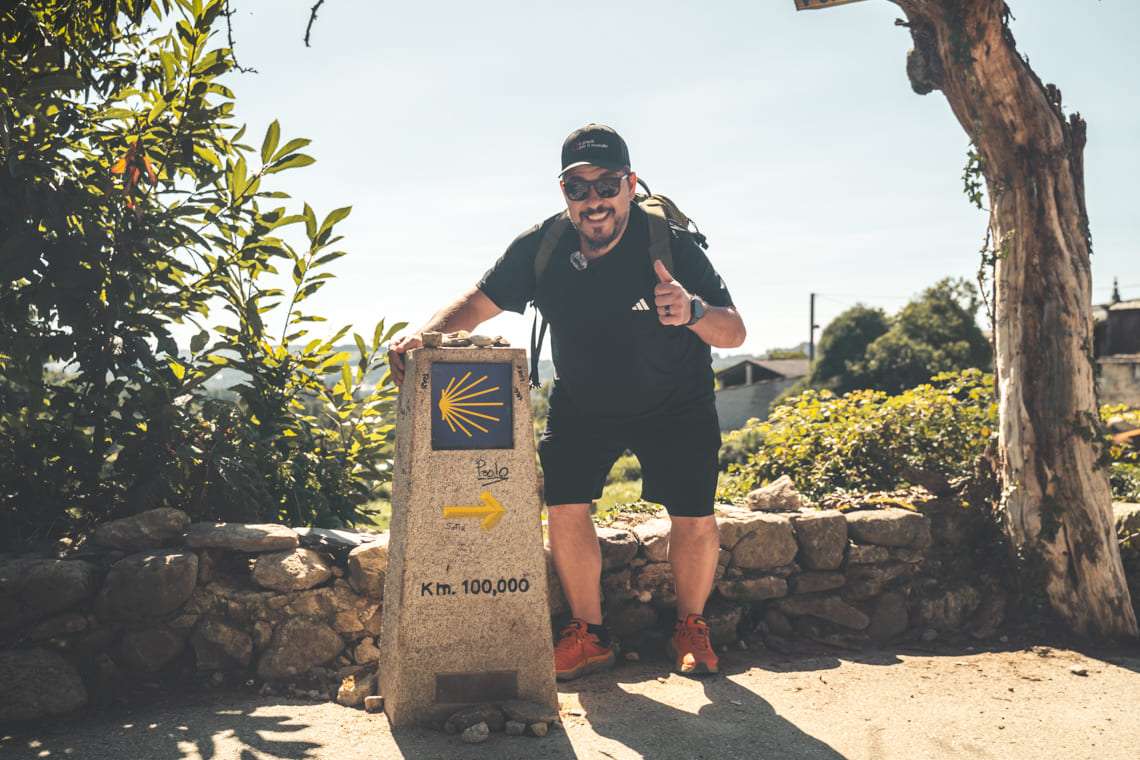
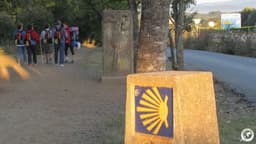
It's the Camino of the yellow arrows you've seen in the films, of villages that live for pilgrims, of friendships that begin over dinner. If you're after the classic Camino experience, with its energy and its network of services, the French Way is the answer.
It has one flaw: from Sarria onwards, in high season, you can feel it's the main route. For some that's the beauty of it, for others it isn't.
How to start: from Sarria if you have a week, in the easy version over 9 stages if you prefer shorter days, from León if you have two weeks, from Saint Jean Pied de Port if you want the whole Camino, 800 km across Spain.
Portuguese Way: the route of the ocean
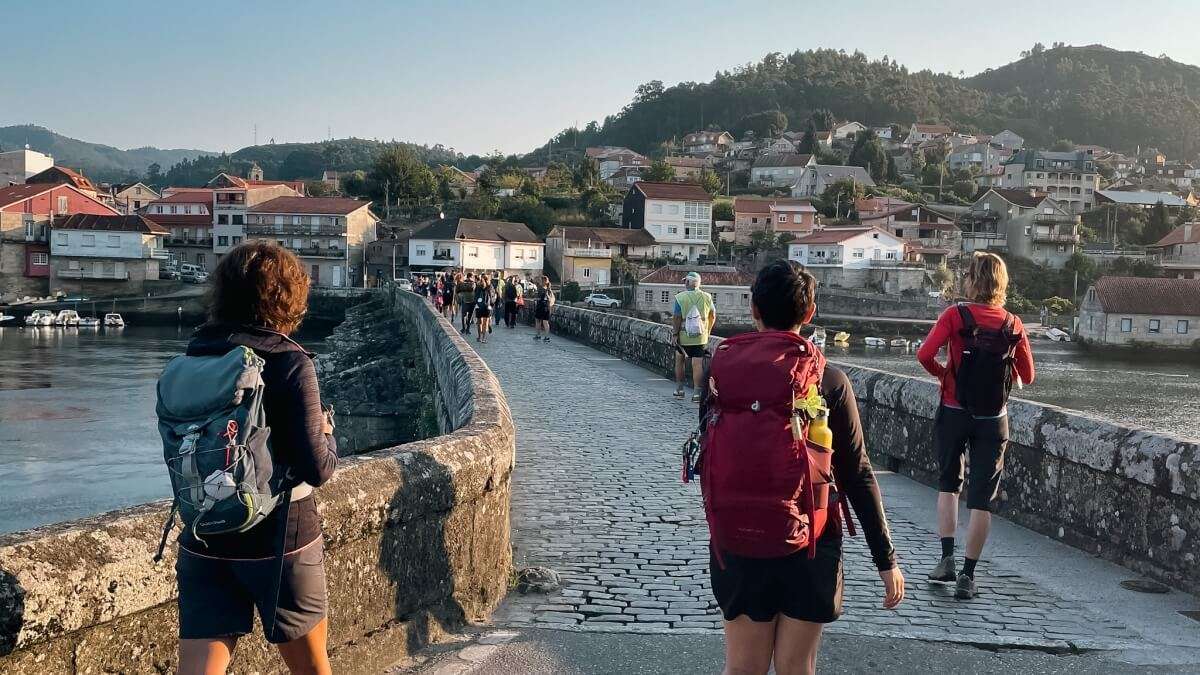
The Portuguese is the second most walked Camino, but it has a completely different character: gentler, greener, and on the coastal variant you walk beside the Atlantic for days.
Bruna walked it with us along the coast: "I finished my Portuguese coastal camino, through places of breathtaking beauty. The ocean entered my heart and will stay there forever. The preparation of the camino was impeccable: thank you."
How to start: from Tui for the last 100 km, from Vigo for the short coastal variant, from the coast at Porto if you have two weeks and want the ocean from day one. We've dedicated a full guide to setting off from Porto, coast or inland.
Primitivo Way: the route of silence
The Primitivo is the original Camino, the one King Alfonso II walked in the 9th century. It crosses the mountains of Asturias and Galicia: it's the most physically demanding and the most rewarding for anyone after nature and few crowds.
If your legs are trained and you want the Camino without its crowded version, this is where we send you. From Lugo for the last 100 km inside the Roman walls, from Oviedo for the complete route over two weeks. We've dedicated a guide to the stages of the Primitivo, with the Ruta de los Hospitales.
English Way: short but complete
The English Way from Ferrol has an advantage no other has: in 5 or 6 stages you walk a complete Camino, from the start to the cathedral. Not a piece of a longer route: the whole Camino, the way the pilgrims who landed from the North Sea walked it.
It's the choice for anyone who has a week and wants to be able to say: I walked the whole thing.
Northern Way: the wild coast
The Northern Way follows the Cantabrian Sea between cliffs, beaches and cities like San Sebastián, Bilbao and Santander. It's long, a constant up and down, less serviced than the French: which is exactly why it has stayed authentic.
How to start: from Ribadeo for the final stretch to Santiago, from Bilbao to Santander for the most scenic stretch, from Irun for the whole crossing, over 800 km.
And after Santiago: Finisterre and Muxía
There's a Camino that begins where the others end. From Santiago you can carry on to the ocean, to the "end of the world": it's the epilogue that many wayers describe to us as the most intense stretch of all. You walk it in 3 or 4 days towards Muxía and Finisterre, or you add it to the main Camino, as in the Sarria-Finisterre.
How you really choose
On paper you've read about seven Caminos. In practice the choice comes down to three things: how many days you have, how fit you are, and what you're looking for right now: people, silence, ocean, mountain.
It's the conversation we have every day from Santiago de Compostela, where we've lived for over ten years. The team has walked more than 150 caminos in person and has built the journey for over 30,000 people: tell us your time and your pace, we'll tell you your Camino. Then we build it to measure, organised but without groups, with accommodation, luggage transfer and support.
If budget is a factor, here's how much the Camino de Santiago costs, item by item.
Tell us your time and your pace: we'll reply with the right Camino for you, no obligation.
Frequently asked questions
Which is the most beautiful Camino de Santiago?
There's no single answer: the French wins for atmosphere and encounters, the Portuguese coastal and the Northern for their ocean landscapes, the Primitivo for nature. The most beautiful is the one that suits your time and your fitness.
Which Camino should you choose for your first time?
For most people, the French from Sarria: perfect signposting, services everywhere, the classic Camino atmosphere. Anyone who prefers more calm chooses the Portuguese from Tui.
Which is the easiest Camino?
The French from Sarria in the 9-stage version, with short days, is the most accessible. The Portuguese from Tui also has a gentle profile. If you're setting off after 60, read our dedicated guide.
Which is the least crowded Camino?
The Primitivo and the Northern Way. The English too, outside summer, stays quiet.
Is 100 km enough for the Compostela?
Yes: the cathedral issues the Compostela to anyone who walks at least the last 100 km of a recognised Camino, with the stamps on their credential.
Prefer to go it alone? Our book How to Organise the Camino de Santiago walks you through it step by step, from where to start to your backpack.
Share
apiediperilmondo by wayure
New articles on walks, trekking and hiking trips. Free, no spam.
Co-fondatore di Apiediperilmondo e Wayure | Camminatore, imprenditore, costruttore
A hundred times the Camino de Santiago. Eight times the Kumano Kodo. Dozens of times the coasts of Portugal, then the Via Francigena, Ireland, England, Normandy: every walk you find here I have done on my own two feet, in every season, alone and with private groups and companies. I do not offer a single step I have not walked.
Profilo e tutti gli articoli di Vincenzo