A Piedi Per Il Mondo
Article

Top 5 Treks in England and Wales: Hidden Gems for Walkers

Discover the best kept secrets of British hiking: dramatic cliffscapes, ancient stone walls, emerald valleys, and timeless castles hidden in wild landscapes. These five essential treks will redefine your walking adventures.

AP

A Piedi Per Il Mondo

January 5, 201811 min2,169 wordsUpdated May 27, 2026
#europa#galles#inghilterra#trekking-in-galles#trekking-in-inghilterra
Top 5 Treks in England and Wales: Hidden Gems for Walkers

In this article

England and Wales have always occupied, in the imagination of most people, the image of an extremely cold, damp, rainy country with a difficult language and monotonous, repetitive landscapes. Well, apart from the rain, which greatly influences the culture and environment of these regions, everything else is far from the truth.

The landscape diversity is impressive, as are the historical and cultural attractions and the villages you pass through on foot. The people are extremely welcoming and easy-going, ready to help you in difficult moments and point you in the right direction.

The English are indeed great walkers, and certainly deep connoisseurs of the areas you will be hiking through.

As mentioned before, it is perhaps the climate that is the only weak spot for fully enjoying these places. Winters are cold, and summers, though warm, are humid and prone to rain. What I can tell you is that to walk in these areas you must not be afraid of getting wet! Even in the middle of July, you may find yourself caught in a heavy downpour or soaked by morning fog. After all, without this climate, the grass could never be such an intense and luminous green, and the landscapes never so beautiful and interesting.

The best months to undertake a walking trip in England are obviously those from late spring to September. You can enjoy many hours of daylight, pleasant daytime temperatures and a low risk of rain. Along the coastal paths you might even treat yourself to a refreshing swim, but be warned: water temperatures hover around 10-15 degrees C, considerably lower than the warm Mediterranean waters. Of course, nothing stops you from setting out during the winter months: the landscapes are equally enchanting, and you might be lucky enough to see long beaches completely covered in pristine snow.

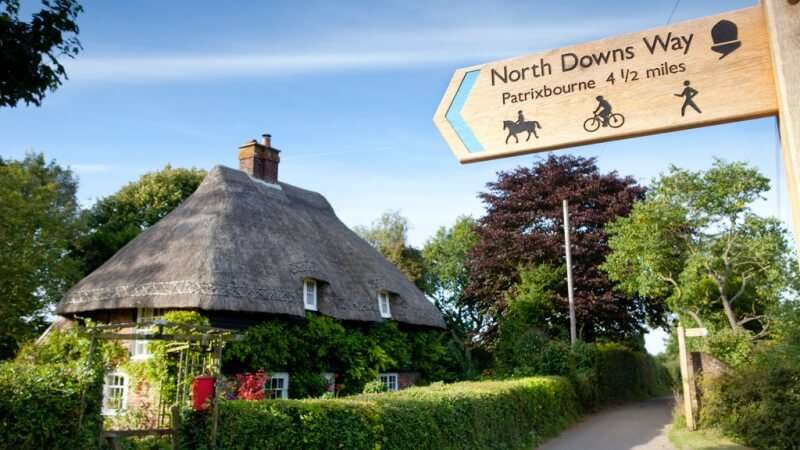
Every trekking route is perfectly marked with dedicated signage:

  • Yellow arrow: indicates a path for walkers only, forbidden to bikes, horses and motor vehicles;
  • Blue arrow: indicates a path that can be used not only by walkers, but also by bikes, horses and motor vehicles;
  • Purple arrow: indicates a path that can be used by walkers, cyclists, horse riders and drivers, but not motor vehicles without the landowner's permission;
  • Red arrow: indicates a path that can legally be used by walkers, horse riders, cyclists, drivers and motor vehicles;
  • Image of an acorn: the symbol of all national long-distance trails.

Among the thousands of kilometres of trails in these areas, I have chosen what I believe are, for scenery and challenge level, the best 5 treks in England and Wales. I am sure that once you have read about them, you will not be able to wait to tick them off your wish list one by one.

1. North Downs Way

trekking in england

245km long, the North Downs Way is a wonderful trek in England that runs south of London, between the renowned towns of Farnham, Canterbury and the White Cliffs of Dover. There are no particular difficulties, and it can comfortably be completed in about ten days, averaging just 20-24 km per day.

The proximity to London makes these areas easily reachable by public transport, both train and bus.

On the North Downs Way you also need not worry at all about where to sleep: you will find B&Bs, hotels, cottages, in short a variety of accommodation at varying prices that will allow you to meet your needs and budget fully. Unfortunately the route does not have many campsites, and wild camping is not permitted; the alternative is to ask farm and pub owners if you can stay on their land for the night.

The direction usually suggested by guides is west to east, but it is possible to walk the North Downs Way in the opposite direction without any problem. Signage is plentiful and getting lost is truly impossible; as for the symbols, the rules mentioned above apply: yellow arrows, red arrows and acorns.

Among the most fascinating features of this trek in England is certainly the presence of castles, no fewer than 8, along with magnificent cathedrals and great archiepiscopal palaces. The strong connection with the Church and Christianity is also reflected in the presence, in these very areas, of a well-known pilgrimage route, which leads from Winchester to Canterbury Cathedral in Kent, where the shrine of martyred Archbishop St Thomas Becket is found. Part of this pilgrimage happens to coincide with the North Downs Way, sharing much of its mileage. Canterbury is also known as the starting point of the Via Francigena, and indeed shares the stretch from the city to Dover on the coast.

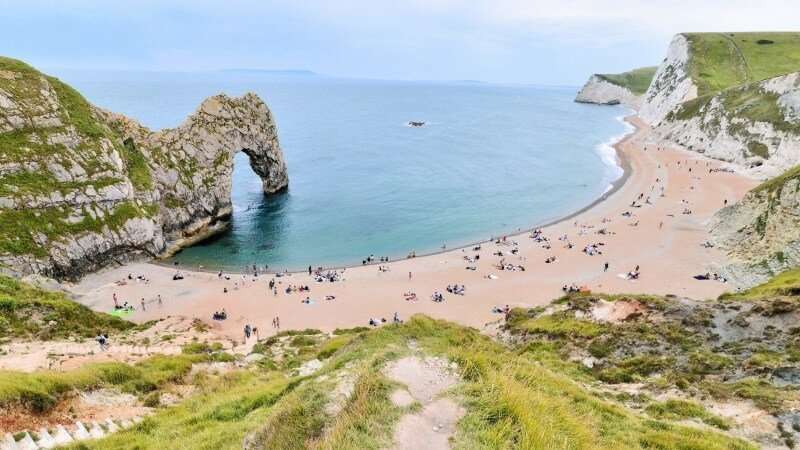
In short, a true concentration of history, things to see and natural beauty; the White Cliffs of Dover are truly a spectacle to be enjoyed at least once in a lifetime!

2. South West Coast Path

trekking in england

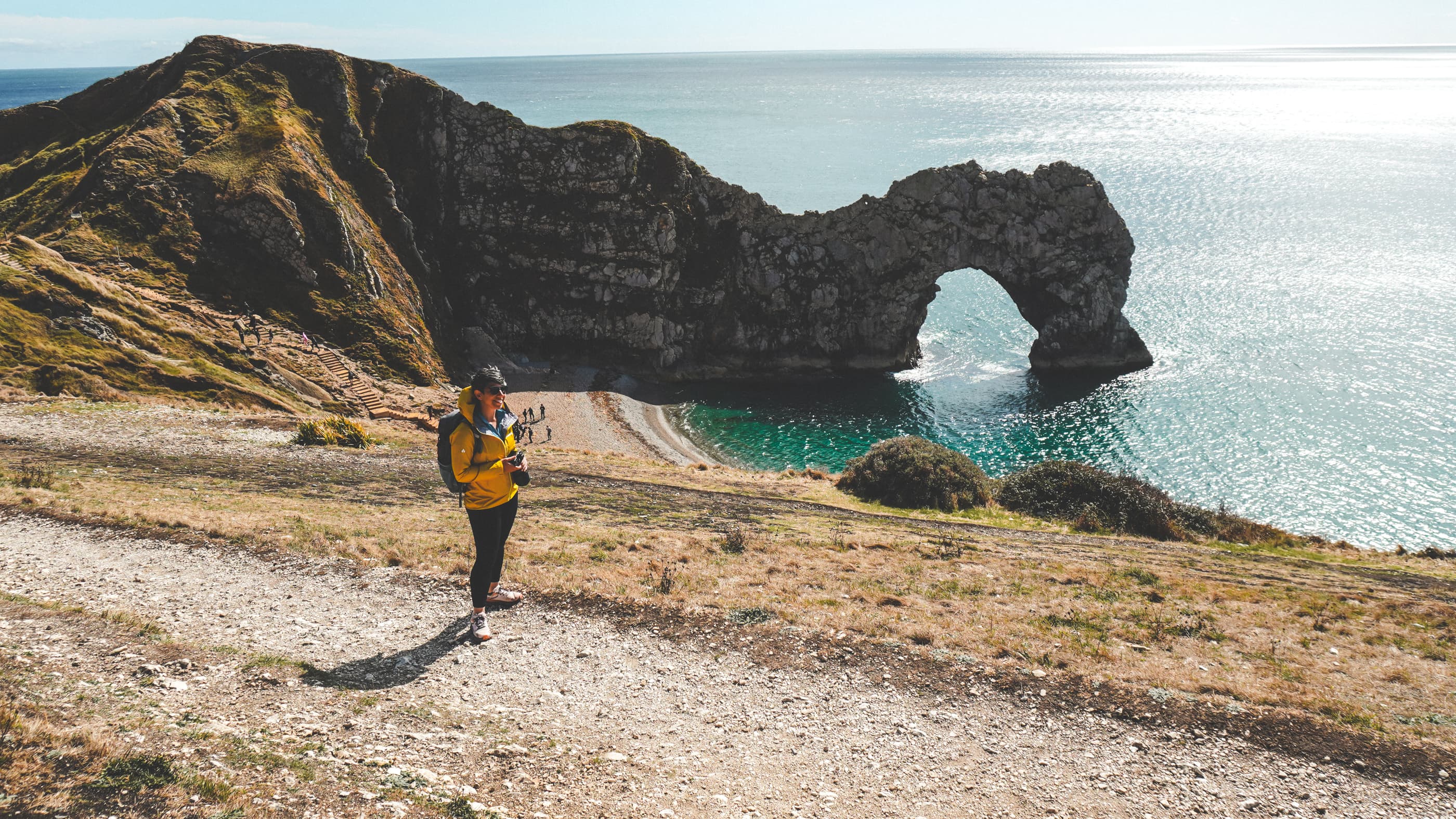
1,008km long, the South West Coast Path runs from Minehead to Bournemouth along the entire magnificent south-western coast of England, including a region everyone knows as Cornwall. The route is well marked and can be walked in either direction. Wooden posts bearing the acorn symbol, common to all national trails, and the name of the South West Coast Path mark the way. Getting lost is impossible.

The difficulty level is at times T-E and at times E, not so much for navigation or lack of infrastructure, but for the elevation changes, which can at times be somewhat demanding. Being a coastal trail, you often have to descend to sea level and then climb back up. The ups and downs are frequent, but fortunately not too strenuous.

Although a fairly experienced hiker can complete this trek in 30 days, the South West Coast Path guides recommend 52 stages, each between 14km and 25km long. This programme certainly extends the journey, but allows you to take advantage of free time to enjoy the landscapes or the attractions of particular towns and places for longer.

As for accommodation, along the South West Coast Path you will find every type of lodging, from hotels to B&Bs to luxury cottages to campsites; it all depends on your budget or your appetite for adventure. If you wish, along the route you can also make use of a dedicated luggage transfer service.

The paths winding up and down these spectacular English cliffs, the animals grazing or roaming free, the small fishing villages and the castles that once defended these shores, all contribute to making the South West Coast Path one of the best 5 treks in England. The colours, the intense scents, as well as the sense of freedom and deep closeness to nature are experiences that walkers like us simply cannot miss!

3. Pembrokeshire Coast Path

trekking in england

Nearly 300km long, the Pembrokeshire Coast Path was created back in 1970, becoming from that moment the first trekking route in Wales ever devised. A few years ago, the Wales Coast Path was also inaugurated, a trail of over 1,400km that follows the entire Welsh coastline and therefore incorporates the Pembrokeshire Coast Path within it.

The trail can be walked in either direction, and the start and finish points are, by choice, the city of Cardigan or the lovely town of Amroth Castle. Although it can comfortably be completed in 10-12 days, guides suggest completing it in 15 stages, each between 14km and 25km. The Pembrokeshire Coast Path almost never reaches high altitudes, and therefore matches the T-E difficulty category.

The Pembrokeshire Coast Path is well signposted: as with all English national trails, you will find yellow arrows, blue arrows and the acorn image. Accommodation along the route is plentiful and varied: campsites, hotels, B&Bs and cottages are just a few examples. Especially if you choose the summer period for the Pembrokeshire Coast Path, my advice is always to book accommodation in advance; it is a tourist area, so it is better to be prepared and you might even find a good deal.

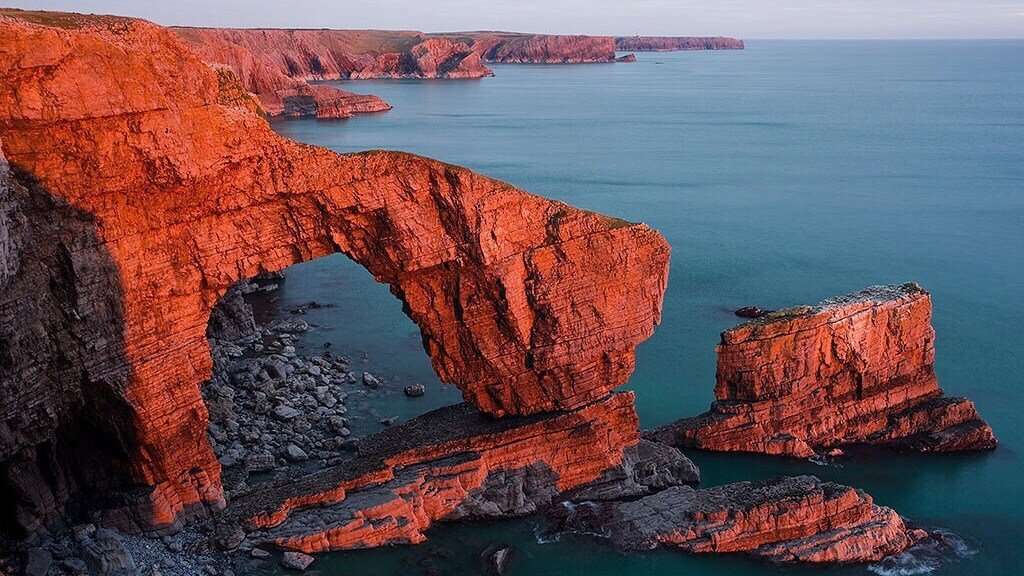
Among the cultural attractions along the route is the beautiful Carew Castle and the Henllys Iron Age fort, rediscovered only 20 years ago. Among the natural wonders you will find a great variety of birds, along with the lucky sighting of seals, dolphins and porpoises. And let us not forget the fantastic and endless green meadows, the grazing animals, or the high and jagged cliffs plunging into the sea, interspersed perhaps with small and evocative fishing villages. Pembrokeshire Coast Path, a dream you cannot leave unrealised!

4. Offa's Dyke Path

trekking in england

Literally translated as The Path of Offa's Dyke, Offa's Dyke Path follows part of the earthworks that Offa, King of Mercia, had built from 785 AD to defend himself from neighbouring Welsh tribes. According to scholars, the dyke was about 27 metres wide and 8 metres tall, a significant undertaking that involved a large number of people over several years.

The trail as we know it today was officially opened in 1971, and runs from south to north along the entire border between Wales and England, from the cliffs of Sedbury, near Chepstow, to the town of Prestatyn. Both starting points can be reached by train, and from there you can move locally by bus.

Offa's Dyke Path is 285km long and has a total elevation gain of just over 9,000 metres. Between 10 and 15 days are needed, depending of course on each person's needs and abilities. Well signposted, it can be walked in either direction, though the south-to-north direction is usually preferred.

As with the other treks in England and Wales, along Offa's Dyke Path there is a wide choice of accommodation for overnight stays: B&Bs, cottages, hotels, campsites, private residences and much more. During English public holidays and summer months I recommend booking in advance.

The best period is late spring and the months of September and October, though there may be a slightly higher risk of rain and low temperatures in the morning and at night.

There is truly a great deal to see along Offa's Dyke Path!

Let us start with the castles: along the route you will find at least 30, all magnificent and built after 1066. Among these, Chepstow Castle, White Castle, Montgomery Castle and Chirk Castle stand out for their charm and beauty.

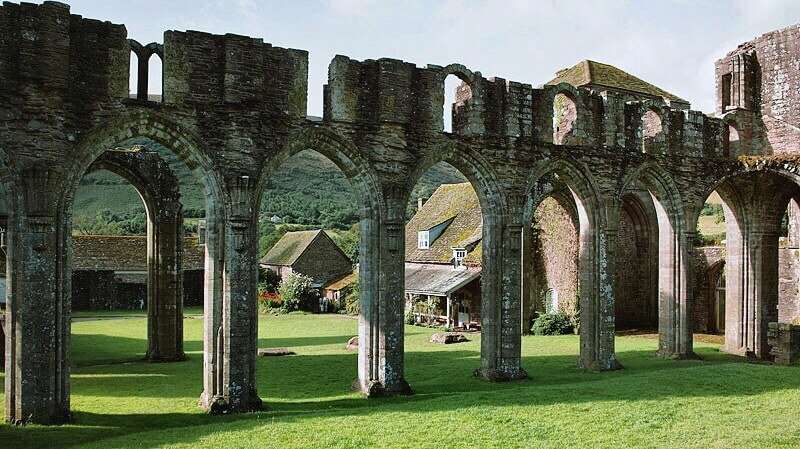
Beyond the castles, the many abbeys and churches along the route are well worth a visit, as symbols of the great influence of the Church in these lands. Certainly impressive is Tintern Abbey, an ancient Gothic ruin still perfectly nestled in the surrounding nature. The same extraordinary emotion awaits at Llanthony Priory, magnificent.
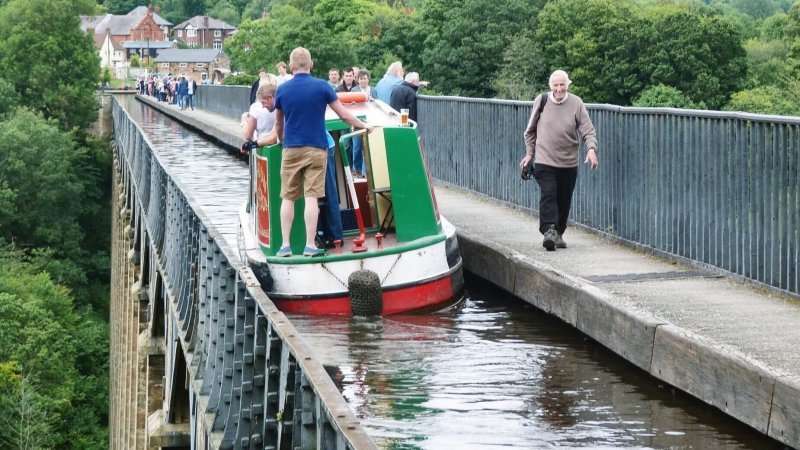
Finally, the Pontcysyllte Aqueduct deserves a mention: built in 1805, it has since earned the prestigious title of UNESCO World Heritage Site. It is a navigable aqueduct, the first of its kind, over 300 metres long, over which the Llangollen Canal flows. It can be crossed on foot along a side walkway, or by boat: a truly unique experience.

Those described above are just some of the wonders and reasons that convinced us to include Offa's Dyke Path in this list of the best 5 treks in England and Wales.
5. Hadrian's Wall Path

trekking in england

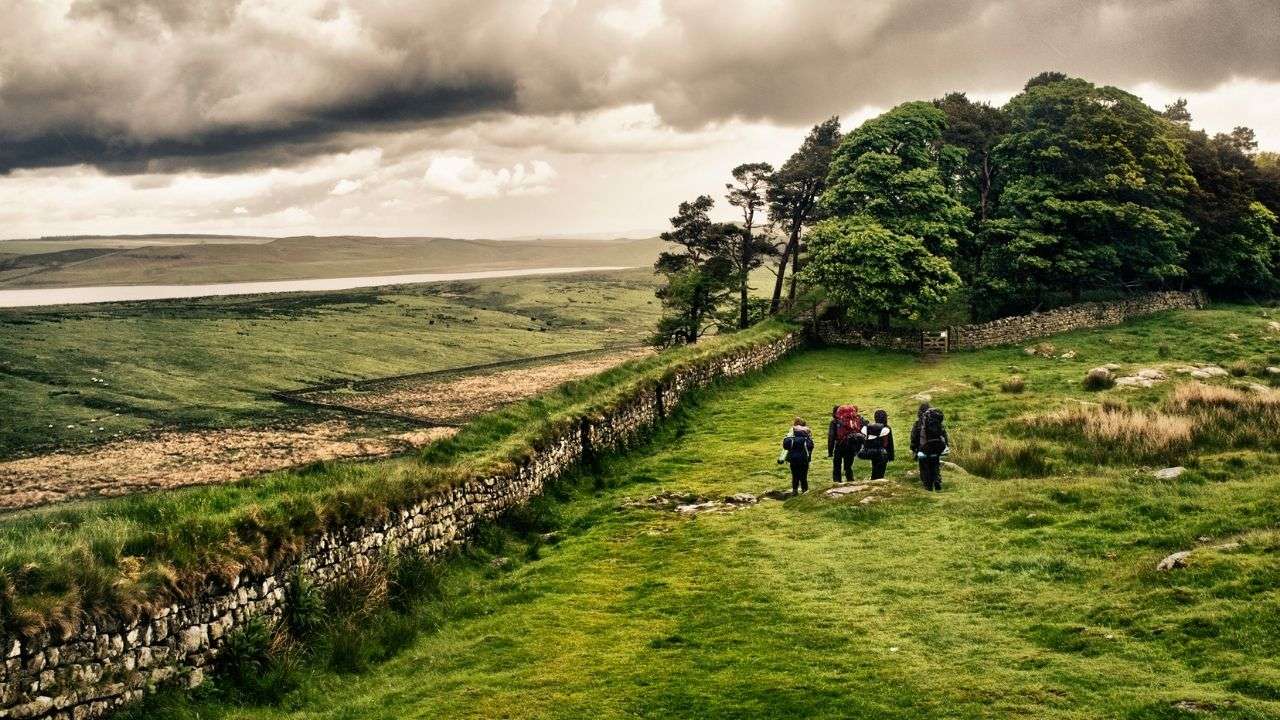
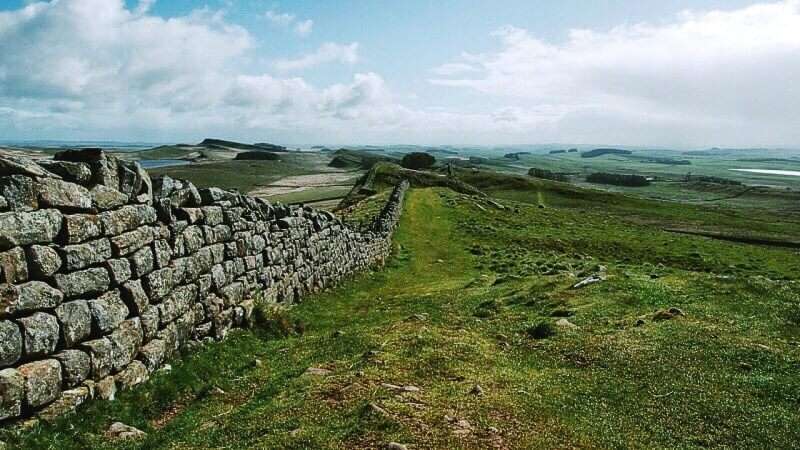
A renowned destination for history lovers and hikers alike, Hadrian's Wall Path has always held a prominent place. It traces one of the most imposing and strategically important ancient structures ever built, which also became a UNESCO World Heritage Site in 1987: Hadrian's Wall, a wall that was at the time about 5 metres high, built by the Roman Emperor Hadrian in the 2nd century AD to protect Britannia, a Roman province, from raids by local tribes from the north.

Hadrian's Wall Path is 135km long and runs from Wallsend (Newcastle) to the town of Bowness-on-Solway on the west coast. It is essentially a coast-to-coast route, where England narrows and gives way to Scotland. Given the short distance, this trek can be completed in 6-7 days. It is also very well signposted and can be walked in either direction.

An efficient public transport service will easily take you to the start of the trek and to intermediate stops along the way. Accommodation is plentiful and suits all tastes, but I recommend booking well in advance: Hadrian's Wall attracts a great deal of tourism and there is a risk that bed availability runs out quickly.

Given the abundant rainfall in these areas, the best period to walk Hadrian's Wall Path is from May to October, though I suggest avoiding July and August, when the school holidays bring large numbers of visitors to this archaeological site.

➜ To learn more about Hadrian's Wall Path, see the dedicated article Trekking on Hadrian's Wall, where you will find a thorough description of the route based on direct experience.

➜ To read all information in English about other treks in England, I recommend visiting the National Trail UK website.


#europa#galles#inghilterra#trekking-in-galles#trekking-in-inghilterra

Share

A Piedi Per Il Mondo

New articles on walks, trekking and hiking trips. Free, no spam.

Previous article

Over 300,000 Pilgrims on the Camino de Santiago: The Remarkable 2017 Numbers

Next article

Walking in Tuscany: The Renaissance Ring Around Florence

Walk in England

Discover our itineraries
in England.

All itineraries

Want a tailor-made itinerary?

Plan your trip
Read also
Trails Worldwide

The 5 Best Treks in Norway for Wild Adventure

November 24, 2021
Germany's 5 Best Trekking Routes for Walking Pilgrims
Trails Worldwide

Germany's 5 Best Trekking Routes for Walking Pilgrims

November 11, 2021
Kumano Kodo – A Sacred Pilgrimage Through Japan
Trails Worldwide

Kumano Kodo – A Sacred Pilgrimage Through Japan

July 3, 2020