The Via Francigena from Passo della Cisa to Lucca
Walk seven days through Tuscany's heart, descending from the Apennine pass to the Tyrrhenian coast, arriving at the sacred city of the Holy Face.

In this article
Table of Contents
- Starting point: Passo della Cisa
- Distance: 151 km
- Difficulty: Moderate hiking
- Number of stages: 6
The Via Francigena from Passo della Cisa to Lucca covers 150km, generally divided into 6 stages, though the presence of various facilities along the route allows walkers to divide it without too much difficulty into more days.
Those starting from here and skipping the steeper section at Passo della Cisa will embark on a considerably easier walk.
Leaving behind the gruelling climb of the Emilian slopes of the Apennines, you enter Tuscany.
For the first few days the Via Francigena follows the Magra river valley, through mountainous terrain, passing through small villages rich in history and pilgrimage heritage.
Eventually you approach the coast where, particularly in summer, you cannot help but notice traditional beach tourism. The coast is left on the final walking day, as you venture into small valleys nestled between hills and reach Lucca, following the Serchio river, where you can admire the beauty of this charming gem nestled within its ancient walls.
The elevation changes don't end at Passo della Cisa. True, they become gentler, but long descents alternate with short yet strenuous climbs that test your physical endurance.
Along the coast you sleep but practically never walk, partly to avoid busy main roads, partly to follow the historic route, which passed inland to avoid the flatter, marshy zones.
The path initially winds through footpaths and mule tracks, through beech and chestnut forests, before giving way to secondary roads at mid-height with stunning sea views and white tracks following the river into Lucca.
Want to start from Lucca? Read our article on the Via Francigena from Lucca to Siena.
Did you miss a section? Read our article on the Via Francigena from Pavia to Passo della Cisa.
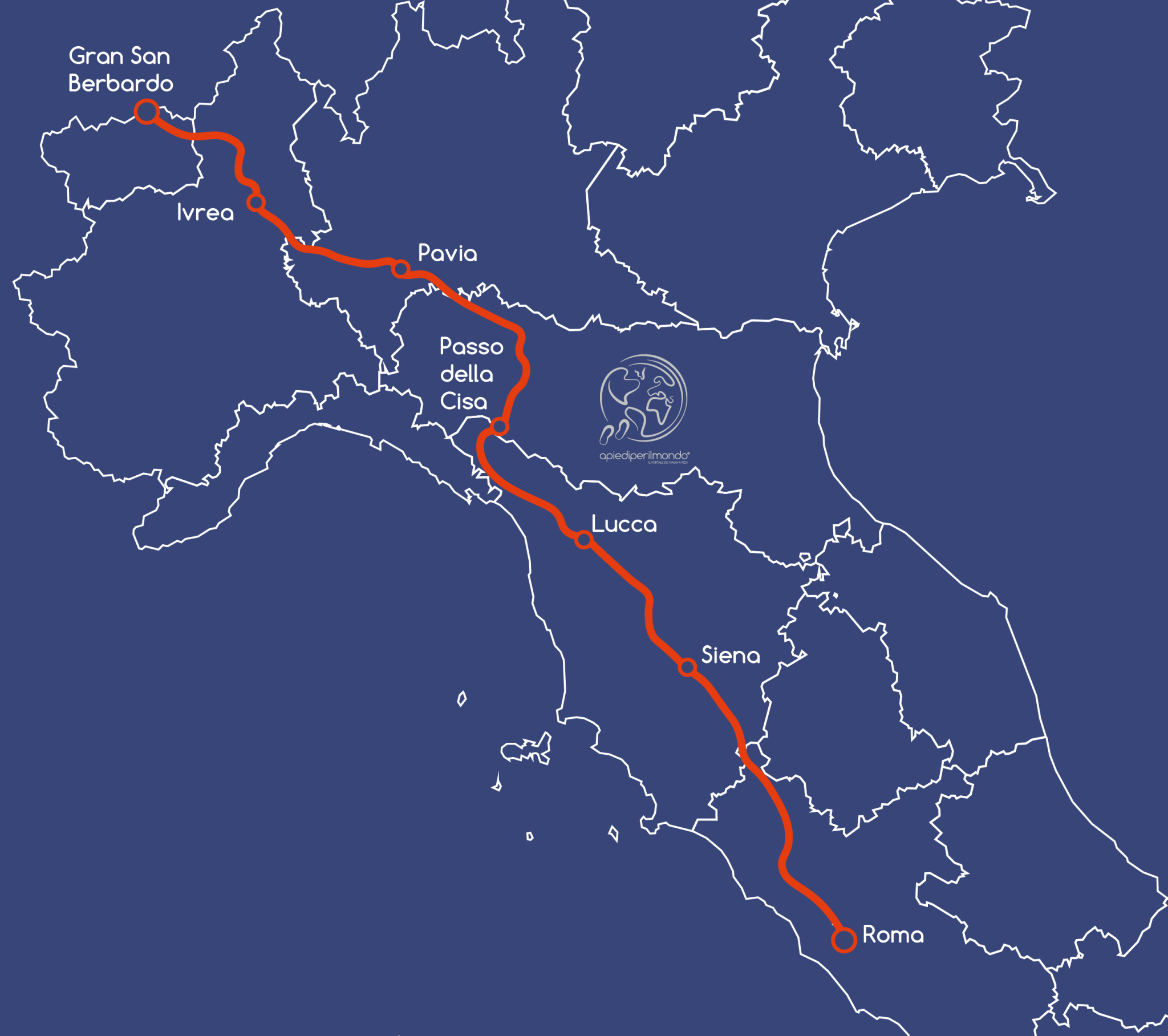
Difficulty Along the Route
In Tuscany the main challenge of the walk is the constant ups and downs, a feature that repeats throughout the region. This particular section is characterised by long descents and short but intense climbs.
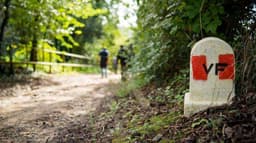
The waymarking is excellent, so navigation poses no problem, making it practically impossible to get lost. The footpaths, mule tracks and secondary roads are all shaded, making the walk pleasant even in summer.
Along every section of the route you pass through villages, so finding water and food is not an issue. In short, with some physical fitness, this stretch of the Via Francigena from Passo della Cisa to Lucca is very manageable for anyone.
Where to Sleep
As with the entire Via Francigena, this section offers accommodation for all budgets, from pilgrim hostels, some on a donation basis with shared dormitories, to B&Bs and hotels.
In some pilgrim hostels there's also the opportunity to share dinner with other pilgrims, just like on the Camino de Santiago, a wonderful experience for those who've walked it before and cherish those memories.
For many, the sense of community is one of the most meaningful aspects of pilgrimage walks, as it's during these shared moments that you experience powerful emotions and forge bonds with the people you meet.
Of course, you can also choose to stay in B&Bs and hotels, ensuring greater privacy. Every level of comfort is available, from a room with private bathroom to a luxury suite with spa facilities. Tuscany excels in this regard in Italy, being accustomed to welcoming all types of tourism year-round, both domestic and international.
What to Eat
On the Via Francigena through Tuscany, food will certainly not be a concern—quite the opposite! The walk offers the perfect opportunity, or perhaps the perfect excuse, to discover through meals a rich and extraordinary gastronomic culture.
Lunigiana is a very special valley: surrounded by mountains yet with direct access to the sea. Its culinary specialities are primarily based on mushrooms, as the sea air gives the mushrooms from this valley a flavour distinct from those found in, for example, the Alps. So whether it's tagliatelle, risotto, mushrooms with polenta or potatoes, you'll have a wonderful opportunity to savour this fantastic product!
Another absolutely essential dish to try is testaroli, an ancient type of pasta believed to have been invented by the Romans. Made from a simple mixture of water, flour and salt, a thin pancake-like sheet is created, cooked between two tiles called "testi"—the upper and lower tiles—then cooled, cut into irregular pieces, boiled and dressed with pesto or mushrooms. They're delicious and found only in this tiny corner of Italy!
As you approach the coast, you'll find other products typical of the entire Tuscany region: chickpea flour pancake, flatbread and all those classic fish dishes found in every coastal area. Don't miss the fish soup, as the Tuscan version is among the finest in all of Italy.
The cured meats differ from those of other regions, so packed lunches can be made with panini and flatbread featuring Tuscan cured ham (with a distinctively salty flavour), finocchiona or, for those who prefer stronger tastes, head sausage or biroldo, made from the animal's head parts.
In Lucca the typical dishes are different: tordelli, half-moon shaped ravioli; matuffi, a bowl layered with polenta, meat ragù, mushrooms and parmesan, and potato bread, considered a true delicacy.
The wines deserve an entire chapter—Tuscany is a major wine producer—but it's essential to note the red DOC wine from the Lucca hills, which perfectly accompanies the dishes described above for a truly delightful dinner.
Stages of the Via Francigena from Passo della Cisa to Lucca
Passo della Cisa —> Pontremoli 22 km
Pontremoli —> Aulla 32.5 km
Aulla —> Sarzana 17 km
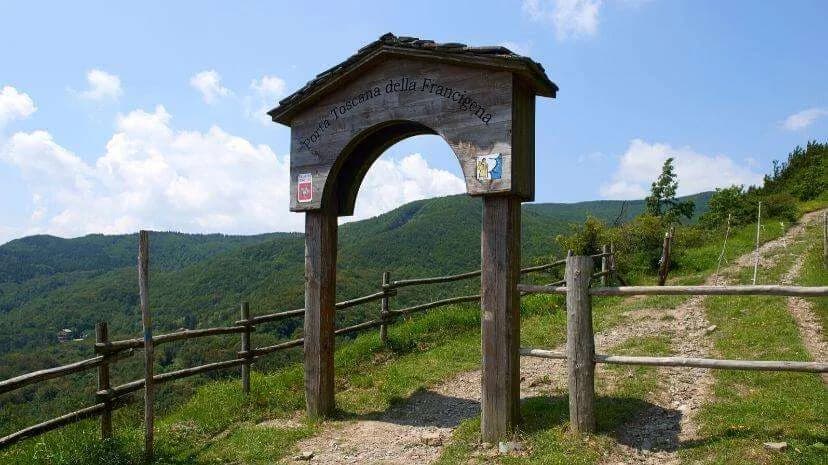
The Via Francigena enters Tuscany at Passo della Cisa and continues through Lunigiana, a valley carved by
Share
apiediperilmondo by wayure
New articles on walks, trekking and hiking trips. Free, no spam.
Redazione
La redazione di Apiediperilmondo. Guide, itinerari e storie nate camminando: consigli pratici, cammini in Italia e nel mondo, letture e spunti per chi viaggia a piedi.
Profilo e tutti gli articoli di ApiediperilmondoDiscover our itineraries
in Italy.
Via degli Dei in 5 stages
Via Francigena from Lucca to Siena
Via del Sale from Varzi to Portofino
Want a tailor-made itinerary?
Plan your trip