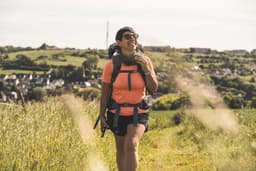
Appalachian Trail – The Ultimate American Trekking Adventure
Walk 3,500km over five months through pristine wilderness and breathtaking landscapes. The Appalachian Trail is more than a trek—it's a transformative journey of self-discovery and profound connection with nature.

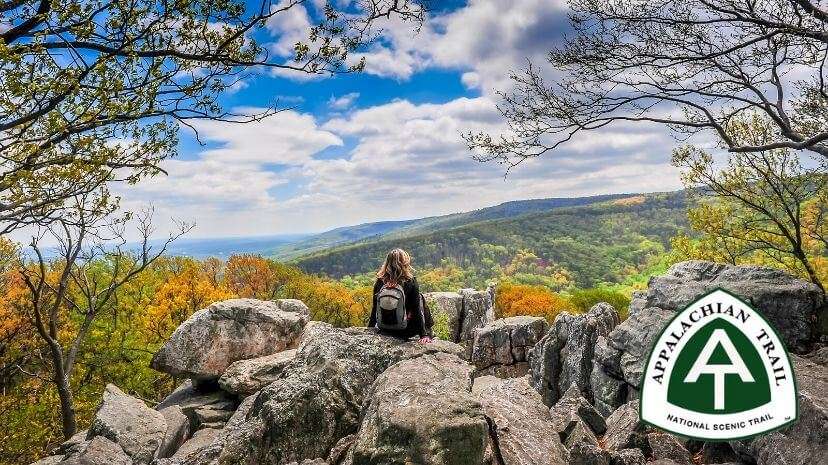
In this article
Table of Contents
When you think of trekking in the United States, the first one that comes to mind is the Appalachian Trail: 3,500 km long, crossing 14 states from Georgia to Maine, and taking 5-6 months to complete. For its difficulty, beauty, and history, it is considered by Americans themselves to be the most important trek in the country.
If you are looking for a place to test yourself, to immerse yourself for months in wild nature, to challenge rain, snow, and humid heat, to step away from the comforts of "normal" life, and to connect more deeply with the Mother Earth that hosts us, then this is truly the adventure you need.
Appalachian Trail - General Information
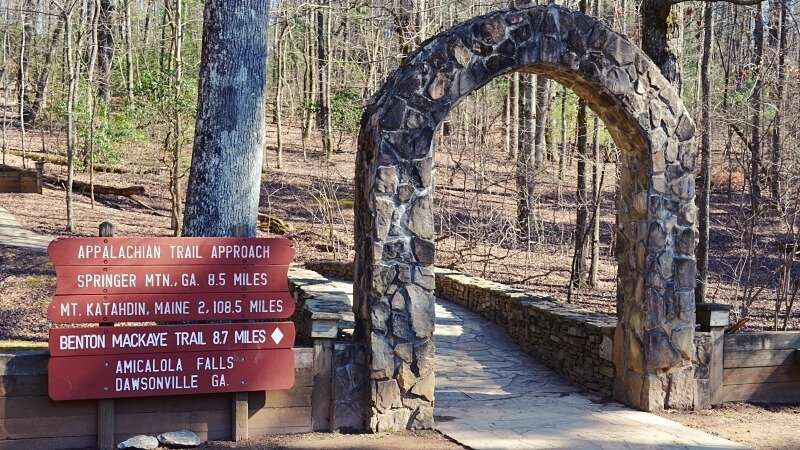
The Appalachian Trail is a 3,500 km long trek that runs vertically along the eastern seaboard of the United States. The route passes through 14 states in succession: Georgia, North Carolina, Tennessee, Virginia, West Virginia, Maryland, Pennsylvania, New Jersey, New York, Connecticut, Massachusetts, Vermont, New Hampshire, and Maine, and can be walked in either direction.
The start and end points are Mount Katahdin in Maine and Springer Mountain in Georgia.
The Appalachian Trail requires careful and informed preparation and planning. This is not a destination to take lightly. Without the right gear and precautions, you risk serious injury: hypothermia if not dressed for cold, dehydration if you carry too little water or food, illness if you are not careful about ticks or other animals, and uncomfortably close encounters with bears if you ignore basic rules about food and your presence in the wilderness.
Anyone who wants to hike the Appalachian Trail must first be aware of the dangers they face, and above all, the best ways to deal with them. It is essential to understand that our presence has an impact on that place: the noise we make when walking, the sound we produce when chatting with others, the ground we camp on, our smell, the waste we produce, and the food we eat and carry in our pack. Being aware of all this is the first step toward making the experience safer for us and more respectful of the surrounding environment.
In general, when I talk about planning, I mean:
- assessing your physical and mental condition;
- when to leave (climate and temperatures);
- where to start (where and when are interdependent);
- how many days you have and therefore what distance you can cover (average daily distance);
- whether or not you are a thru-hiker;
- where to sleep;
- what gear to bring;
- knowing the trail markings;
- the rules for accessing the Parks;
- the Leave No Trace principles;
- how much it costs.
Northbound Thru-hiker, Southbound Thru-hiker, Flip-flops: who they are
Since these are terms we will encounter throughout the rest of the article, it is worth clarifying what each one means.
Thru-hikers are hikers who complete a thru-hike continuously, from start to finish. Thru-hikers tackling the Appalachian Trail take, on average, 5-6 months to complete the entire route. Within this category, we distinguish between Northbound Thru-hikers, Southbound Thru-hikers, and Flip-flops.
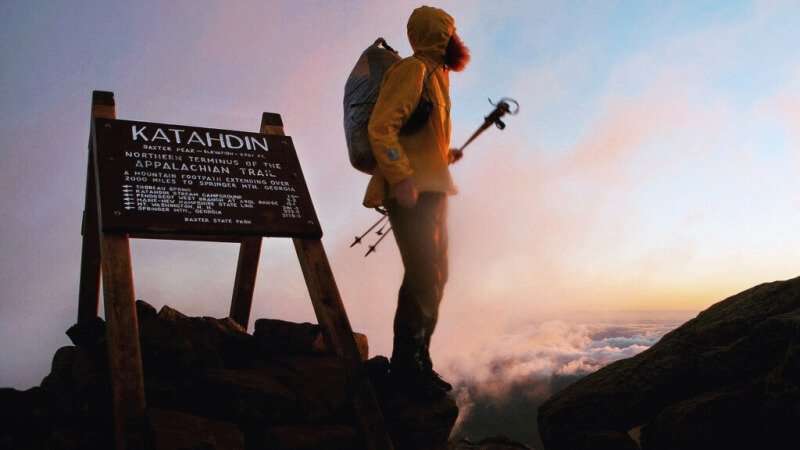
Northbound Thru-hikers are those who hike the Appalachian Trail from south to north, from Georgia to Maine. To reach Mount Katahdin by October, when prohibitive weather forces the closure of Baxter State Park, hikers must start their journey around March, so they fit within the 5-6 months needed to complete the entire trail.
Southbound Thru-hikers are hikers who walk the Appalachian Trail from north to south, from Maine to Georgia. They depart in June and arrive at Springer Mountain in November or December. What Southbound Thru-hikers face is a decidedly harder and more demanding Appalachian Trail, both because they start walking in the most rugged region of all, and because they tend to walk into winter rather than summer.
For these reasons, Southbound Thru-hikers are far fewer than Northbound Thru-hikers: statistics show about 10% versus a sizeable 76%.
Making up the remaining 14% is the flip-flop category. Growing in number compared to previous years, flip-floppers are hikers who, through a clever strategy, bypass the weather difficulties of walking continuously in one direction by starting, for example, from the midpoint: this allows them to begin on flatter, calmer terrain and, above all, to choose the perfect season for hiking.
Although the other two categories do not consider them true thru-hikers, flip-floppers are encouraged by the Appalachian Trail Conservancy because their alternative approach helps reduce the environmental impact caused by the crowd of northbounders heading north every spring.
A "2,000-miler" is a person who has hiked the entirety of the Appalachian Trail, all at once or in sections, and who fills out the form to be included on the official list. According to these records, between 2010 and 2017 the number of thru-hikers reached 6,807, an impressive yet still small number that demonstrates the extreme toughness and difficulty of this incredible Trail.
Where to start and when for the Appalachian Trail
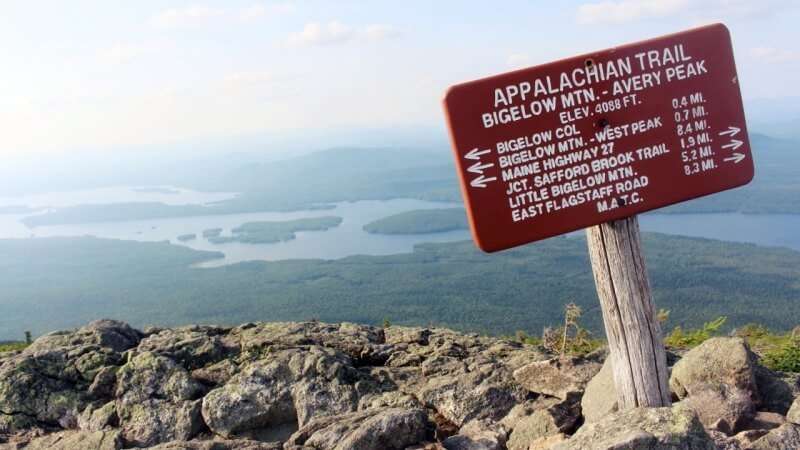
As you will have gathered from the previous chapter on Thru-hikers, where and when to start are not two unrelated questions; they are variables that influence each other and must therefore be managed together when planning your Appalachian Trail. The length of the route, 3,500 km, and its vertical distribution make it highly dynamic in terms of climate, temperatures, topography, and landscape.
The first thing to do is to study the climatic and geographic characteristics of the individual sections you will be hiking, and then ask yourself: which of these would I enjoy walking through, and which can I realistically tackle without excessive risk? To help with this decision, the Appalachian Trail has been ideally divided into 5 major regions:
- Northern New England - Maine and New Hampshire offer the most rugged and severe conditions of the entire Appalachian Trail. The weather is harsh, especially since many sections run above the tree line, beyond 2,000 metres. It is therefore strongly discouraged for inexperienced hikers. To give you a sense of what to expect: even the strongest hikers, in certain sections, cover no more than 1.5 km per hour, as they must also scramble and slide over vertical rocks. You should plan for no more than 8-13 km per day.
The Appalachian Trail ends/begins in Maine, specifically in Baxter State Park, at the famous Mount Katahdin. Access to this park is only permitted from 15 March to 15 October, when environmental conditions are more favourable. Note: this does not mean you will not encounter cold, rain, and snow, only that they will not be a major obstacle, provided you are an experienced hiker.
- Southern New England - Eastern Vermont, Massachusetts, Connecticut, New York: this section is less remote and rugged than the previous one. You still walk along mountain ridges, but you pass through dense forests, farmland, wide agricultural valleys, and even small towns.
In New York State you are far less isolated than before. You can actually see the Manhattan skyline from certain points along the trail. The elevation changes are moderate, almost flat in places, and water sources are more scarce and sometimes contaminated. Here it is truly necessary to carry a portable trekking water filter.
- Mid-Atlantic - New Jersey, Pennsylvania, Maryland: here the Appalachian Trail passes very close to populated areas, frequently crossing roads and offering several access points to the trail. Challenging climbs alternate with very easy, flat sections. Here summer is the problem, both for the oppressive heat and the scarcity of water.
- Virginia and West Virginia - Virginia hosts a quarter of the entire Appalachian Trail, ranging from easy to very demanding sections.
This area is often captured in photographs thanks to the incredible landscapes visible from the magnificent Shenandoah National Park. If you are a less experienced hiker wanting to test yourself with something manageable, I recommend starting here: not only will you enjoy some of the finest scenery on the entire A.T., but you can do just a couple of days of trekking. The busiest season remains autumn, when the foliage is truly unique.
Equally magnificent are George Washington National Forest and Jefferson National Forest, absolutely stunning places.
- Southern Appalachians - Tennessee, North Carolina, and Georgia make up the final region of the Appalachian Trail. The Great Smoky Mountains National Park here features the highest peaks of the entire trek, above 1,800 m. Given the altitudes, snowstorms are possible until April, while July and August are terribly hot and humid. The views remain spectacular and make this beginning/end point a truly unforgettable experience.
Where to sleep on the Appalachian Trail
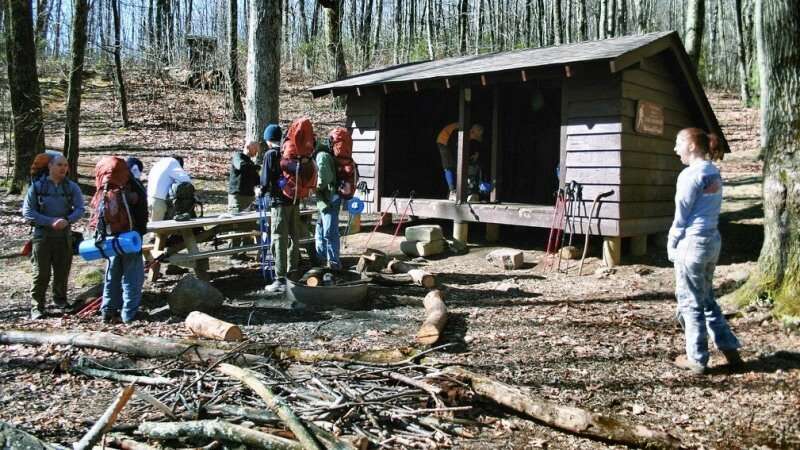
Camping areas and shelters are the most common solutions for those tackling a multi-day or even multi-month trek on the Appalachian Trail. If you pass near populated areas, you can of course opt for a night or two in a hotel, but beware: the risk of longing for a hot shower on demand every time could tempt you to give up.
Along the Trail there are a total of 270 shelters, wooden lean-tos open on one side. Many are located near streams and have a nearby toilet structure. The advantage lies not only in finding shelter when it rains or snows, but also in meeting other hikers and reducing your impact on the surrounding environment. Only individual hikers may use them; groups must use tents and camp nearby. Although reservations are generally not required, some Parks do require them, such as Great Smoky Mountains National Park in Tennessee. Check the official website for all relevant information.
Camping, whether dispersed or within designated areas, is regulated by area and national park. It is therefore necessary to check in advance to avoid any mistakes.
In general, it is always best to camp in designated areas to minimise environmental impact as much as possible. In some areas dispersed camping is permitted, but your tent must always be pitched at least 60 metres from a water source.
Making a campfire is not prohibited (except in certain areas) but is strongly discouraged due to the significant environmental and visual impact it causes. In the Leave No Trace section you will find all the specific rules for moving and camping in perfect harmony with the surrounding environment.
Gear for the Appalachian Trail
To understand what to bring on the Appalachian Trail, it is important to answer two questions:
- How many days do I want to walk?
- During what period do I want to walk? And what weather conditions might I encounter?
Obviously, depending on temperature, weather, and climate, you will need to choose very different clothing: heavier and waterproof for cold and rain, lighter and breathable for heat and high humidity. In general, the key is to wear synthetic fabrics and absolutely avoid wool and cotton: not being breathable, they absorb water and sweat and keep you perpetually damp, which can cause hypothermia in certain weather conditions. Synthetic fabrics protect you from this danger, provided you are also covered by warm layers.
Clothing, and therefore its weight and volume, also affects the capacity and total weight of your pack, though only to a minor degree.
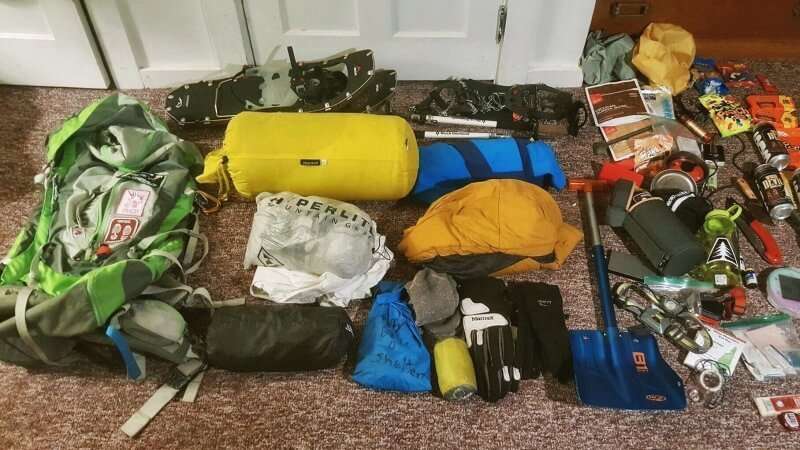
A 65-litre pack is generally sufficient. It should contain:
- everything you need to sleep outdoors, including tent, sleeping pad, and sleeping bag;
- good food supplies (freeze-dried and otherwise), cookware, and a camp stove. Bear in mind that the daily caloric requirement for a hiker is 3,000-4,000 calories, rising to 5,000-7,000 calories for a thru-hiker;
- a good supply of water and a portable trekking water filter;
- a first aid kit, including an emergency thermal blanket, insect repellent, and tick tweezers;
- everything you need to dispose of human waste: a trowel (for burying faeces), toilet paper, hand soap (hygiene is the first defence against illness), and a sealable plastic bag;
- a powerful torch and matches;
- a sharp knife;
- a sturdy rope of at least 50 metres (needed to hang your food supplies from a tree, so as not to attract animals to your tent);
- a good pair of shoes with a durable sole and a comfortable fit.
Buying all this gear for the first time can cost a lot, between 1,000 and 2,000 euros. For a thru-hiker, starting with quality equipment is essential!
Although the Appalachian Trail is well marked and signposted, it is always advisable to carry a good map or trail guide. Not only will it help you be prepared in case of setbacks, but it will allow you to plan your trip precisely, reducing the risk of imprudence and unforeseen events. On a trek like this, it is better to be well prepared!
How much does it cost to hike the entire Appalachian Trail
The main expenses for a thru-hiker completing the entire Appalachian Trail are:
- initial purchase of gear and equipment needed to start and camp;
- purchase of replacement gear worn out or damaged during the trek, including at least 3 new pairs of shoes;
- food;
- hotel rooms and restaurant meals when you want to treat yourself near towns and villages.
A rough estimate, based on the experience of thru-hikers who have successfully completed the Trail, is between 3,000 and 5,000 euros, not counting the cost of transport to and from home, health insurance, and the 1,000-2,000 euros for the initial equipment.

Food and supplies on the Appalachian Trail
Thru-hikers walking all or a significant portion of the Appalachian Trail must manage their food supplies very carefully. It is mostly freeze-dried food, which, although it does not excel in flavour or appearance, has the advantage of not spoiling after two days in your pack and lasting for months (typically 36 months).
Obviously, you cannot carry all the food you need for 5 months of trekking in your pack; in fact, at most you can sustain yourself for about one week. This means that once your supplies run out, you will need to find more. The problem is that unless you are passing through large cities, you will rarely find products similar to your own.
At this point you have only one option, which also requires considerable preparation.
First, you must calculate with great precision how many calories you need each day, and therefore how much food you need for the 5-6 months of trekking. The next step is to figure out which towns you can resupply at, and at which points along the route you will need additional food stocks. Once you have worked all this out, you must arrange to send yourself food parcels to various points along the trail. You can use post offices (all of which are listed in Appalachian Trail guides), or send parcels to trail-friendly hotels or accommodations, which is the more affordable option.
I know, you need to be very good at calculating everything! However, with a good guide in hand, it will all become much clearer.
Dangers on the Appalachian Trail
As you will have gathered by now, the Appalachian Trail is NOT a walk in the park; rather, it is a tough and demanding trek that deserves respect, awareness, and a degree of reverential caution from those who undertake it.
Aside from the trail's inherent difficulties, listed above, the dangers that typically worry less experienced hikers are related to the local wildlife. Let's start with snakes: although there are large and venomous ones, especially in warmer areas, they are harmless animals if not provoked. It will therefore be enough to watch where you walk and where you place your hands.
A threat that appears less significant but is far more dangerous is a tick bite. Ticks can carry serious diseases such as Lyme disease. You should therefore be careful not to lie on grass directly without a mat underneath, and do the same with your pack. It is also important to check your skin carefully every time you wash, and to carry appropriate tick-removal tweezers in case of need.
The danger that we perceive most acutely, given the size of the animal in question, is that posed by the brown bear. Bears populate many areas of the Appalachian Trail and it is therefore quite likely that you will spot one while walking along the trail. The important thing is to keep a safe distance, especially if you see them with their cubs.
The moment when we are most vulnerable to this danger is at night, when we are "peacefully" sleeping in our tent or shelter. The best way to prevent the possibility of a nocturnal bear raid is to handle your food correctly. Bears have an excellent sense of smell and could detect the scent of food you are cooking or food stored in your pack. Hence these two pieces of advice:
- cook and eat your meal at least 60 metres from where you sleep, so the smell of food disperses more easily;
- put all food supplies, both freeze-dried and fresh, as well as energy drinks, in a solid container and hang it with the rope (this is why you need to include one in your gear) from a tree 60 metres from where you sleep and where you ate. The branch should be at least 5 metres high, and you must position the container at least 3.5 metres from the ground, 2 metres from the lower branch, and 2 metres from the tree trunk. Bears are very agile and excellent climbers, and if you hang the container incorrectly they could steal all your supplies for the following days. Believe me, that is not a risk you can afford to take.
The 7 ethical principles of Leave No Trace.
As mentioned earlier, in National Parks as in every other natural context, there is a serious problem of environmental sustainability caused by the heavy and often intrusive presence of humans. To minimise the negative impact of humans on the surrounding environment, the 7 principles of Leave No Trace were created.
Below you will find a list and a brief description. For more details, I recommend reading the article Leave no Trace, which I assure you offers excellent insights and moments of reflection for people like you and me who love nature and strive to keep it as unspoilt as possible.
- Plan ahead and prepare
- Travel and camp on durable surfaces
- Dispose of waste properly
- Leave what you find
- Minimize campfire impacts
- Respect wildlife
- Be considerate of other visitors
The basic concept is: be aware of the impact your presence has on the surrounding environment and try to reduce it as much as possible; walk, in short, without leaving a trace.
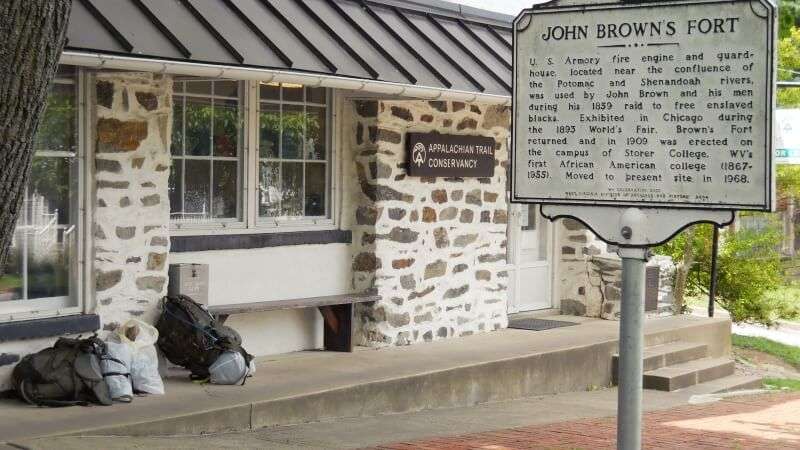
Appalachian Trail Conservancy and volunteering
The Appalachian Trail Conservancy, a federation of 31 local organisations made up almost exclusively of volunteers, is responsible for the maintenance, protection, and promotion of this itinerary. It is estimated that the number of hours "worked" by these people amounts, in a year, to more than 10,000 days, an impressive figure that gives a sense of the enormous effort needed to keep this trail accessible to hikers.
Volunteering has always been a fundamental element of this Trail. The Appalachian Trail was in fact created by a group of volunteers in the 1920s and 1930s, driven by the idea of Benton MacKaye, and completed in 1937. Since then the route has changed in certain places, always with the aim of offering hikers better viewpoints and protecting areas with particularly fragile ecosystems.
For statistical data, consult the relevant page on the Appalachian Trail Conservancy website.
For additional information on Leave No Trace, visit the official website.
Share
apiediperilmondo by wayure
New articles on walks, trekking and hiking trips. Free, no spam.
Co-fondatrice, Apiediperilmondo
I've been organising walks since I discovered that walking slow is the fastest way to know a place. I take care of every logistical detail so you can focus only on the steps ahead.
Profilo e tutti gli articoli di DeborahTurn this inspiration into a real journey.
Tell us about your dream walk: we will build the itinerary together.