Trekking Yellow Mountain: Lost in the Sea of Clouds
Discover the magic of Yellow Mountain's misty peaks, where ancient trails wind through clouds and timeless landscapes. An unforgettable journey for trekkers seeking solitude and natural wonder.

[av_layout_row border=” min_height_percent=” min_height=’0′ color=’main_color’ mobile=’av-flex-cells’ id=”]
[av_cell_two_third vertical_align=’top’ padding=’10px,30px,0px,60px’ background_color=” src=” attachment=” attachment_size=” background_attachment=’scroll’ background_position=’top left’ background_repeat=’no-repeat’ mobile_display=”]
[av_one_full first min_height=” vertical_alignment=’av-align-top’ space=” margin=’0px’ margin_sync=’true’ padding=’0px’ padding_sync=’true’ border=” border_color=” radius=’0px’ radius_sync=’true’ background_color=” src=” attachment=” attachment_size=” background_position=’top left’ background_repeat=’no-repeat’ animation=” mobile_display=”]
[av_image src=’https://ctciegkgbryqtjtzlifl.supabase.co/storage/v1/object/public/apd-media/apd/2017/11/Montagna-gialla.jpg’ attachment=’20066′ attachment_size=’full’ align=’center’ styling=” hover=” link=” target=” caption=” font_size=” appearance=” overlay_opacity=’0.4′ overlay_color=’#000000′ overlay_text_color=’#ffffff’ animation=’no-animation’ admin_preview_bg=”][/av_image]
[av_heading heading=’Trekking Yellow Mountain: lose yourself in the "sea of clouds"‘ tag=’h1′ style=’blockquote modern-quote’ size=” subheading_active=’subheading_below’ subheading_size=’18’ padding=’10’ color=” custom_font=” av-medium-font-size-title=” av-small-font-size-title=” av-mini-font-size-title=” av-medium-font-size=” av-small-font-size=” av-mini-font-size=” admin_preview_bg=”]
Among China's most beloved destinations, a trek across Yellow Mountain is an excellent choice for an unforgettable two-day adventure through mystic peaks and suspended walkways.
[/av_heading]
[av_textblock aalb-admin-input-search=” size=” font_color=” color=” av-medium-font-size=” av-small-font-size=” av-mini-font-size=” admin_preview_bg=”]
If you must choose just one place to explore on foot in China, choose Yellow Mountain (Huangshan). Located in Anhui Province, it's easily accessible and offers spectacular vistas across granite peaks and solitary pines. What's more, it was recently announced that from 1 November 2017 to 28 February 2018, admission to Yellow Mountain is completely free for international visitors. This is an excellent opportunity to experience one of China's most celebrated mountain destinations on foot. The snowy winter landscape guarantees breathtaking panoramas.
Many will try to discourage you: legend has it that the highest zones, reachable by cable car, are excessively crowded. Crowds do exist (2 million visitors annually is significant), especially weekends and during local holidays, but it's far from the human wall everyone describes. With a bit of planning, you can experience this mountain in peace and tranquility—just keep walking!
➜ If you have many days available and this Yellow Mountain trek isn't enough, check out these other stunning treks in China.
[/av_textblock]
[av_heading tag=’h2′ padding=’10’ heading=’What is Yellow Mountain, or Huangshan?‘ color=” style=” custom_font=” size=” subheading_active=” subheading_size=’15’ custom_class=” admin_preview_bg=” av-desktop-hide=” av-medium-hide=” av-small-hide=” av-mini-hide=” av-medium-font-size-title=” av-small-font-size-title=” av-mini-font-size-title=” av-medium-font-size=” av-small-font-size=” av-mini-font-size=”][/av_heading]
[av_video src=’https://www.youtube.com/watch?time_continue=1&v=xENdo1OuhJQ’ format=’16-9′ width=’16’ height=’9′]
[av_textblock aalb-admin-input-search=” size=” font_color=” color=” av-medium-font-size=” av-small-font-size=” av-mini-font-size=” admin_preview_bg=”]
Huangshan (黄山, literally Yellow Mountain) has carried this name since 747. Previously known as Yishan, it was renamed to honor Huang Di, the mythological Yellow (or Golden) Emperor and ancestor of the Han people. Legend holds that it was from here that Huang Di ascended to heaven.
From the 8th century onward, temples were constructed, transforming the massif into a sacred place for over 1,000 years. Like many sacred sites, it occupies a unique and splendid location, and visiting brings good fortune—hardly surprising given the crowds it attracts.
The Huangshan Scenic Area, encompassing the most touristic zones and surrounding parkland, has been a UNESCO World Heritage Site since 1990.
➜ UNESCO page dedicated to Huangshan
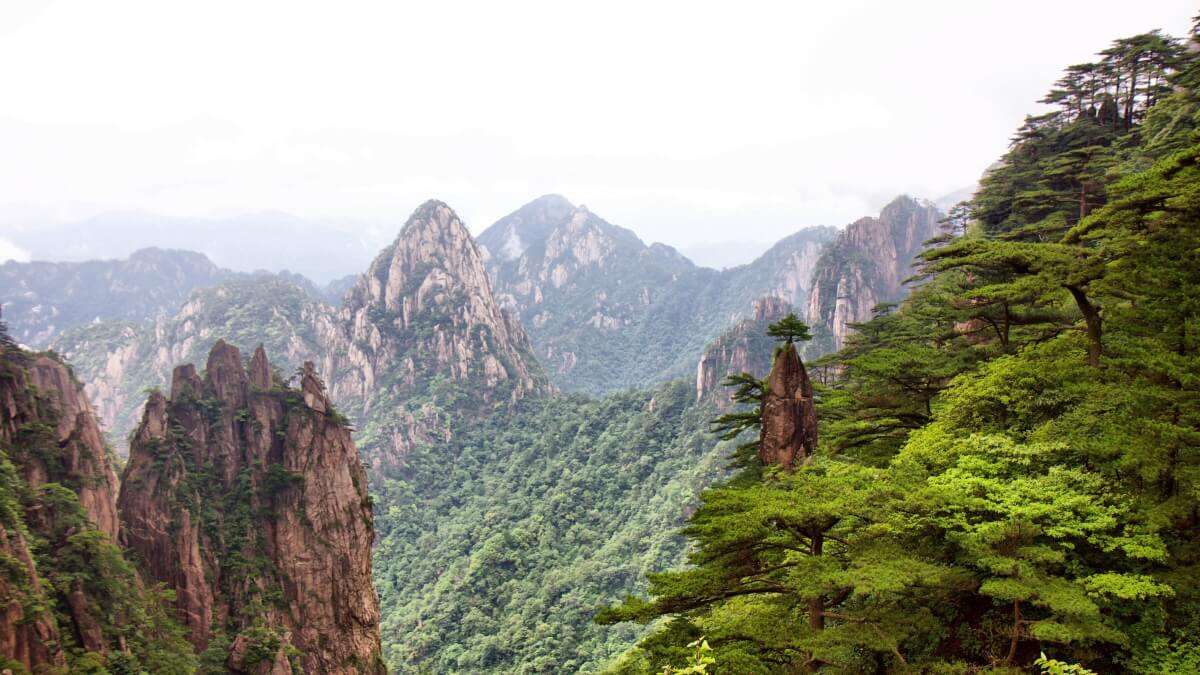
Huangshan's main massif comprises 36 granite peaks reaching 1,864 meters (6,115 feet) at the summit—Lotus Peak. The site is renowned throughout China for inspiring a significant body of traditional Chinese landscape painting (an entire painting school bears its name) and classical poetry (over 20,000 poems have been dedicated to it!). The iconic images of peaks rising above mist are world-famous. The peaks themselves bear poetic names such as "Lotus Flower Peak" and "Capital of Heaven."
Integral to the landscape are the elegant pines with their remarkably improbable forms—essential elements in any souvenir photograph. The Pinus hwangshanensis, native to this region, is considered a symbol of resilience: these trees force their way through rocky terrain with minimal soil and grow vigorously, seemingly defying gravity. The pines too have been officially named: "Welcoming Guest Pine" and "Farewell Guest Pine."
As if this weren't enough, the region is also famous for producing green tea of the Mao Feng Cha variety.
[/av_textblock]
[av_heading tag=’h2′ padding=’10’ heading=’ The Yellow Mountain Trek Route ‘ color=” style=” custom_font=” size=” subheading_active=” subheading_size=’15’ custom_class=” admin_preview_bg=” av-desktop-hide=” av-medium-hide=” av-small-hide=” av-mini-hide=” av-medium-font-size-title=” av-small-font-size-title=” av-mini-font-size-title=” av-medium-font-size=” av-small-font-size=” av-mini-font-size=”][/av_heading]
[av_image src=’https://ctciegkgbryqtjtzlifl.supabase.co/storage/v1/object/public/apd-media/apd/2017/11/Scale-Montagna-Gialla.jpg’ attachment=’20067′ attachment_size=’full’ align=’center’ styling=” hover=” link=” target=” caption=” font_size=” appearance=” overlay_opacity=’0.4′ overlay_color=’#000000′ overlay_text_color=’#ffffff’ animation=’no-animation’ admin_preview_bg=”][/av_image]
[av_textblock aalb-admin-input-search=” size=” font_color=” color=” av-medium-font-size=” av-small-font-size=” av-mini-font-size=” admin_preview_bg=”]
The main zone visited by trekkers is the upper elevations, accessible via two cable cars, a mountain railway, and a rack railway connecting the summit to their respective park entrances. As we're here to walk, we choose the hiking paths.
Traditionally, for practical reasons, most ascend via the Western Steps, a 4-kilometer predominantly stair-stepped route (a beloved feature throughout East Asia), and descend via the Eastern Steps. Someone once took the trouble to count all stairs in the park: a staggering 60,000! The staircases were built over different periods, though construction is believed to have begun as early as the 6th century.
Climbing from the west, you can take several detours along the ascent to reach higher peaks (including Lotus Peak at 1,864 meters) and experience ingeniously designed suspended walkways. The entire route is protected by railings, with no genuinely dangerous sections.
The upper zone is a network of paths designed to maximize views of the peaks and pines. Understandably, areas closest to cable car terminals are most crowded, but often a short walk takes you back to peaceful solitude.
A rarely visited area, especially by tour groups, is the western section called the West Sea Grand Canyon Area, featuring the dramatic Fairy Bridge. Generally speaking, even paths in the upper zone involve significant stairs and elevation changes, so don't expect the climbing to end once you reach the summit.
The primary activity at elevation is enjoying the panorama while walking. The phenomenon most visitors come for is the "sea of clouds"—created especially in summer by temperature differences between the sun-heated summit and the cooler valleys below. When clouds aren't present, the peaks rising from the sea of mist are equally enchanting. Clear sunny days are equally spectacular.
The best time to enjoy the views is at sunrise, making it highly advisable to plan your Yellow Mountain visit over two days, staying overnight at the summit and waking early.
The descent along the Eastern Steps offers fewer panoramic views but remains thoroughly enjoyable. The elevation loss is nonetheless substantial, so take care with your knees!
[/av_textblock]
[av_sidebar widget_area=’adsense’]
[av_heading tag=’h2′ padding=’10’ heading=’ How to Get to Yellow Mountain ‘ color=” style=” custom_font=” size=” subheading_active=” subheading_size=’15’ custom_class=” admin_preview_bg=” av-desktop-hide=” av-medium-hide=” av-small-hide=” av-mini-hide=” av-medium-font-size-title=” av-small-font-size-title=” av-mini-font-size-title=” av-medium-font-size=” av-small-font-size=” av-mini-font-size=”][/av_heading]
[av_textblock aalb-admin-input-search=’montagna gialla’ size=” font_color=” color=” av-medium-font-size=” av-small-font-size=” av-mini-font-size=” admin_preview_bg=”]
Huangshan lies in Anhui Province, four hours by high-speed train from Shanghai. Your arrival city, Huangshan City, was recently renamed to strengthen its connection with the mountain (it was previously called Tunxi, a name many still use). Though not the closest city to the park, it's the most convenient, offering both a high-speed railway station and a national airport. The train station is north of town, and in under an hour by taxi you'll reach Tangkou, at the base of the park. This is where you access both the Western and Eastern Steps.
[amazon_link asins=’8859238838,8854024554,B01AGHNO22′ template=’ProductCarousel’ store=’apiediperilmondo-21′ marketplace=’IT’ link_id=’fe6aec87-d394-11e7-91c8-8f8f2f8beceb’]
You can arrive in Tangkou in the morning, aiming to reach the summit before evening, or arrive the evening before and stay at one of the town's numerous budget hotels. Many offer shuttle service to the trailhead the following day.
At the park entrance you'll need to purchase a ticket (approximately 35 EUR per person). To take advantage of next winter's free admission, bring your passport. Cable car rides are not included in the park ticket and must be purchased separately at the ticket office.
Upon descending the Yellow Mountain trek along the Eastern Steps, take a park shuttle bus back to the main entrance (where the Western Steps begin), from where you can catch a shuttle bus or taxi to your next destination.
Generally it's advisable to plan a Huangshan visit over 3 days, though 2 days allows you to accomplish everything at a reasonable pace. If you have only one day, opt for the cable car at least one way (note that it closes relatively early in the evening).
[/av_textblock]
[av_sidebar widget_area=’adsense’]
[av_heading tag=’h2′ padding=’10’ heading=’ Where to Stay After Your Yellow Mountain Trek ‘ color=” style=” custom_font=” size=” subheading_active=” subheading_size=’15’ custom_class=” admin_preview_bg=” av-desktop-hide=” av-medium-hide=” av-small-hide=” av-mini-hide=” av-medium-font-size-title=” av-small-font-size-title=” av-mini-font-size-title=” av-medium-font-size=” av-small-font-size=” av-mini-font-size=”][/av_heading]
[av_textblock aalb-admin-input-search=” size=” font_color=” color=” av-medium-font-size=” av-small-font-size=” av-mini-font-size=” admin_preview_bg=”]
The town of Tangkou is well-supplied with small and large hotels at reasonable prices. Many staff speak English, as the destination has long attracted international visitors.
A night at the summit is well worth it. Options here are unfortunately limited and pricey. The summit hotels, somewhat dated now, are park-managed and offer rooms at relatively fixed rates. To spend significantly less, book well in advance.
Especially on weekends, don't rely on finding available lodging at the summit without a reservation—you'll be disappointed. Some hotels rent tent pitches (on concrete!) for your own tents or rental ones. This is a valid budget option, but bear in mind that nighttime temperatures drop considerably, requiring adequate bedding. Hotels include restaurants and typically provide breakfast. The upper zone has a couple of small shops selling snacks and water.
[/av_textblock]
[av_sidebar widget_area=’adsense’]
[av_heading tag=’h2′ padding=’10’ heading=’ When to Visit Huangshan ‘ color=” style=” custom_font=” size=” subheading_active=” subheading_size=’15’ custom_class=” admin_preview_bg=” av-desktop-hide=” av-medium-hide=” av-small-hide=” av-mini-hide=” av-medium-font-size-title=” av-small-font-size-title=” av-mini-font-size-title=” av-medium-font-size=” av-small-font-size=” av-mini-font-size=”][/av_heading]
[av_textblock aalb-admin-input-search=” size=” font_color=” color=” av-medium-font-size=” av-small-font-size=” av-mini-font-size=” admin_preview_bg=”]
Huangshan is visitable year-round, but keep in mind that temperatures at the summit are always significantly lower than in the valleys below, requiring appropriate layering even when sweltering in the lowlands.
Late spring is the best season for a Yellow Mountain trek: plants are in bloom, verdant greens dominate, and days are often clear. It's also the busiest season. To experience the "sea of clouds" phenomenon, summer offers the best conditions, particularly on days following rainfall.
Autumn provides wonderful opportunities to appreciate characteristic colors and the landscapes often depicted in traditional painting. Early autumn is perhaps the year's most cherished time to visit Huangshan. Absolutely avoid the first week of October, coinciding with national holidays.
Winter is cold and snowy, but panoramas are guaranteed. Which is precisely why admission is free this year!
[/av_textblock]
[av_heading tag=’h2′ padding=’10’ heading=’ What Else to See Around Huangshan ‘ color=” style=” custom_font=” size=” subheading_active=” subheading_size=’15’ custom_class=” admin_preview_bg=” av-desktop-hide=” av-medium-hide=” av-small-hide=” av-mini-hide=” av-medium-font-size-title=” av-small-font-size-title=” av-mini-font-size-title=” av-medium-font-size=” av-small-font-size=” av-mini-font-size=”][/av_heading]
[av_textblock aalb-admin-input-search=” size=” font_color=” color=” av-medium-font-size=” av-small-font-size=” av-mini-font-size=” admin_preview_bg=”]
Yellow Mountain sits within the Huizhou region (distinct from the southern province of the same name), comprising southern Anhui and northern Jiangxi: it boasts its own language (Huizhou), its own cuisine (Hui, recognized among China's 8 major culinary traditions), and distinct cultural traditions (Peking Opera originated from Huizhou opera). During the Ming and Qing dynasties, the region enjoyed particular economic prominence.
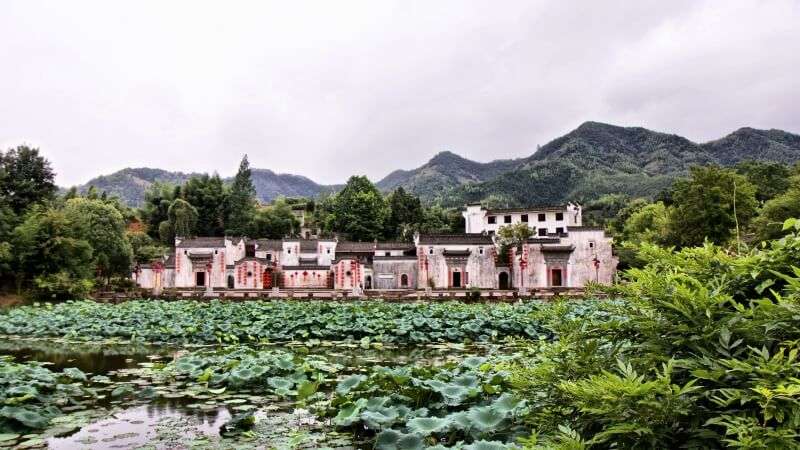
Beyond a Yellow Mountain trek, the region's primary attractions are several beautifully preserved traditional villages. The most famous are Hongcun and Xidi, approximately one hour's drive from the Huangshan Scenic Area. Both are UNESCO World Heritage Sites.
On the way to the station
Share
apiediperilmondo by wayure
New articles on walks, trekking and hiking trips. Free, no spam.
Redazione
La redazione di Apiediperilmondo. Guide, itinerari e storie nate camminando: consigli pratici, cammini in Italia e nel mondo, letture e spunti per chi viaggia a piedi.
Profilo e tutti gli articoli di Apiediperilmondo