The Via Francigena: Pavia to Passo della Cisa
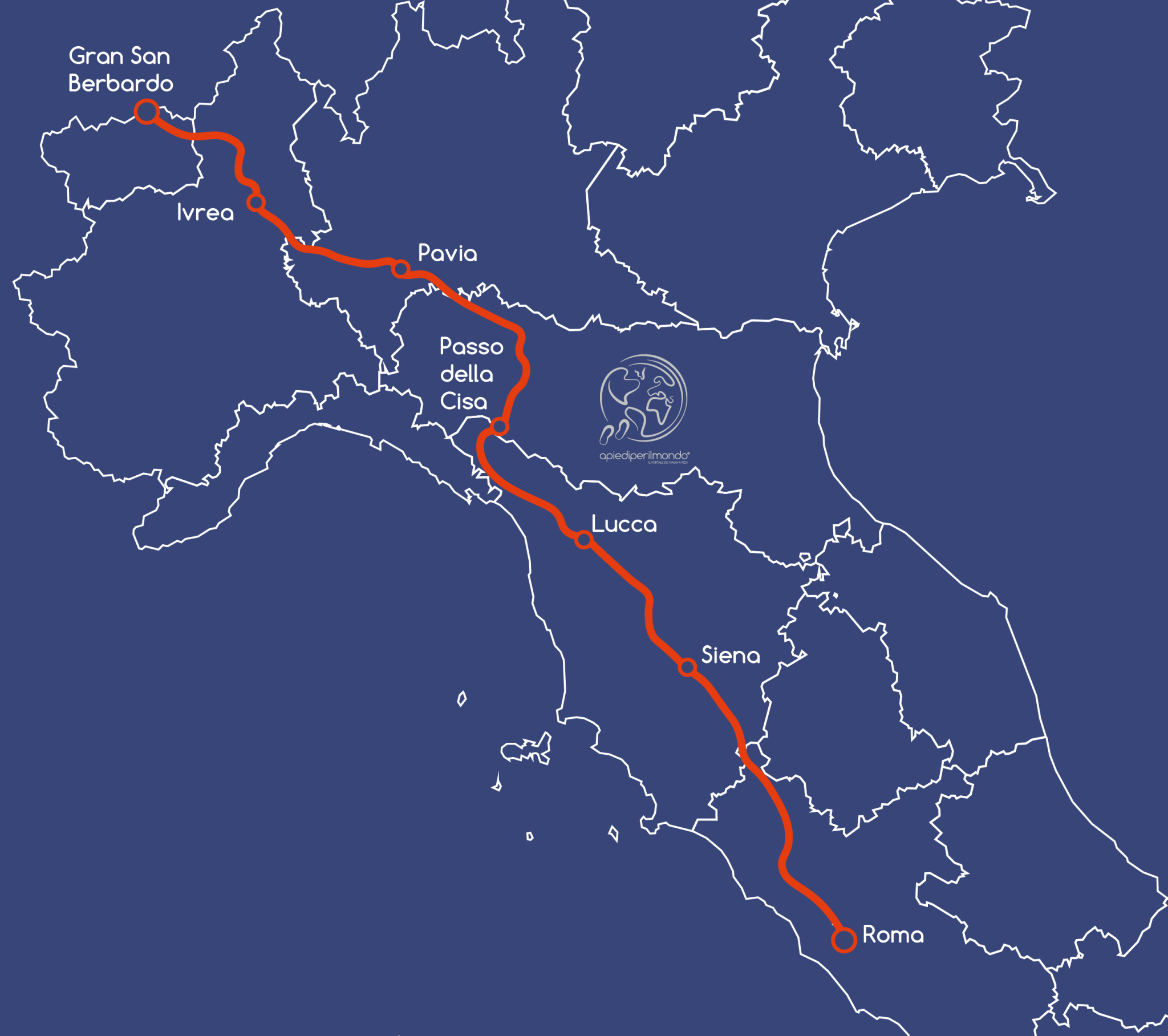
Walk for a week through the Po Valley and into the Apennines on this iconic pilgrimage route. The Via Francigena crosses the mighty Po River, winds through cultivated farmland, and climbs to the historic Passo della Cisa.

Open Table of Contents
- Start: Pavia
- Distance: 195 km
- Difficulty: Moderate Hiking
- Stages: 8
On this section of the Via Francigena from Pavia to Passo della Cisa, you traverse the Po Valley longitudinally from west to east, crossing cultivated fields and river landscapes, then turn sharply south towards the Apennines foothills, where lush forests and cool mountain trails resume, for a total of 195 km.
Stages can be customised according to your fitness level: from 7 days for the more experienced to nine or ten days for those wanting a more leisurely pace.
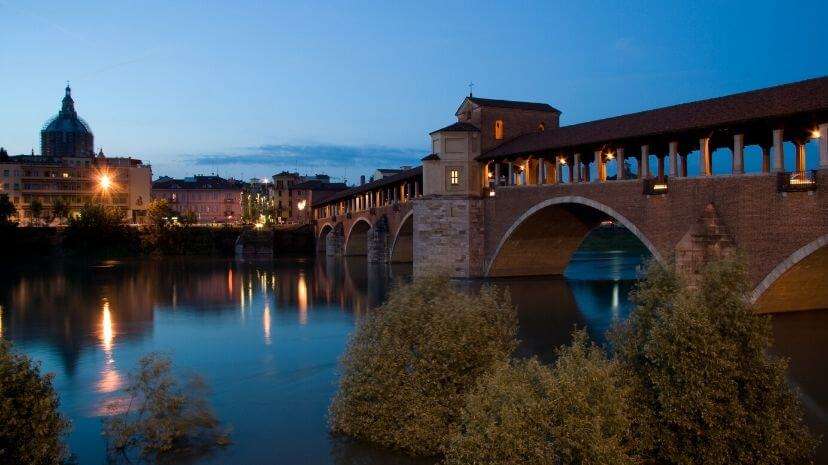
Starting from Pavia, you enter the most urbanised and human-modified section of the entire Via Francigena. Until Piacenza, the route winds along secondary roads, passing through quiet villages and intensively cultivated fields, occasionally skirting the Po and Lambro rivers as far as Corte Sant'Andrea.
Even though most of the route is on asphalt, you continue to walk in the footsteps of ancient pilgrims, evident from their traces such as the Church of San Giacomo in Cerreto and the place name Ospitaletto, indicating where pilgrim hospitality once existed.
From Corte Sant'Andrea, you can choose two routes to reach Piacenza: the first follows the entire Po embankment and enters the city from a bridge to the north, while the second, more scenic option, involves crossing the Po by boat to reach Soprarivo and entering the city from the west along a busy final stretch.
Piacenza, like all major cities, tests the pilgrim's resolve, but deserves a visit for the history told by its ancient churches.
Beyond the city, you continue walking along country lanes that cross the busy Via Emilia and intensive farmland, touching Fiorenzuola and then Fidenza. This town holds special significance: since ancient times it was the crossroads where different routes entering Italy from east and west met, heading towards Rome or southern Italy.
From Fidenza onwards, the route begins climbing again. Initially the ascent is gradual, skirting the Taro River, which you cross on the bridge entering Fornovo. Then begins the long climb to the Apennine pass and the Passo della Cisa.
This second section can be divided into two or three stages, allowing anyone to tackle the difficulty according to their abilities. Over the years, villages along the state road to the pass have equipped themselves to welcome pilgrims, enabling truly personalised stage divisions.
Starting from Passo della Cisa? Read the article on the Via Francigena from Passo della Cisa to Lucca.
Missed a section? Read the article on the Via Francigena from Ivrea to Pavia.
Difficulty Along the Trail
As with the Via Francigena from Ivrea to Pavia, the first section of this route presents no difficulty.
From a physical perspective, there are no elevation changes to tackle as, mentioned earlier, you walk through the Po Valley.
The only consideration is the substantial amount of asphalt, which may cause foot soreness by day's end. The second section, from Fidenza onwards, sees elevation gains becoming increasingly noticeable, culminating at Passo Cisa.
Until Fornovo, it's a continuous gentle rolling landscape. Then from Fornovo begins the Apennine ascent to Passo Cisa, where for three days you walk on a slow, gradual climb that steepens as you approach the pass. It's advisable to pace your energy and divide stages according to your fitness and physical limits.
The growing number of hostels allows you to tackle this section optimally.
Where to Sleep
From Pavia onwards, the number of hostels run by parishes and small municipalities continues to increase, with many having operated for over 20 years and therefore well-established in pilgrim hospitality.
Services include beds in shared rooms and shared bathrooms, at very reasonable prices, often on a donation basis.
In larger cities like Piacenza, Fiorenzuola, and Fidenza, you'll also find conventional accommodation such as hotels and B&Bs, offering private rooms with en-suite bathrooms at higher prices.
In short, finding affordable accommodation has become increasingly easy.
What to Eat
Along this Via Francigena section between Pavia and Passo della Cisa, there are no issues finding food and water. In every village and major city there's abundant choice of bars, bakeries, supermarkets and restaurants of every type.
Given the region, it's recommended to taste typical cured meats such as Piacenza salami, prosciutto in the Parma area, and as you approach the pass, the famous Parmigiano Reggiano produced from milk of cattle fed on hay from Val di Taro pastures.
In Berceto, a village just before the pass, another highly prized specialty is porcini mushrooms, renowned for exceptional quality thanks to the valley's position beyond the pass where sea breezes reach upslope, imparting a distinctive flavour to the mushrooms.
Entering Emilia, fresh pasta (tortellini, tagliatelle, lasagne, etc.) is incomparably delicious, especially when homemade.
Stages of the Via Francigena from Pavia to Passo della Cisa
Pavia → Santa Cristina and Bissone 28 km
Santa Cristina and Bissone → Orio Litta / Corte Sant'Andrea 17 km
Orio Litta / Corte Sant'Andrea → Piacenza 22.1 km – Alternative left bank of Po 25 km
You leave Pavia along a gentle route on secondary roads, repeatedly approaching the Ticino River and then the Po. You pass through small villages in
Share
apiediperilmondo by wayure
New articles on walks, trekking and hiking trips. Free, no spam.
Redazione
La redazione di Apiediperilmondo. Guide, itinerari e storie nate camminando: consigli pratici, cammini in Italia e nel mondo, letture e spunti per chi viaggia a piedi.
Profilo e tutti gli articoli di ApiediperilmondoDiscover our itineraries
in Italy.
Via degli Dei in 5 stages
Via Francigena from Lucca to Siena
Via del Sale from Varzi to Portofino
Want a tailor-made itinerary?
Plan your trip