Adam's Peak Pilgrimage: A Sacred Journey in Sri Lanka
Climb Sri Lanka's holiest mountain on a spiritual pilgrimage away from tourist crowds. Discover local devotion as you ascend 5,500 steps to the sacred footprint at Adam's Peak, where pilgrims of all faiths converge.

Pilgrimage on Adam's Peak, Sri Lanka
A sacred pilgrimage to Sri Lanka's holiest mountain on the resplendent island, where you'll discover local spirituality away from mainstream tourism: Adam's Peak, the sacred footprint and its 5,500 steps to enlightenment.
Sri Lanka is an island of countless opportunities. There are tropical beaches for seaside enthusiasts seeking traditional relaxation, national parks for nature lovers and wildlife enthusiasts, archaeological sites to discover more about this island's rich heritage, and temples aplenty. Religion has always played a particularly important role in Sri Lanka, shaping both the island's history and its recent past. Spirituality is deeply felt by the population, with overlapping cultural and religious traditions creating an exotic and captivating cultural blend.
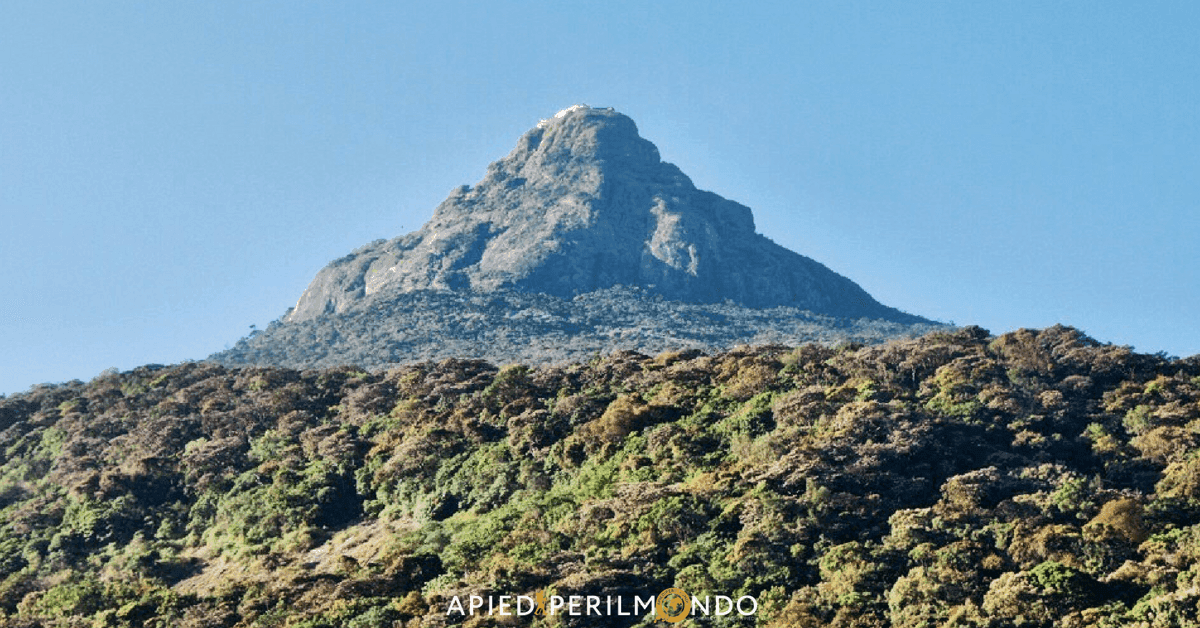
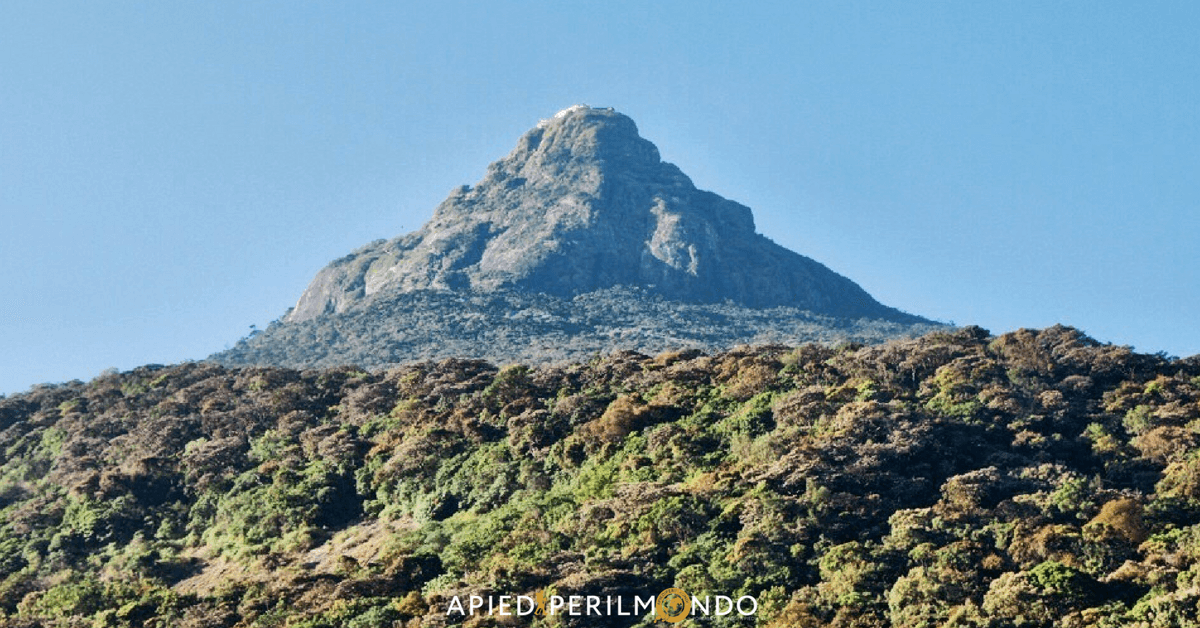
Beyond traditional temples—from bustling city sanctuaries to those hidden in rural countryside—there is one sacred site revered by all religions represented on the island: Adam's Peak. Known locally as Sri Pada, this mountain rises to 2,243 metres above sea level in the island's central highlands. While not the highest peak, it is undoubtedly the most spiritually significant and widely visited.
What makes it extraordinary is a rocky formation believed to be a sacred footprint. Buddhists believe it belongs to Buddha, Hindus attribute it to Shiva, while Muslims and Christians believe it to be the footprint of Adam. Marco Polo himself mentioned it in his travels. The impression—measuring 1.8 metres in length—is housed at the summit and draped in white cloth. A temple has been built around it, where hundreds of pilgrims daily light oil lamps in reverence.
The Climb and Pilgrimage Experience
Distance: 5.7 km
Starting altitude: 1,206 m
Summit altitude: 2,243 m
Elevation gain: 1,037 m
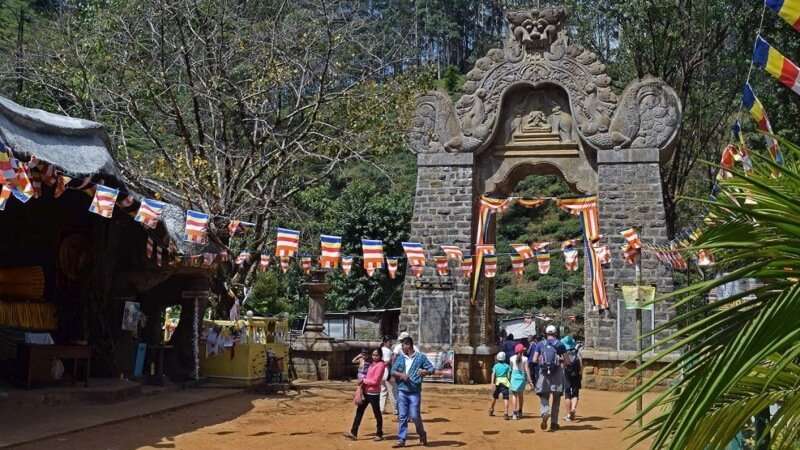
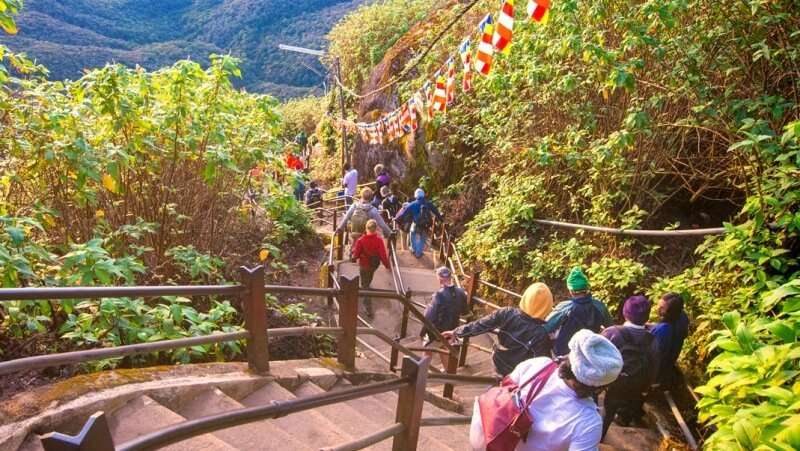
Multiple routes lead to the summit, but pilgrims traditionally favour the path through the village of Nallathanni. The ascent comprises 5,500 steps with approximately 1,000 metres of elevation gain.
The Adam's Peak pilgrimage, sacred to Buddhists for over a thousand years, should be undertaken between December and May, when conditions are most favourable. During other months, the site is unmaintained and heavy rains make the climb hazardous. The best days are during the full moon (known as poya in the Buddhist lunar calendar, a national holiday) or Sinhala New Year (mid-April): on these occasions, reaching the summit becomes nearly impossible due to crowds.
The ascent happens throughout the day but primarily at night: the goal is to reach the summit for sunrise. Most pilgrims begin climbing around 2 a.m., taking 2-3 hours depending on the season. Arriving at least an hour before dawn is advisable to secure a spot on the small eastern-facing steps and fully appreciate the sunrise.
Space at the summit is limited relative to the number of pilgrims, so latecomers sometimes miss reaching the peak before sunrise. The temple itself isn't ideal for viewing the sunrise, as the perimeter walls partially obstruct the view. The descent takes 1.5-2 hours, with most pilgrims back at the base by 8 a.m.
The stairway to Adam's Peak is dotted with small shops selling everything imaginable: warmer clothing (locals often underestimate the summit temperature), toys, snacks, and traditional Ayurvedic remedies.
Practical Planning
The most practical approach is to arrive at Nallathanni in the afternoon the day before your climb, ensuring you've booked a guesthouse in advance to avoid waiting around at midnight. After a short walk through the dusty village streets, you can arrange dinner at your guesthouse. Rest early, then begin your ascent at 2 a.m.
The pilgrimage is free—no entrance fees required—though you may encounter locals or self-proclaimed monks seeking donations.
Temperatures at these latitudes are rarely extreme, but wind can be considerable, especially as you climb higher. Wear trekking trousers, a technical shirt, and a fleece jacket—you'll likely shed these layers soon after sunrise. A small day pack suffices for essentials and rain gear if weather seems uncertain. Locals typically wear traditional dress or jeans, and virtually everyone goes barefoot or in sandals.
Once at the summit, position yourself on the steps to the left of the temple entrance to wait for dawn. Once you've claimed a spot, it's worth visiting the temple while a companion holds your place. Of course, enter the temple barefoot and without headwear.
After breakfast back in Nallathanni, you can arrange onward travel, as the area offers little else for international visitors.
Where to Stay in Nallathanni
The village of Nallathanni at the mountain's base is the most convenient and well-serviced option. It's dotted with guesthouses of varying standards, offering rooms with or without private bathrooms. Dining options are available, though most visitors arrange meals through their guesthouse—dinner before departure and breakfast upon return.
What to See in Sri Lanka
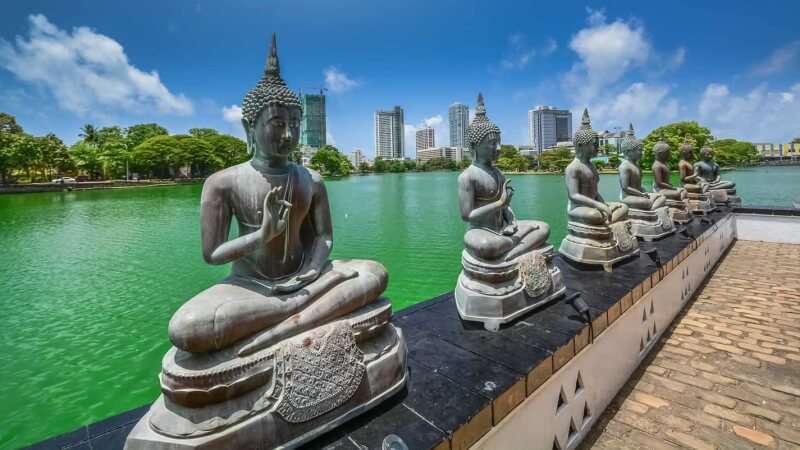
Sri Lanka is a nation of 21.5 million people, predominantly Sinhalese (75%), followed by Tamil (11%), Arab-descended communities (9%), and Indian (4%). Buddhism is practised by 70% of the population, Hinduism by 13%, Islam by 9%, and Christianity by 7%.
Any Sri Lankan journey begins and ends in Colombo, a coastal city that offers limited beachfront appeal. A day is sufficient to explore the Fort district (featuring beautifully restored colonial architecture), the bustling Pettah Market east of Fort, and the lively Union Place and Church Street areas—more vibrant, local neighbourhoods that are rapidly changing due to ongoing development.
The northern half of the island features the beaches of Jaffna at the extreme north, deserving careful exploration as they're less commercially developed (this was the final stronghold of the civil conflict, hence it opened to tourism later). Inland lie the remarkable archaeological cities of Anuradhapura, Sigiriya, and Polonnaruwa, all truly spectacular. On the northeast coast, Trincomalee is the most renowned beach destination.
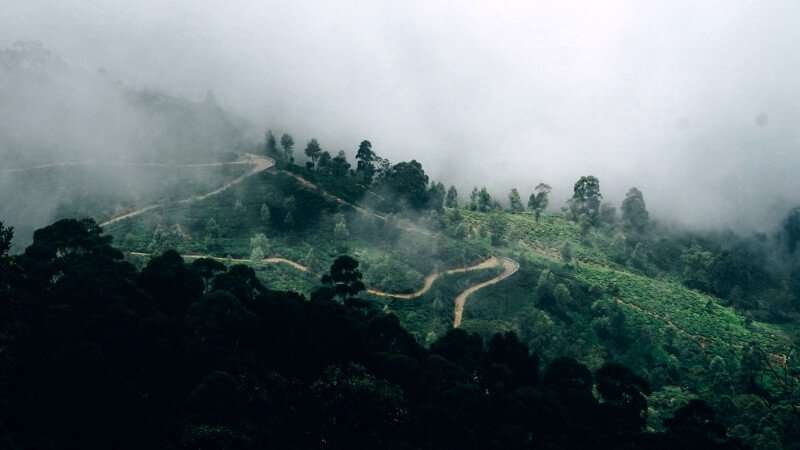
The island's centre is dominated by the Hill Country, a major tea-producing region. The landscape is rolling and verdant, temperatures are milder, and the architecture distinctly colonial. The main town is Kandy, certainly worth a day's visit. South of Kandy, Nuwara Eliya is the heart of tea plantations. Not to be missed is the scenic train journey from Haputale to Ella, though most travellers continue onward immediately afterwards.
The southern half features numerous national parks scattered across the island, renowned for leopards and elephants. Sinharaja National Park uniquely offers the chance to trek through rainforest on foot, naturally with a qualified guide.
The southern coast is dedicated to beach experiences. Galle is the principal town, recently restored around its historic Fort and well worth a leisurely stop.
The Adam's Peak pilgrimage fits well into a central region tour between Kandy and Nuwara Eliya, or can be reached directly from Colombo.
Travelling in Sri Lanka is straightforward: the population generally speaks passable English and tourist services are reliable. Travel options include private cars with drivers or trains (note that delays are common). Given the island's modest size, a ten-day itinerary offers an excellent balance.
Share
apiediperilmondo by wayure
New articles on walks, trekking and hiking trips. Free, no spam.
Redazione
La redazione di Apiediperilmondo. Guide, itinerari e storie nate camminando: consigli pratici, cammini in Italia e nel mondo, letture e spunti per chi viaggia a piedi.
Profilo e tutti gli articoli di ApiediperilmondoTurn this inspiration into a real journey.
Tell us about your dream walk: we will build the itinerary together.