Book Review: Into The Wild – A Journey Into Wilderness
Jon Krakauer's gripping narrative follows Chris McCandless, a young idealist who spent the early 1990s wandering through America's wilderness, ultimately seeking spiritual truth and authenticity in nature's remote corners.

To many eyes, this might seem like an adventure driven by youthful impulse, a desire to rebel against society and family, ending badly due to inexperience and excessive exuberance. Yet I believe it's the story of a young man with a promising future who chose, with extraordinary courage, to forsake the easy comfort he could have enjoyed in order to pursue self-discovery and a deeper meaning to life. He embarked on a journey with no destination or timeline, one that would lead him to inhospitable lands and ultimately to his death.
This book, "Into the Wild", emerged from a chance encounter between McCandless's story and Krakauer, then a journalist, who reported the entire affair in Outside magazine. The article immediately captured widespread attention across the United States.
Many wondered why a young man barely in his twenties had chosen to abandon his family's comfortable, middle-class existence (Chris's father, Walt, was a leading scientist at NASA) to venture into an existence stripped of possessions and certainty.
They dismissed it as existential whimsy, unable to fathom such a foolish and immature choice, unable to move beyond Chris's tragic end, unable to grasp the profound power of his journey or that intimate quest for balance between man and nature.
Over time, this story became an all-consuming obsession for Krakauer, who gradually pieced together this extraordinary tale with help from the young man's family, the people he met along the way, and Chris's own diary from his final adventure. The result is one of the most evocative and emotionally moving reading experiences imaginable.
"Many people live unhappily their entire lives without ever attempting to change their situation because they are conditioned by the way they were born into this world, how they were raised, and what society and their parents have told them to do. Yet, for the adventurous spirit, there is nothing quite so paralyzing as the promise of a secure future. The core of the human spirit is passion for adventure. The real heart of vitality is joy derived from new experiences, and there is no greater joy than to have an ever-changing horizon and to live each day in the light of a new sun."
Jon Krakauer
Shortly after graduating from Emory College, Chris set out on his journey across the United States—first by car, later on foot, riding freights, kayaking, and using every available means of transport. A true literary wanderer on the road!
He was not intimidated by hardship or afraid to take risks, and this enabled him to navigate challenges with remarkable resilience. He was also highly cultured and well-read, devouring the great classics—Tolstoy, Jack London, Thoreau, Pasternak—and developing his own personal creed, a continuous reflection that led him to adopt stringent moral standards for both himself and others. Inevitably, this philosophy strained his relationships, particularly with his parents.
During one of his summer travels before completing his studies, Chris discovered that both he and his sister Carine had been born outside of wedlock—his father was still legally married to his first wife. This intolerable lack of honesty gradually kindled in him a sense of rebellion that had previously been kept tightly in check.
For this reason and many others, he made the radical decision to cut ties with his old life. He donated all his savings to charity, burned his documents and remaining cash, and resolved to live day by day, following the call of his heart and mind, always on the road.
He headed west in his beloved Datsun, but an incident forced him to abandon the car and continue on without transport. Along the way, he formed genuine friendships with several people, though he concealed his identity behind the nom de plume Alexander Supertramp—a symbol of his rejection of his former life.
During these nearly two years of almost ascetic pilgrimage, he worked and saved money to purchase the equipment necessary for his ultimate dream—the adventure of all adventures, a true journey "Into the Wild": Alaska.
"Two years he wanders all over the place. No phone. No pool. No pets. No cigarettes. Ultimate freedom. An extremist. An aesthetic wanderer. A radical ascetic. A man for whom life itself is the only suitable venture. Now, after years of continuous travel, he stops to take a final stand: the climax of the spiritual revolution. No longer to be poisoned by civilization, he flees, and walks alone upon the land to become lost in the wild."
Christopher McCandless
He never lingered long in one place, perhaps fearing he might grow too attached to people and locations and be tempted to abandon his plans. I believe this is another admirable quality in Chris—he always had the courage to take to the road again without hesitation, constantly refilling his future with possibilities. Perhaps what drew him forward was the very difficulty he created for himself, his refusal to yield to society's continuous pull, and his ability to find satisfaction in daily deprivation.
"Don't settle down and sit in one place. Be a drifter. A rolling stone. A wanderer. Experience new places and horizons each and every day."
Christopher McCandless
What emerges during a journey—a slow journey undertaken with the labour of one's body and the work of one's mind—is something extraordinary that reduces to cosmic insignificance all the inequities imposed by society: bills to pay, work troubles, a house to clean, missed opportunities. These become snow in the sun, and the mind focuses with disarming clarity toward your goal, toward that purpose that set you on your path.
Returning to Chris and his "Into the Wild" adventure, we might criticize him for giving in to the classic frenzy of an impatient young man eager to measure himself against life without knowing it deeply—especially when choosing to live solely on what the earth provides, particularly in an extreme place like Alaska. Yet everyone should recognize his enormous strength of initiative and goodness of heart in pursuing his dream and attempting to create something he profoundly believed in!
How many detractors can claim as much?
I believe the only way to be part of this system without going mad is to accept, even in small part, what it offers.
A difficult matter for a free spirit unwilling to compromise. Writing about it is certainly simpler and less painful than living it.
"It is easy, when you are young, to believe that what you desire is what you deserve, to assume that if you want something badly enough, it is your God-given right to have it."
Christopher McCandless
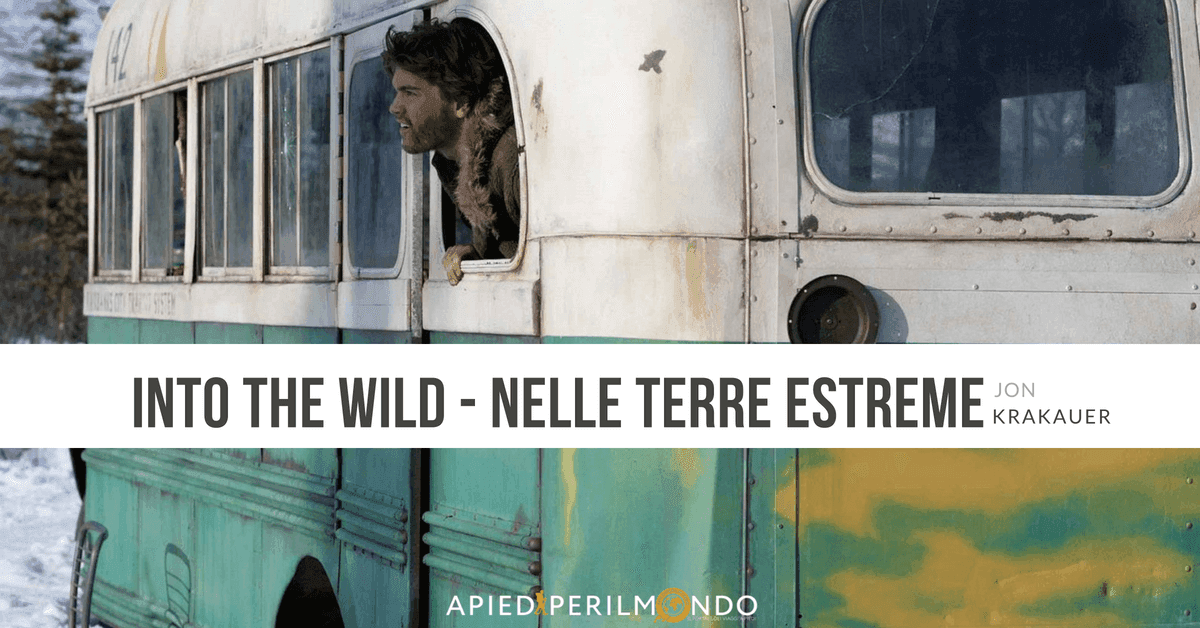
He reached Alaska in April 1992 and remained there for approximately five months. He found shelter in an abandoned bus and provided for himself by hunting, fishing, and gathering berries, roots, and wild plants—without phone, maps, watch, or axe. For five months, he survived according to the unforgiving laws of nature in extreme terrain. He came to understand even more profoundly that true happiness does not lie in material possessions but in simple, genuine contact with the world and wild, untouched nature. He grasped the idea that genuine happiness requires full sharing with others, as he noted in his journal: "Happiness is only real when shared."
We might speculate that he had reached a point of readiness—we cannot know for certain—to return home to his family, to forgive his parents and perhaps himself for all those misunderstandings and arguments that now, without that burning anger, seemed like futile excuses for leaving.
Some people achieve a certain maturity as years pass, as is true for most. Others manage to discern meaning and truth sooner because the journey itself expands the mind and broadens horizons, allowing those who choose to forgo certain comforts to arrive much earlier at an important life objective: awareness.
Returning to Chris and his "Into the Wild" adventure, we might criticize him for surrendering to the classic impatience of youth, for attempting to measure himself against life without truly knowing it—especially when choosing to live solely on what the earth provides, particularly in an extreme place like Alaska. Yet everyone should acknowledge his enormous strength of will and genuine goodness for pursuing his dream and striving to create something he deeply believed in!
How many detractors can claim the same?
I believe the only way to participate in this system without losing one's mind is to accept, even minimally, what it offers.
A difficult matter for a free spirit, one unwilling to compromise. It is certainly easier to write these words than to live them.
"I have lived a full life, and I have satisfied myself with the kinds of things I have seen. I have sensed in myself a need to find something in life to which I can direct my efforts. I have found that I can be happy only in a small corner of life, in the province of a small, provincial town, with my family, with the people I love, and with modest work for the good. To fulfill these hopes, and not to abandon them for something more significant, but to keep trying to achieve them, is the most important thing in life. I have discovered that I can have happiness only when I work for it, with the help of my family and friends, and when I know that I am capable of achieving what I have begun; and now I see that I have found this happiness. What more can a man desire?"
Christopher McCandless, reading Leo Tolstoy
Chris had decided to return to civilization. Those two years of freedom would have allowed him to give concrete form to the aspirations of his young adulthood.
Unfortunately, when he returned to the Teklanika River he had crossed months earlier, the snowmelt had swollen the water with such force that he could not safely ford it without risking being swept away by the current.
He returned to the bus to await a more favourable moment. But in the following weeks, he mistakenly gathered seeds from inedible wild potato plants, which resembled the species he usually foraged.
The toxic effects of consuming these poisonous seeds led to malnutrition and ultimately to his death in mid-August of that year.
Two weeks later, a group of local hunters discovered his remains, bringing his story to light.
Krakauer tells Chris's story with the intent of cultivating compassion and understanding, encouraging readers to set aside judgment and preconception to truly grasp the significance of the young man's personal quest. The writer's empathy toward Chris—Krakauer himself is a mountaineer and lover of wilderness—plays perhaps a crucial role between the lines. One senses the passion invested in the writing and the determination to portray Chris as a figure of elevated moral character.
Yet Krakauer's journalistic instinct allows him to maintain perfect equilibrium between emotion and objectivity, avoiding partisan enthusiasm in his narrative.
I recommend taking "Into the Wild" with you on your next journey—it will be your companion and prompt you to reflect on many aspects of everyday life.
I also urge you not to miss the film adaptation directed by Sean Penn with the same title, enriched by Eddie Vedder's soundtrack. His musical compositions elevate the film to extraordinary heights.
Share
apiediperilmondo by wayure
New articles on walks, trekking and hiking trips. Free, no spam.
Redazione
La redazione di Apiediperilmondo. Guide, itinerari e storie nate camminando: consigli pratici, cammini in Italia e nel mondo, letture e spunti per chi viaggia a piedi.
Profilo e tutti gli articoli di ApiediperilmondoDiscover our itineraries
in Camino de Santiago.
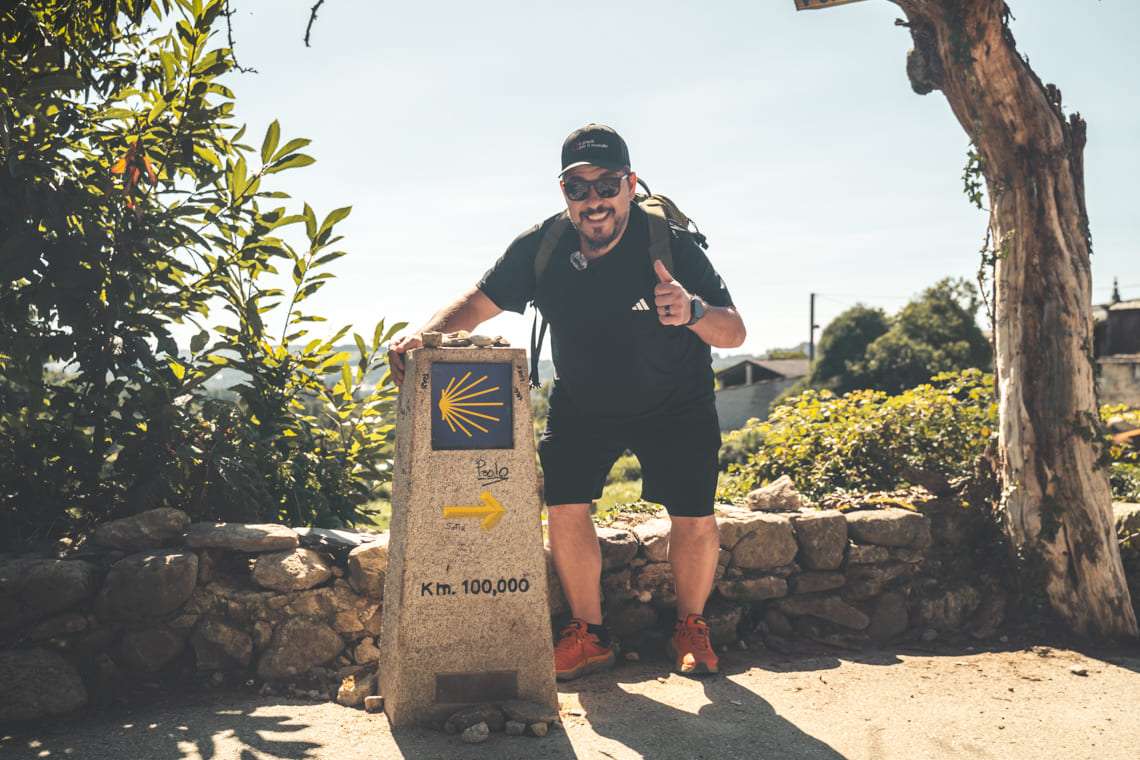
Camino de Santiago from Sarria - Last 100 km
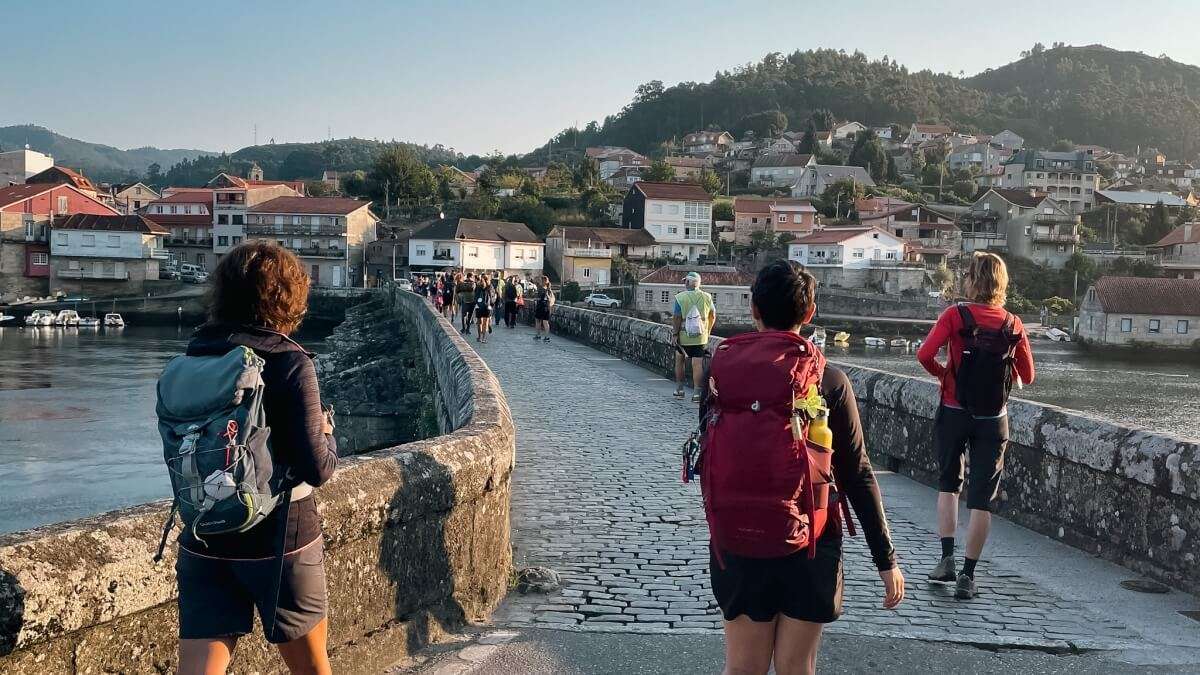
Portuguese Way from Tui - Last 100 km

Camino Primitivo from Lugo - Last 100 km
Want a tailor-made itinerary?
Plan your trip