20 Iconic Landmarks on the Camino de Santiago
The Camino de Santiago is a transformative journey that touches your heart with every step. Yet certain places—through their breathtaking beauty or spiritual significance—create memories that linger far longer than others. Discover 20 unforgettable landmarks that define this sacred pilgrimage.

In this article
1. Saint-Jean-Pied-de-Port
Saint-Jean-Pied-de-Port is the official starting point of the Camino de Santiago de Compostela.
Once you have collected your pilgrim passport at the pilgrim office on Rue de la Citadelle, all that remains is to enjoy the wonderful atmosphere of this small Basque gem at the foot of the Pyrenees.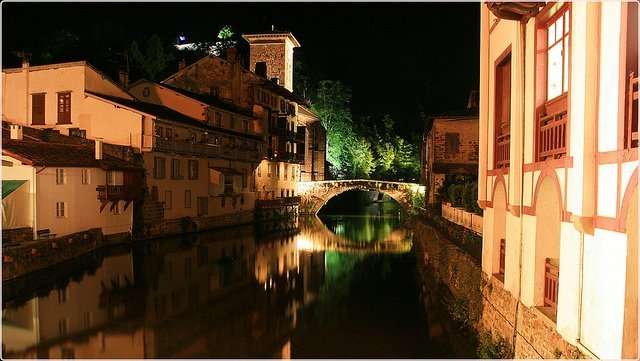
The cobbled streets, stone bridges and beautiful historic centre create a stunning effect against the surrounding nature. And the people, who are wonderfully welcoming, enrich what is already an incredible experience.
2. The Pyrenees and Roncesvalles
The first stage is genuinely tough, but the satisfaction of having crossed the Pyrenees on foot and the beauty of the landscapes along the way make these 1,270 metres of climbing an unmissable part of your Camino de Santiago.
Arriving at Roncesvalles feels like a celebration: you reunite with fellow pilgrims, share dinner with a bunk neighbour, or explore a village with a centuries-long history tied to the Camino. You are in Spain, and the journey has truly begun.
3. Pamplona
Pamplona is the first major city you encounter on the Camino. Proudly Basque, it is famous for its running of the bulls during the San Fermin festival.
Its pintxos are a culinary spectacle, and the city itself is genuinely fascinating. Modern, clean and full of greenery, it has a very ancient historic centre packed with things to see, where you can also have fun and dive into the Spanish nightlife.
4. Alto del Perdon
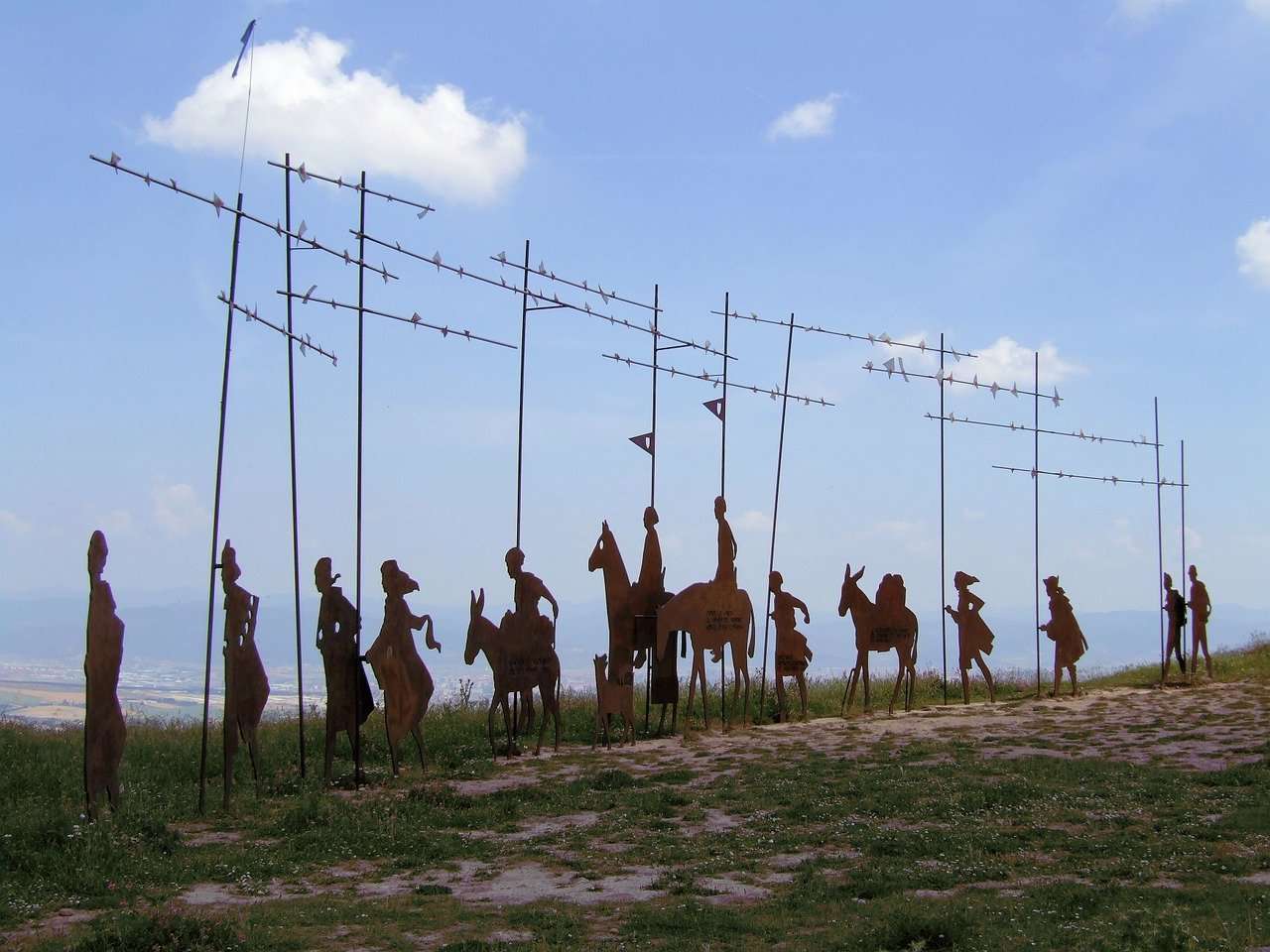 Just past Pamplona, on the Alto del Perdon, beside 40-metre wind turbines, stands one of the Camino's most famous artistic installations: a caravan of pilgrims on foot, on horseback and on mule.
One of these 14 figures bears the celebrated inscription "Donde se cruza el camino del viento con el de las estrellas", evoking the wind that blows constantly here and the starlight that, according to legend, guided Pelayo to discover the tomb of the Apostle James. Truly an iconic spot on the Camino de Santiago.
5. Fuente del vino de Irache
The wine fountain at Irache has become one of the most iconic spots on the Camino. Here, a double fountain provides pilgrims with both water and wine, kindly offered by the nearby winery. A sign asks you not to drink more than a couple of glasses, so do not fill your bottles. The road ahead is long.
6. Logrono
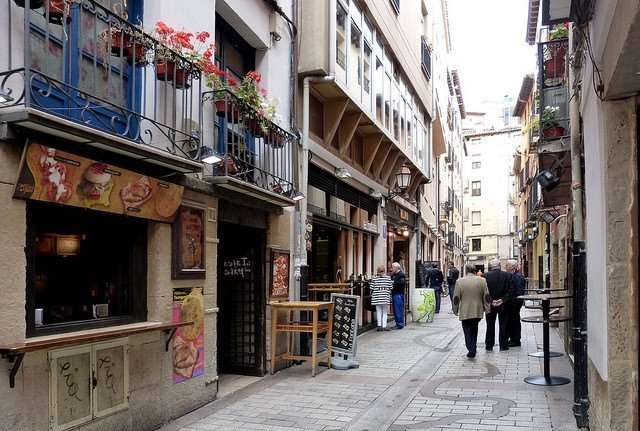 Capital of La Rioja, the famous wine region, Logrono is remembered by pilgrims above all for the drinks and lively evenings.
The historic centre is crammed with bars and venues, each offering dozens of pintxos varieties that have become the symbol of the Spanish nightlife scene. The wine is exquisite and very affordable, and absolutely worth tasting.
Just do not overdo it: you have a day of walking ahead of you.
7. Najera and the poem
Just before reaching Najera you will notice a poem dedicated to the Camino written on a wall. Composed by a local priest, it offers many pilgrims a moment of reflection.
Polvo, barro, sol y lluvia es Camino de Santiago.
Millares de peregrinos y mas de un millar de anos.
Peregrino ¿ Quien te llama? ¿Que fuerza oculta te atrae?
Ni el Campo de las Estrellas, ni las grandes catedrales.
No es la bravura Navarra, ni el vino de los riojanos
ni los mariscos gallegos, ni los campos castellanos.
Peregrino, ¿Quien te llama? ¿Que fuerza oculta te atrae?
Ni las gentes del Camino, ni las costumbres rurales.
No es la historia y la cultura, ni el gallo de La Calzada
ni el palacio de Guadi, ni el Castillo Ponferrada.
Todo lo veo al pasar, y es un gozo verlo todo,
mas la voz que a mi me llama la siento mucho mas hondo.
La fuerza que a mi me empuja, la fuerza que a mi me atrae,
no se explicarla ni yo
¡Solo el de Arriba lo sabe!
Eugenio Garibay
8. Granon
Do not look for a large town or famous landmark, but rather a tiny village at the edge of La Rioja, with just a small church and a few houses in the middle of nowhere.
This is Granon, an insignificant dot on the map for a tourist, but a fundamental stop for a pilgrim who wants to savour the true spirit of the Camino. The welcome offered by the parish community is something truly special.
No one is turned away, even if it means sleeping on the church floor, and the communal dinner reflects that sense of sharing and brotherhood one hopes to find on this journey.
9. Burgos
Burgos is a city that absolutely deserves a proper stop.
Its gastronomy and wines are superb, the historic centre is a labyrinth of atmospheric streets and squares, and the cathedral, one of the finest Gothic examples in Europe, is the cherry on top.
Birthplace of El Cid, home to a theology faculty, the MUSAC museum, a traditional market, a castle and several monasteries: in short, an explosion of beauty, charm, interests and attractions. A magnet for lovers of human-scale cities. Simply enchanting.
10. The Meseta
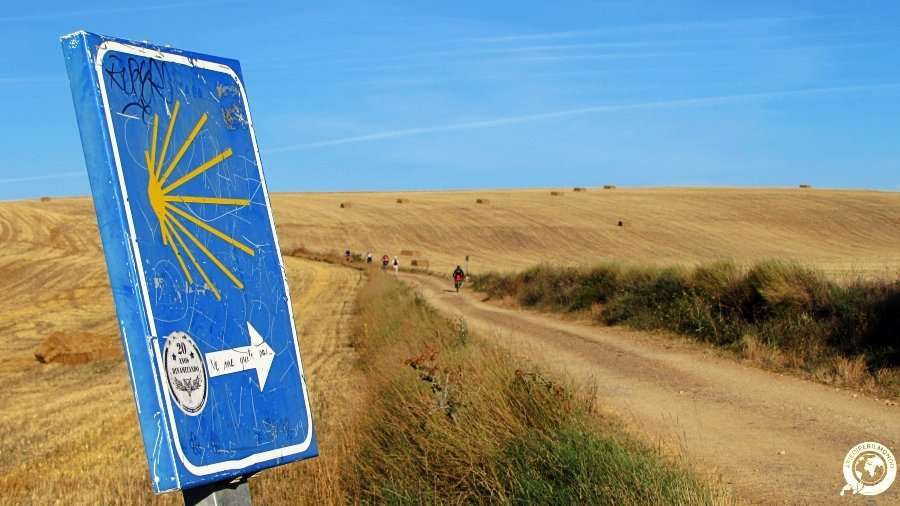 Anyone tackling the Camino de Santiago for the first time, after listening to or reading blogs, accounts and guidebooks, tends to dread this stretch. Many even skip it.
Far from any city, immersed in a wild, vast and silent landscape, you find yourself on the Meseta, one of the absolute symbols of the Camino de Santiago.
The meseta, or plateau, is an ancient geological formation surrounded by mountain ranges, resembling an elevated table. What strikes you most is that after climbing up, when you would expect to descend, you continue for kilometres across a flat dirt track.
The climate features wide seasonal temperature swings, and the dry summer air leaves the land so arid that only steppe-like vegetation can survive. Intensive cereal farming creates monochromatic landscapes devoid of trees or houses.
Pilgrims who cross the Meseta in summer face a gruelling test of endurance, not only physical but above all mental.
The landscape, breathtaking yet endlessly repetitive, makes you lose track of the distance covered, and without landmarks time seems to stand still. For some, getting a little lost in it is a pleasure.
It is the right moment to think, to give space to yourself, and, now at roughly the halfway point, to venture some reflection on your experience.
11. Hontanas
Deep in the Meseta beyond Burgos, a bell tower suddenly appears out of nowhere. A sign along the path warns you that Hontanas is near, but you cannot actually spot it until you are just 50 metres away.
Nestled in a kind of hollow, it looks almost like a mirage: the perfect spot to rest and recover after so many kilometres of sun and solitude.
12. Leon
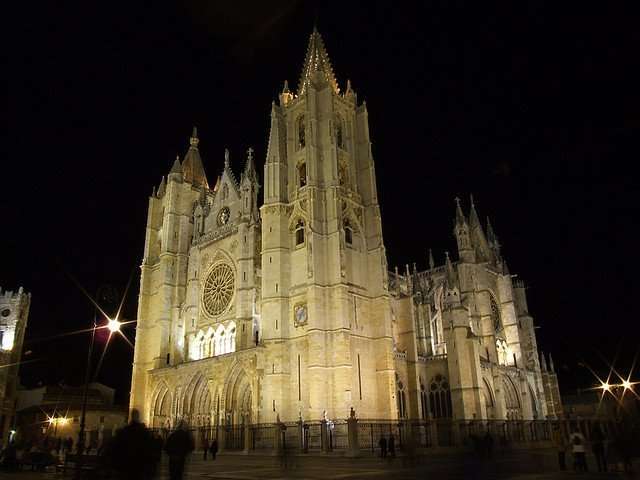 A key stage on the French Camino and the starting point of the Camino de San Salvador, Leon still bears many traces of its Roman past.
Among the city's many prized monuments, the Gothic Cathedral of Santa Maria la Regia stands out as one of the finest in all of Europe.
The past blends with the future: the MUSAC, the Auditorium and the Europa Building, among others, reveal a Leon that is new and dynamic, with its eyes on tomorrow. A city full of life, drawing visitors also for its nightlife, its food and the friendliness of its people.
13. Puente de Orbigo
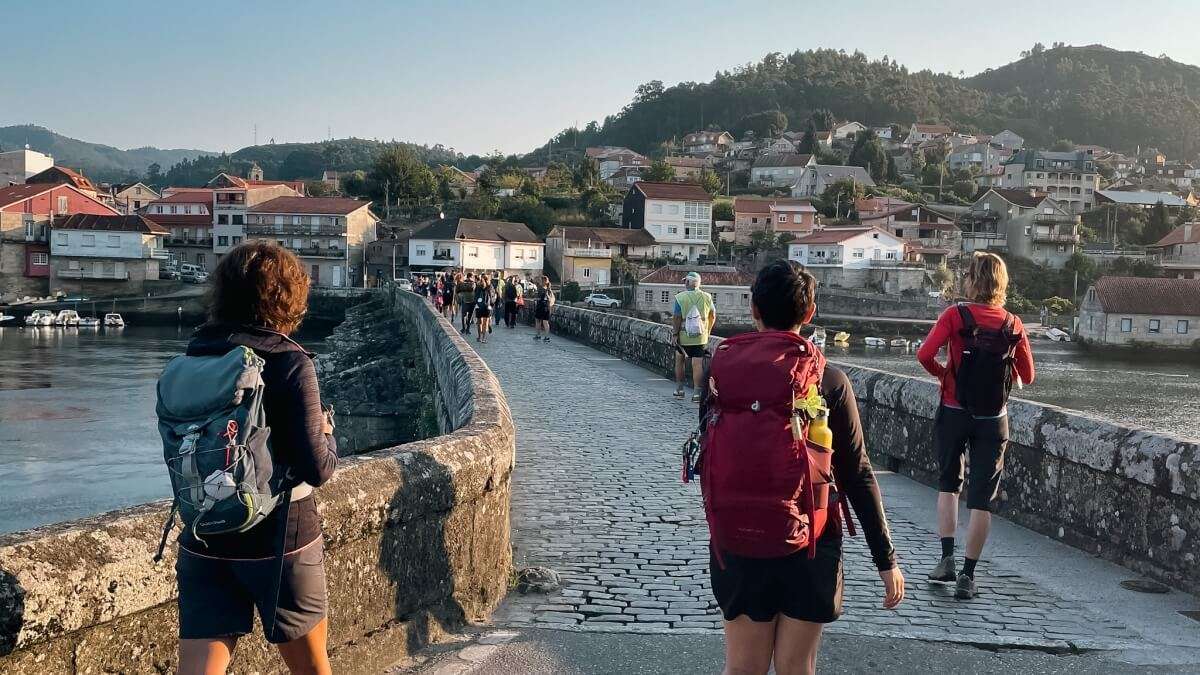
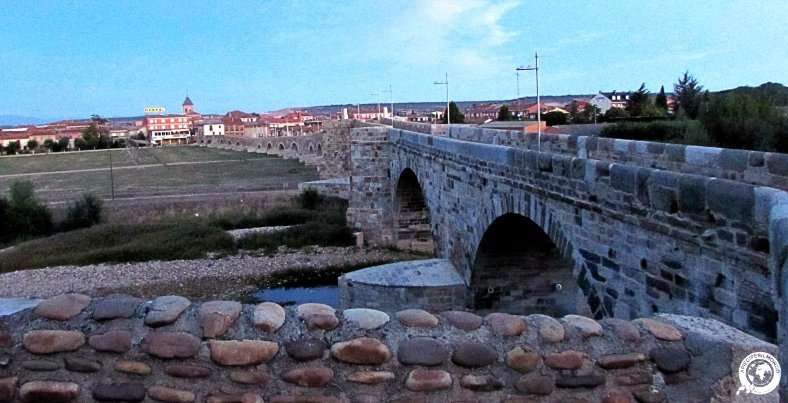 The bridge at Orbigo is a feast for the eyes, with its many arches and stone silhouette.
Crossing it at dusk stirs deep emotion and a sense of wonder, perhaps tied to the history and legend that have always surrounded it. The most famous is that of the Paso Honroso:
The story tells of a certain Don Suero de Quinones, who, having fallen into an unrequited love, fastened an iron ring around his neck as a sign of bondage and vowed to remove it in honour of Santiago if he could triumph in the Paso. So, between 9 July and 10 August of the holy year 1434, he and nine other knights challenged fighters who came from far and wide to single combat. The contests drew enormous crowds who came to watch the bouts. After 30 days the ten knights, all still alive, left the city and set out on pilgrimage to Compostela.
14. Astorga and Gaudi's Palace
Astorga, exploited by the Romans for its abundant gold mines, still preserves numerous traces of its past. Alongside the walls, the baths and the Roman forum, the cathedral and the extraordinary Episcopal Palace designed by Antonio Gaudi stand out for their sheer grandeur.
15. Foncebadon, Cruz de Hierro and Manjarin
 Foncebadon is a small village near a mountain pass, the only one that in the Middle Ages connected Leon with Galicia.
Isolated, hard to reach, and in winter dangerous due to snow, it represented the pilgrim's last chance to find shelter and hospitality in an emergency.
The fortunes of Foncebadon, like its periods of decline, have therefore always been inseparably linked to those of the Camino.
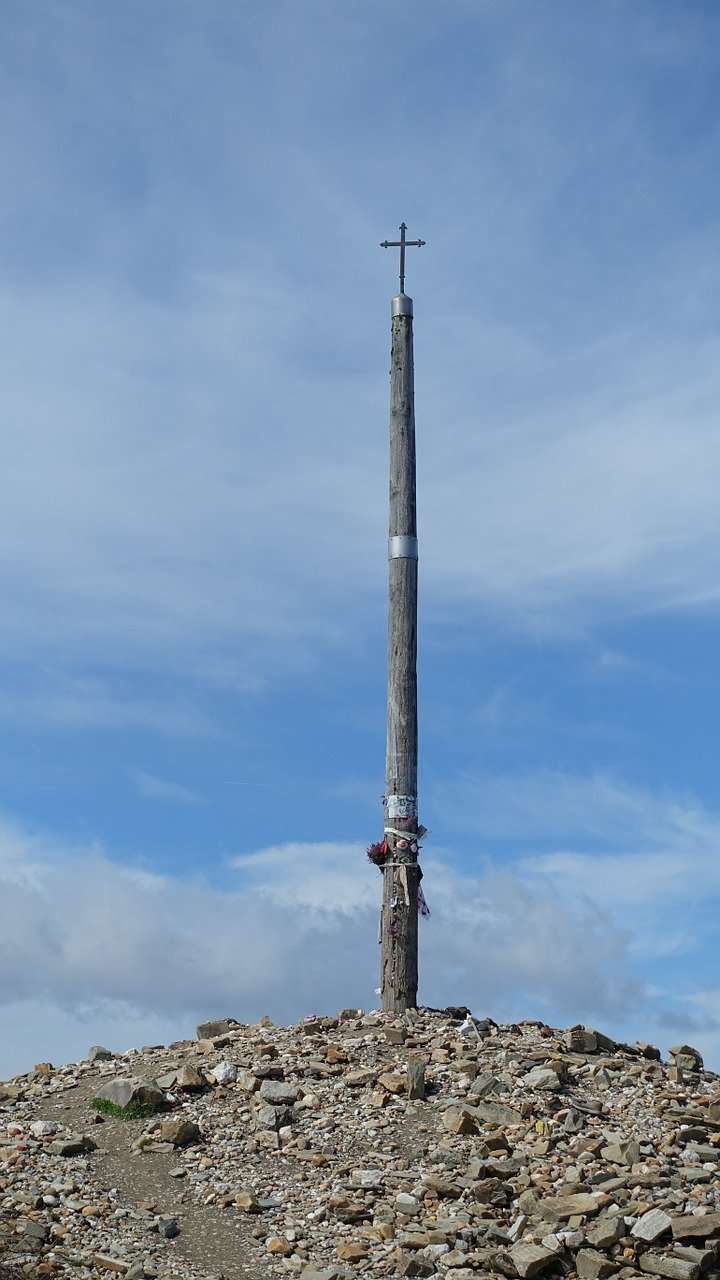
A couple of kilometres further on, the Cruz de Hierro rises from the forest: a 5-metre pole topped by an iron cross, it marks the highest point of the Camino at 1,504 metres.
This is where you leave behind the green Castilian plains and draw close to Galicia with its mountainous, wooded landscapes.
It is said that it was the monk of Foncebadon, Gaucelmo, who erected this pole so that pilgrims would not lose their way during snowstorms. It is now customary to leave a stone brought from home there, a symbol of sacrifice to make amends for a fault.
Finally, Manjarin, a refuge that has welcomed pilgrims since ancient times, famous for a series of wooden boards posted along the road indicating the kilometres remaining to distant places such as Santiago, Rome and Jerusalem.
16. Ponferrada
Ponferrada is a small, highly visited town whose most important attraction is its magnificent castle. Dominated for centuries by the Knights Templar, it was a key stop on the Camino de Santiago in the Middle Ages and remains an essential landmark today.
17. O Cebreiro
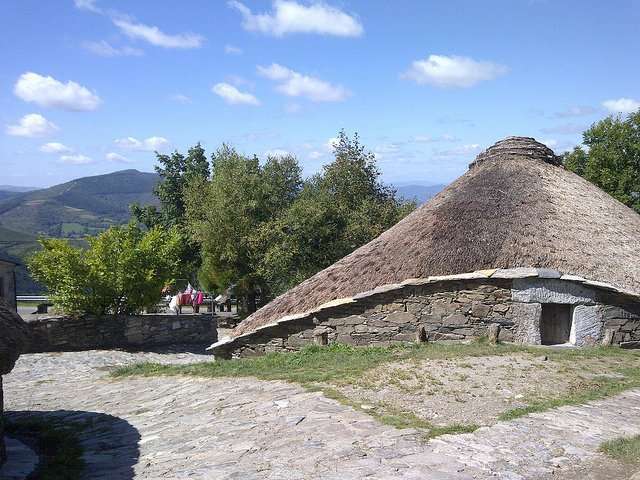
This is undoubtedly one of the most atmospheric and captivating places on the Camino. Already in Galician territory, O Cebreiro has Celtic origins according to some. Perched on a green hill, its panoramic terraces offer a stunning view, often draped in a soft blanket of clouds. In the village you will find peculiar oval structures with thatched roofs: these are "pallozas", ancient rural dwellings.
18. Ezequiel and the Pulpo a la Gallega
Ezequiel is a well-known pulperia in Melide, famous for its exquisite pulpo a la gallega. A typical Galician dish, it consists of stewed octopus, cut into pieces and served on a small wooden board dressed with paprika, olive oil and salt.
19. Monte de Gozo
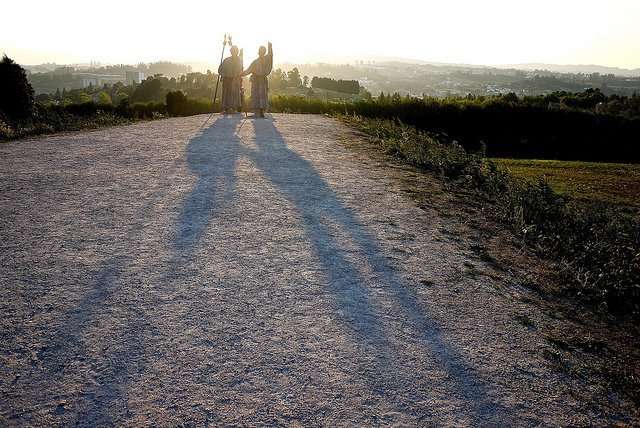 One of the most moving views on the whole journey is from Monte de Gozo, just 5 km from Santiago. From this hill you can see the entire city spread out below, with its houses, streets and the soaring spires of its Cathedral. The emotion is overwhelming, and the joy of arrival mingles with nostalgia for a Camino that is drawing to a close. A huge pilgrim dormitory, newly built, accommodates up to 500 people here.
20. Cathedral of Santiago de Compostela
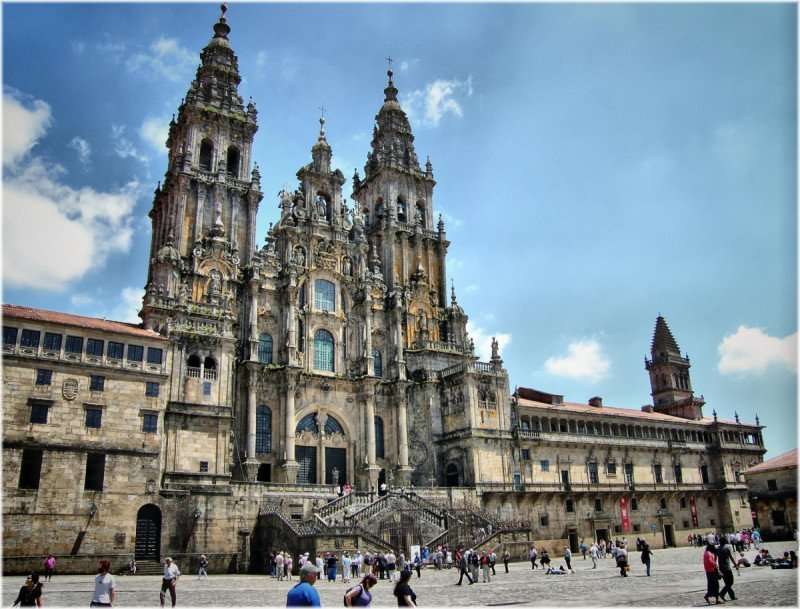
After so many days of travelling and walking, the joy of arriving in Plaza de Obradoiro and resting at the foot of the Cathedral is indescribable. The gathering point for all pilgrims, you are bound to run into a friend or fellow traveller and share a heartfelt embrace.
Inside the Cathedral you can see the statue of Saint James or attend the Friday mass with the Botafumeiro.
Santiago is a truly wonderful city to explore, and it is beautiful enough to be worth at least a couple of days of your time.
Share
apiediperilmondo by wayure
New articles on walks, trekking and hiking trips. Free, no spam.
Co-fondatrice, Apiediperilmondo
I've been organising walks since I discovered that walking slow is the fastest way to know a place. I take care of every logistical detail so you can focus only on the steps ahead.
Profilo e tutti gli articoli di Deborah