Walking With Purpose: The Walking Staff as Life's Support
Discover how the humble walking staff becomes more than a trekking companion—it's a powerful metaphor for finding strength and balance in everyday life.

In this article
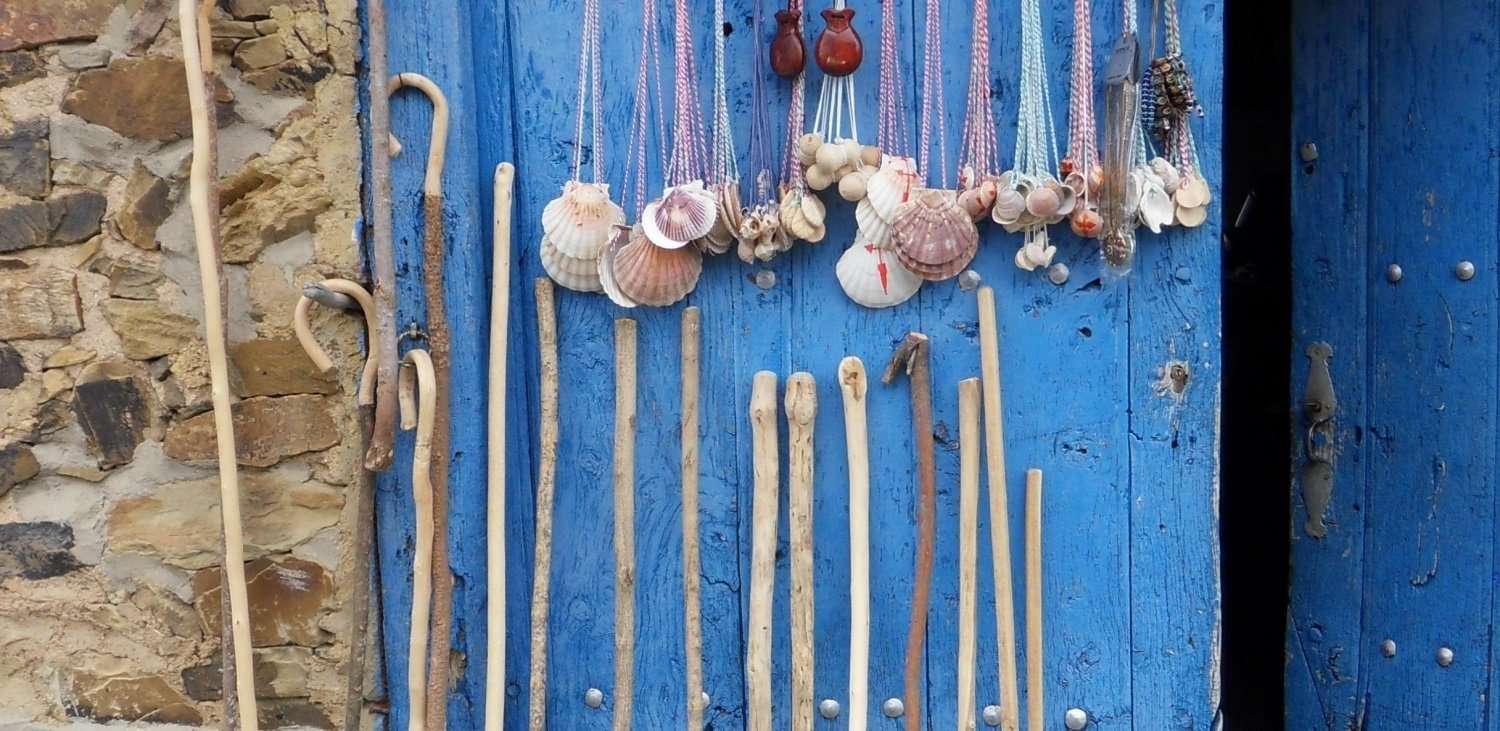
The bordone is one of the main symbols of the Camino de Santiago and refers to a curved staff that was traditionally given to the pilgrim at the beginning of their journey. In the past it was a genuine means of identification: those who carried it could find hospitality, while those without one were viewed with suspicion and risked sleeping under the stars.
It was at least a metre long and at its top was placed a hollow gourd that served as a water bottle, and a shell, as a reminder of the destination. Sometimes small cloths containing a few possessions for survival were tied to it. Besides being of fundamental use for the pilgrimage, it was also considered a representation of God's support.
The staff as support
Beyond this particular tradition, the staff has always been considered an indispensable tool for moving. In ancient gospels and nineteenth-century guides, in medieval volumes and modern works of fiction, stories are often told of saints and wayfarers, hikers and walkers accompanied by a piece of wood or steel.
Once, for example, those who lived in mountain areas would habitually equip themselves with a special staff, very similar to the walking stick used by gentlemen in the city, though more spartan. It was used as a support point, but also for many other practical purposes, such as searching for mushrooms among the undergrowth, sounding the bottom of a stream, probing beneath snow or where tall grass concealed sheer drops, striking the ground to scare away any animals.
Even today, the most modern trekking poles or Nordic walking poles are essential for tackling a walk with peace of mind. They allow you to lighten the physical effort, maintain balance, give rhythm to the walk and are also very useful in emergencies, to help someone haul themselves up, as a handhold, to break ice, or to clean off mud.
The staff as travel companion
The staff is therefore a support and a multi-purpose tool, but more generally it represents in every sense the companion on whom you rely with trust: it is the friend who encourages you on the path when you are tired or want to give up, or the stranger who chats with you along the way to give you relief.
It is the sum of the people you meet and cross paths with on the trails, but also those who support you on your daily journey, those you can ask for help and comfort.
There are occasional staffs, fashioned from a fallen branch, that accompany you only for a stretch of road and then are needed no more, others that break or wear out, and then there are those you bring from home and stay with you to the end, or that you find by chance and remain forever.
Some staffs help you go faster, others support you in the moment of need, some have allowed you to reach the summit, others have kept you company, helping you keep pace. To some you have grown attached, others you have left behind.
They are your relationships, your bonds, your friendships and the journey you have made with them: who has served as your support and your prop? When? For how long? In what way?
And for whom have you been a staff? Those to whom you offered some water in a moment of need, or lent a hand to get over an obstacle, or made smile in a period of discouragement? Which ones have you let go on ahead alone? And which are always at your side?
Share
apiediperilmondo by wayure
New articles on walks, trekking and hiking trips. Free, no spam.
Redazione
La redazione di Apiediperilmondo. Guide, itinerari e storie nate camminando: consigli pratici, cammini in Italia e nel mondo, letture e spunti per chi viaggia a piedi.
Profilo e tutti gli articoli di Apiediperilmondo