The Symbolism of the Camino de Santiago: Where Does It Come From?
Discover the rich symbolic language of the Camino de Santiago, woven through centuries of religious tradition and pilgrim culture. From sacred shells to spiritual crossroads, explore the deeper meaning behind every step of this transformative journey.

In this article
Santiago and the apostle are surrounded by many meaningful symbols. In this article, we've highlighted those that appear most frequently along the Camino de Santiago
Why is the scallop shell the symbol of the Camino de Santiago?

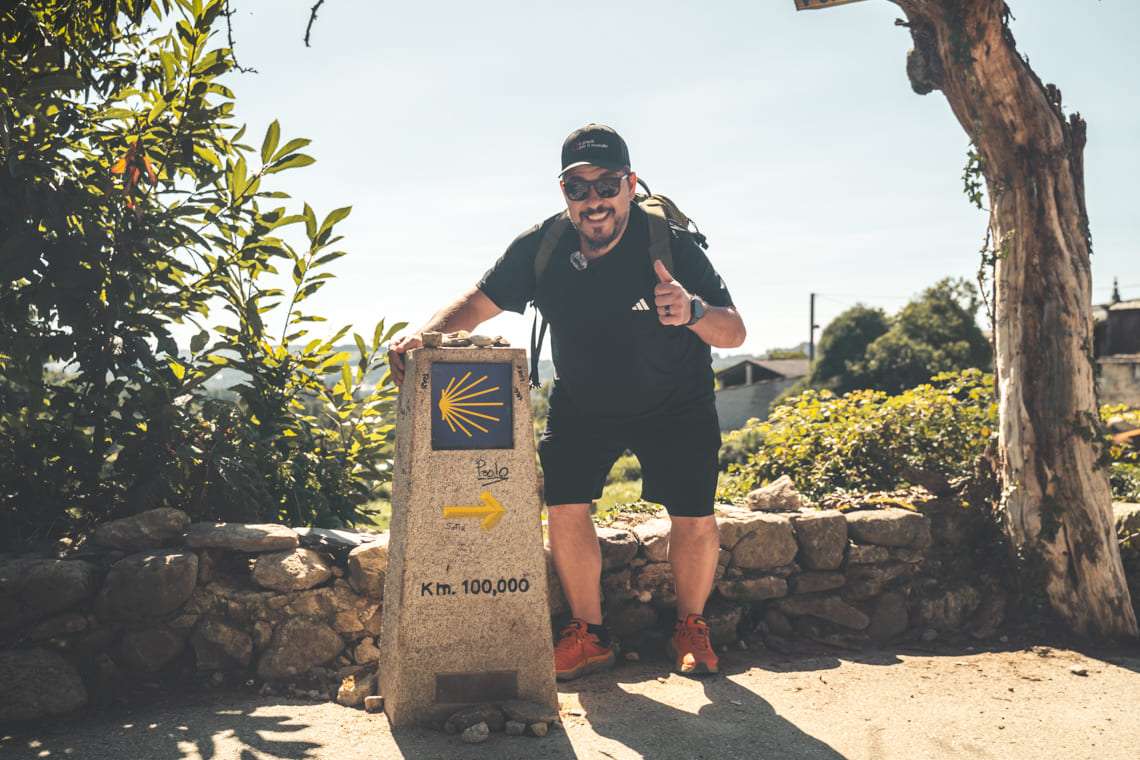
The scallop shell, also known as the Shell of Santiago, is the most recognizable symbol of the Camino de Santiago.
You'll see it marking signposts and waymarkers throughout the entire route leading to the Cathedral of Santiago, where the apostle is said to be buried.
The shell also holds special significance as it served as a practical tool for eating and drinking along the way from rivers and springs.
Moreover, upon reaching Finisterre at the end of their journey, pilgrims would collect shells from the beach as proof of completing the pilgrimage—an ancient predecessor to the modern Compostela certificate.
Historically, only pilgrims making the return journey from Compostela wore the shell.
What does the yellow arrow mean on the Camino de Santiago?
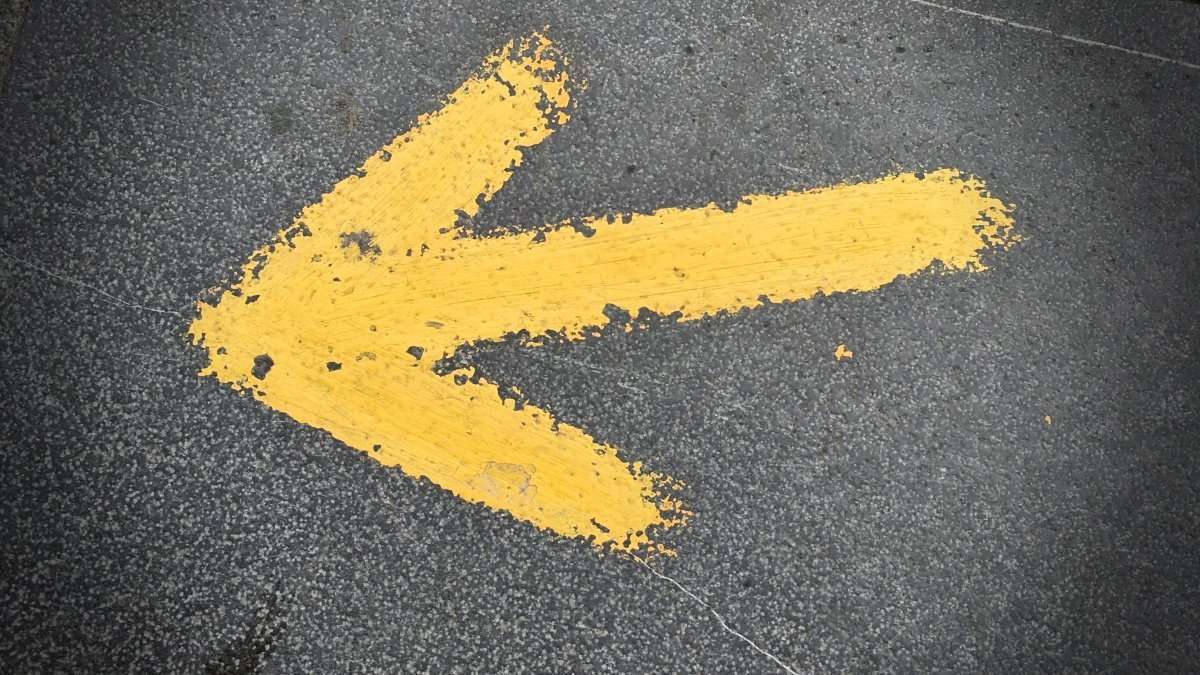
Among the symbols marking the Camino de Santiago, the yellow arrow stands out as a crucial waymarking system. You'll find it painted on walls, roads, trees, pavements, and buildings.
Whenever you spot one, you know you're heading in the right direction!
This yellow arrow represents a modern symbol of the Camino, created in 1984 by a priest from O Cebreiro named Elías Valiña, who played a crucial role in promoting and safeguarding the Camino de Santiago.
Valiña marked the route, particularly from France to Santiago de Compostela, with these yellow arrows (working with local Amigos del Camino associations), with the goal of revitalizing the pilgrimage that was in danger of disappearing and making the journey easier to navigate.
At that time, the paths were poorly defined and it was easy to get lost.
But why yellow? Legend has it that Valiña obtained the paint from road workers who were resurfacing a highway and marking it with this same colour, deciding to use it at confusing points throughout the French Way.
What is the walking staff used for on the Camino de Santiago?
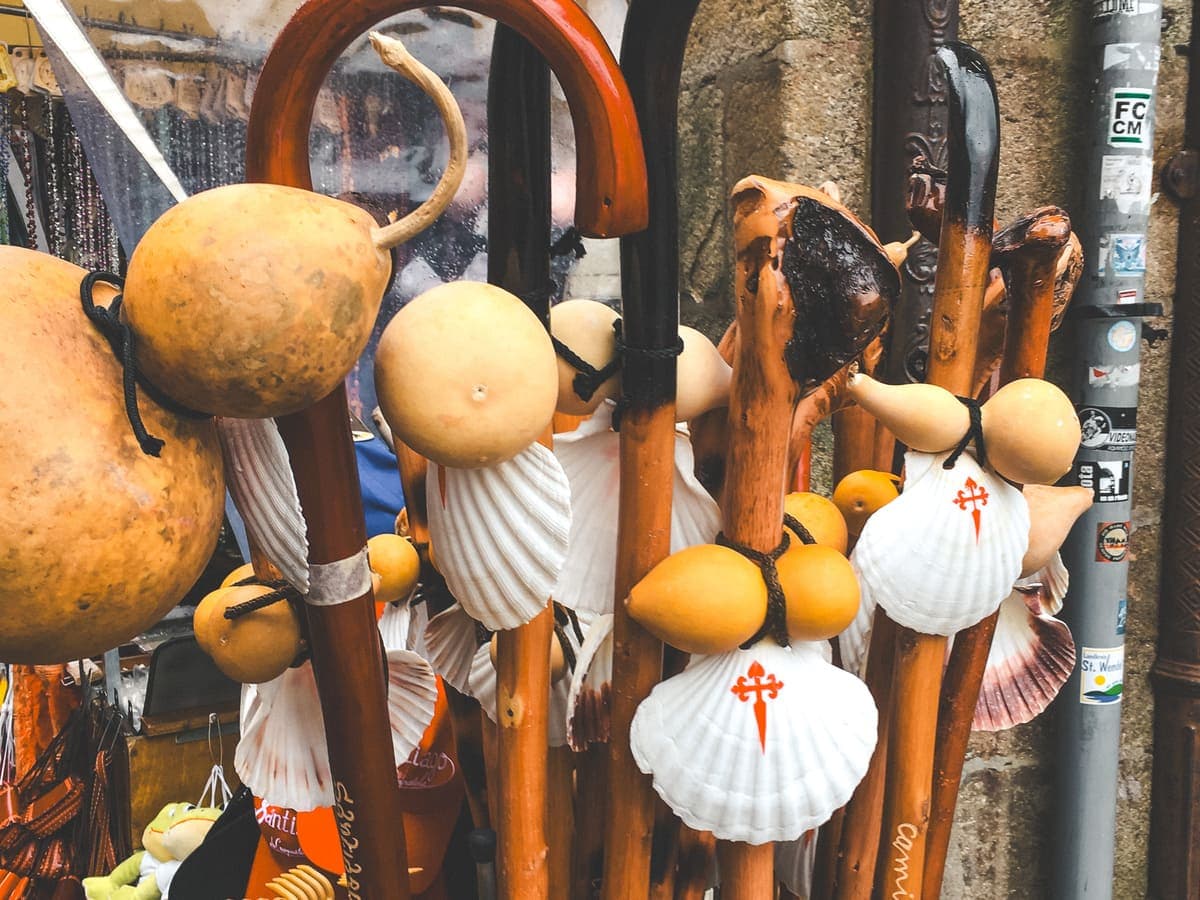
Many pilgrims choose to carry a walking staff throughout the Camino de Santiago.
Why? Beyond providing practical support for covering long distances and maintaining balance on uneven terrain, it carries deep symbolic meaning.
It represents support and stability through both the physical and spiritual challenges encountered along the route.
Typically, the walking staff has a handle at the top where you can attach a gourd or shell.
What does the Cross of Santiago represent?
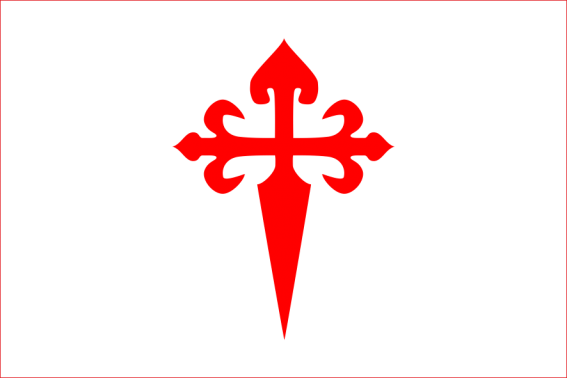
Of course, the Cross of Santiago is central to the symbolism of the Camino, representing the apostle himself.
You'll find this cross in churches, chapels, waymarkers, and other significant points throughout the route.
The cross has a distinctive shape: the upper portion resembles a fleur-de-lis, which then extends downward like a sword blade.
The blade itself references Santiago Matamoros—the warrior saint on horseback—symbolizing divine protection in battle during the Spanish Reconquista.
This cross is traditionally depicted as red on a white background, symbolizing the blood shed by the apostle Santiago.
You'll also encounter this symbol adorning the famous Santiago cake, made with almonds—a delicious treat worth sampling at the end of your pilgrimage!
What is the Compostela and how do you obtain it?
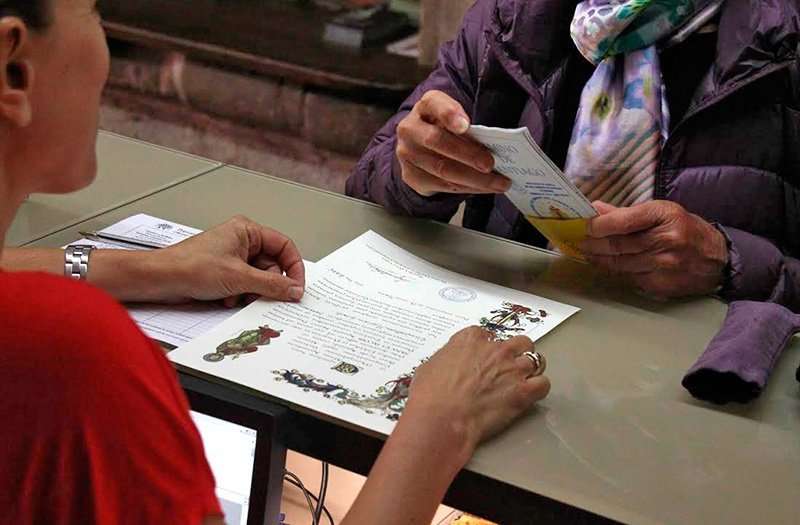
The Compostela is a parchment certificate issued by the Santiago Cathedral, certifying that you have completed the pilgrimage. It's awarded to pilgrims who have walked at least 100 km or cycled 200 km.
Written in Latin, this document serves as a tangible symbol of the pilgrim's commitment to the Camino de Santiago.
What is the pilgrim's credential and where do you get it stamped?
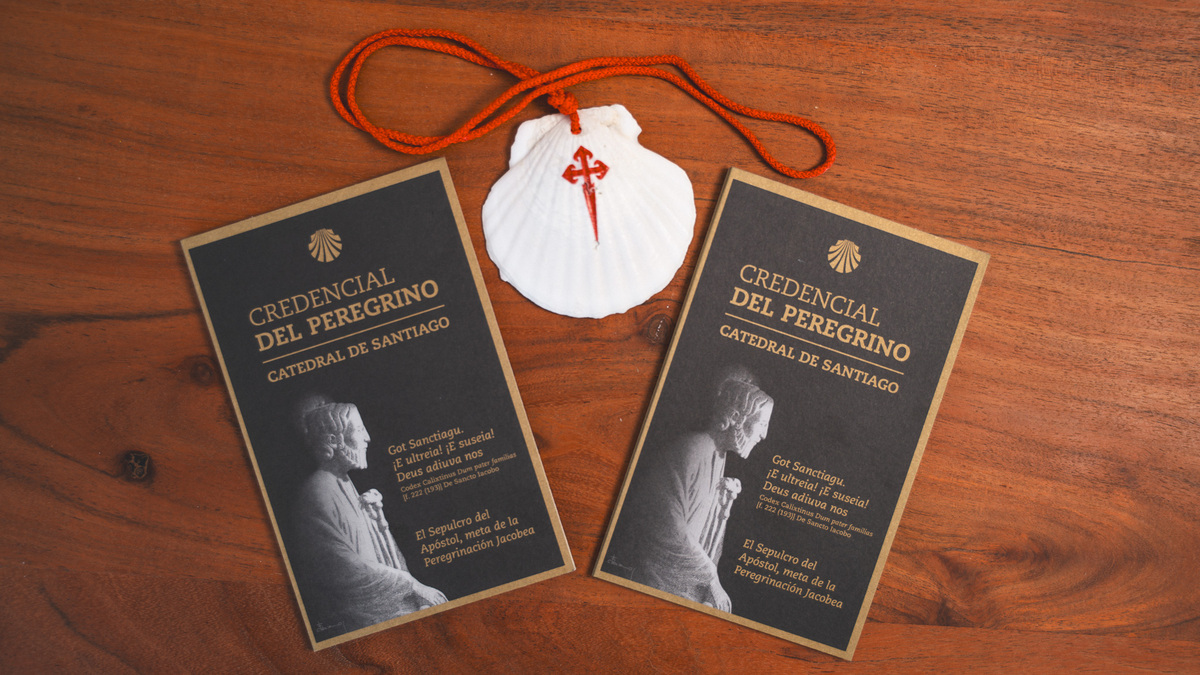
This is a document every pilgrim should obtain before starting their journey and carry throughout the Camino de Santiago.
The Credential serves as proof of your pilgrimage, allowing you to document each stage of your journey.
It gets stamped at various locations—churches, hostels, and cafés—creating a record of your path to Santiago de Compostela.
What are the milladoiros (stone cairns) on the Camino de Santiago?
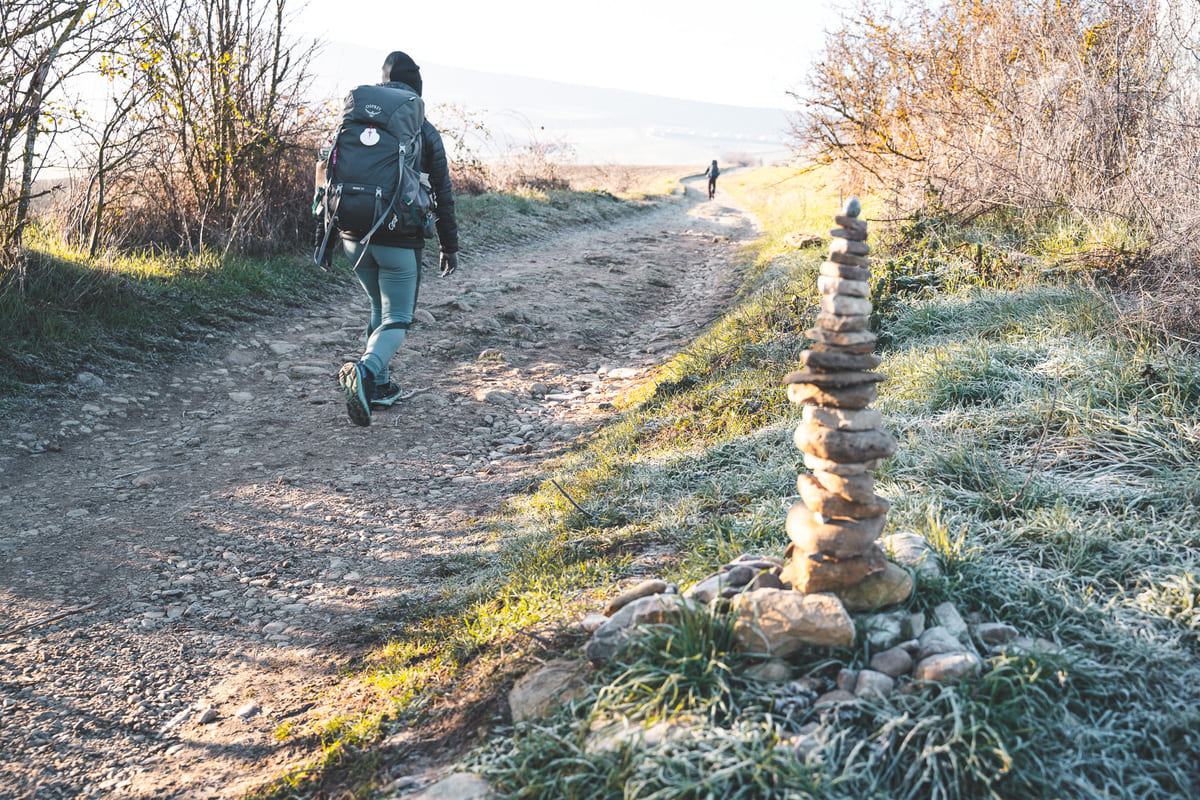
Another meaningful symbol along the Camino de Santiago is the milladoiros—stone cairns.
Along the route, you'll encounter these piles of stones (called milladoiros in Galician), often placed at waymarkers, left by pilgrims before you as a mark of their passage.
According to tradition, these stones represent acts of penitence: pilgrims who carry a stone from their starting point to these sacred spots receive forgiveness of their sins proportional to the stone's size and the sacrifice of carrying it.
Remarkable!
Today they also serve as testimony to the passage of countless pilgrims and as a spiritual meeting point for millions.
This brings us to make special mention of the Iron Cross (Cruz de Hierro) near Astorga.
Erected on a wooden pole approximately 16 feet tall, the Cruz de Hierro presides over Spain and Europe's most extensive stone cairn.
Every pilgrim walking this route places a small stone at the foot of the cross, symbolizing the burdens they're leaving behind, making this gesture one of the most meaningful rituals of the entire Camino de Santiago.
Beside the cross and cairn, there has stood since the 1980s a small chapel dedicated to Saint James and a fountain providing pilgrims with a place to rest and recover after the steep climb.
Why are worn boots one of the symbols of the Camino de Santiago?
Walking boots are essential to any pilgrim's attire, as without proper footwear you'd struggle to complete the journey.
They represent the road and its challenges, and many arrive with pride at Plaza de Obradoiro with boots completely worn through—a visible testament to living the experience fully.
And should you find yourself facing a lighthouse beside a bronze boot, you'll know you've reached Finisterre at the world's end. Here is where the land ends and where, according to Celtic tradition, souls begin their journey to the afterlife. It's also where pilgrims traditionally burned their worn clothing and boots at the conclusion of their pilgrimage.
Did you know all of these things?
Can you think of another symbol we should include in this list of Camino de Santiago symbolism?
Remember, if you'd like to walk the Camino de Santiago, you can do it with us. We can help you plan your journey solo or with companions, always offering the finest services available.
More than 20,000 people have already chosen us!
Dare to discover this wonderful experience with apiediperilmondo.
Share
apiediperilmondo by wayure
New articles on walks, trekking and hiking trips. Free, no spam.
Redazione
La redazione di Apiediperilmondo. Guide, itinerari e storie nate camminando: consigli pratici, cammini in Italia e nel mondo, letture e spunti per chi viaggia a piedi.
Profilo e tutti gli articoli di Apiediperilmondo