Poon Hill Trek in Nepal: Witness the Annapurna Sunrise
Experience one of Nepal's most iconic mountain treks to Poon Hill, where dawn breaks over the snow-capped Annapurna massif. This accessible yet rewarding journey combines stunning Himalayan vistas with authentic encounters in remote hill villages.

[av_layout_row border=” min_height_percent=” min_height=’0′ color=’main_color’ mobile=’av-flex-cells’ id=”]
[av_cell_two_third vertical_align=’top’ padding=’10px,30px,0px,60px’ background_color=” src=” attachment=” attachment_size=” background_attachment=’scroll’ background_position=’top left’ background_repeat=’no-repeat’ mobile_display=”]
[av_one_full first min_height=” vertical_alignment=’av-align-top’ space=” margin=’0px’ margin_sync=’true’ padding=’0px’ padding_sync=’true’ border=” border_color=” radius=’0px’ radius_sync=’true’ background_color=” src=” attachment=” attachment_size=” background_position=’top left’ background_repeat=’no-repeat’ animation=” mobile_display=”]
[av_image src=’https://ctciegkgbryqtjtzlifl.supabase.co/storage/v1/object/public/apd-media/apd/2017/04/trekking-in-nepal.jpg’ attachment=’16467′ attachment_size=’full’ align=’center’ styling=” hover=” link=” target=” caption=” font_size=” appearance=” overlay_opacity=’0.4′ overlay_color=’#000000′ overlay_text_color=’#ffffff’ animation=’no-animation’ admin_preview_bg=”][/av_image]
[av_heading tag=’h1′ padding=’10’ heading=’Trekking to Poon Hill, in Nepal, and sunrise over Annapurna’ color=” style=’blockquote modern-quote’ custom_font=” size=” subheading_active=’subheading_below’ subheading_size=’18’ custom_class=” admin_preview_bg=”]
Planning a trip to Nepal and searching for a short yet unforgettable trek? The Poon Hill trek is the perfect solution for you.
[/av_heading]
[av_textblock aalb-admin-input-search=” aalb-admin-popup-input-search=” aalb_template_names_list=’PriceLink’ aalb-admin-popup-store-id=’apiediperilmondo-21′ aalb_marketplace_names_list=’webservices.amazon.it’ size=” font_color=” color=” admin_preview_bg=”]
Nepal is the ultimate trekking destination. It offers countless options for all levels of difficulty, with satisfaction guaranteed. Beyond the trails, you'll encounter fascinating architecture, unforgettable landscapes, and above all, a welcoming people with genuine smiles and boundless warmth. A trek through Nepal will leave you with indelible memories and powerful inspiration.
[/av_textblock]
[av_heading tag=’h2′ padding=’10’ heading=’ Trekking in Nepal ‘ color=” style=” custom_font=” size=” subheading_active=” subheading_size=’15’ custom_class=” admin_preview_bg=”][/av_heading]
[av_image src=’https://ctciegkgbryqtjtzlifl.supabase.co/storage/v1/object/public/apd-media/apd/2017/04/Nepal-2.jpg’ attachment=’16453′ attachment_size=’full’ align=’center’ styling=” hover=” link=” target=” caption=” font_size=” appearance=” overlay_opacity=’0.4′ overlay_color=’#000000′ overlay_text_color=’#ffffff’ animation=’no-animation’ admin_preview_bg=”][/av_image]
[av_textblock aalb-admin-input-search=” aalb-admin-popup-input-search=” aalb_template_names_list=’PriceLink’ aalb-admin-popup-store-id=’apiediperilmondo-21′ aalb_marketplace_names_list=’webservices.amazon.it’ size=” font_color=” color=” admin_preview_bg=”]
Eight of the world's highest peaks are located in Nepal: Mount Everest (8,848m), Kangchenjunga (8,586m), Lhotse (8,516m), Makalu (8,462m), Cho Oyu (8,201m), Dhaulagiri (8,167m), Manaslu (8,156m), and Annapurna (8,091m). This alone makes clear that Nepal is unmatched for trekking.
Trekking in Nepal is now accessible to many: the trails are well-maintained and Nepal is one of the few countries in the world where you can undertake even lengthy treks without ever needing to sleep in a tent. Of course, as you gain altitude, things change considerably, and the experience required becomes much greater.
Trails vary in difficulty and can be adapted to suit everyone's needs, without losing the sense of adventure and discovery that characterises every journey in these mountains. You don't need to climb to excessive altitudes to have a unique experience—even at 3,000m it will be unforgettable! Naturally, as you go higher, the risks increase (see Warnings), so proceed accordingly and entrust yourself to experienced guides.
[/av_textblock]
[av_heading tag=’h2′ padding=’10’ heading=’ Poon Hill Trek: the route ‘ color=” style=’blockquote modern-quote’ custom_font=” size=” subheading_active=’subheading_below’ subheading_size=’15’ custom_class=” admin_preview_bg=”][/av_heading]
[av_image src=’https://ctciegkgbryqtjtzlifl.supabase.co/storage/v1/object/public/apd-media/apd/2017/04/Nepal-3.jpg’ attachment=’16455′ attachment_size=’full’ align=’center’ styling=” hover=” link=” target=” caption=” font_size=” appearance=” overlay_opacity=’0.4′ overlay_color=’#000000′ overlay_text_color=’#ffffff’ animation=’no-animation’ admin_preview_bg=”][/av_image]
[av_textblock aalb-admin-input-search=” aalb-admin-popup-input-search=” aalb_template_names_list=’PriceLink’ aalb-admin-popup-store-id=’apiediperilmondo-21′ aalb_marketplace_names_list=’webservices.amazon.it’ size=” font_color=” color=” admin_preview_bg=”]
The Poon Hill trek follows a route at relatively low altitudes (never exceeding 3,210m) yet offers unforgettable vistas of one of Nepal's most fascinating and celebrated mountain ranges: Annapurna.
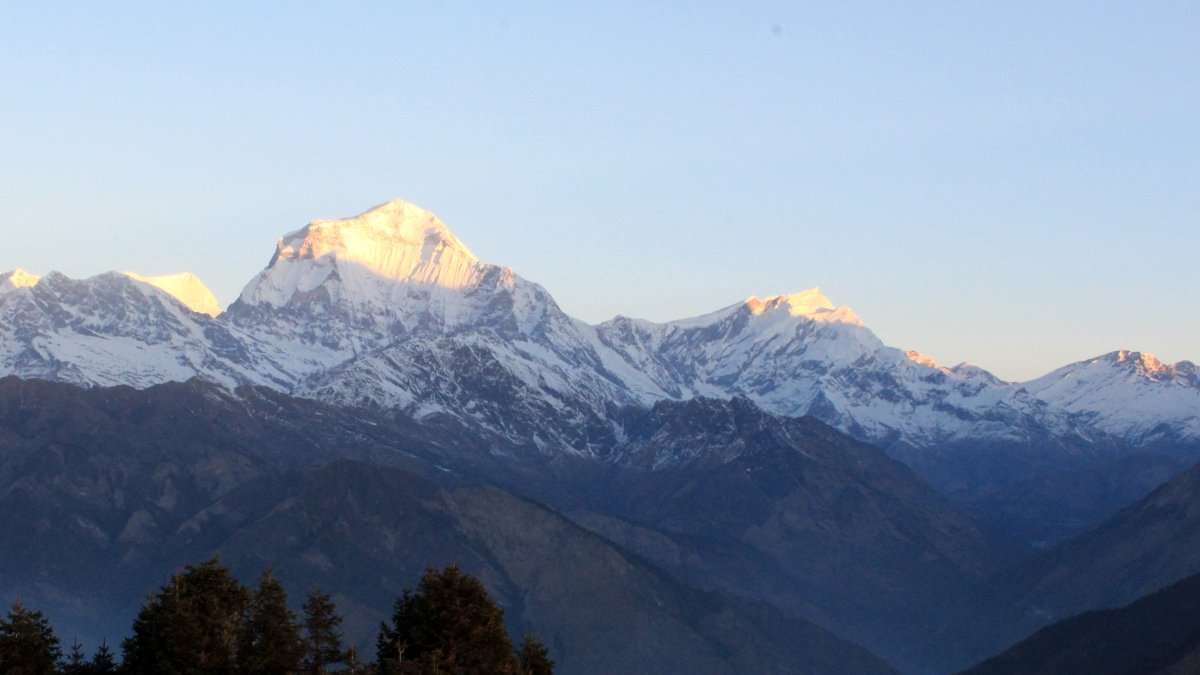
The trek's objective is to witness the sunrise over Annapurna from Poon Hill, a "hilltop" at 3,210m near the village of Ghorepani, from where you can admire the Annapurna's impressive southern face in all its majesty. An experience you'll never forget.
The rest of the route winds through rhododendron forests, Nepal's national flower, along mountain paths regularly used by local inhabitants. The entire trek is dotted with rest stops where you'll find a warm cup of tea or a plate of rice or potatoes. This means you needn't carry food or water with you—a significant saving in both weight and effort!
The trek can be completed in 3 days, or 4 if you prefer.
The starting point is Nayapul.
The route lies within the Annapurna Conservation Area Project (ACAP). You must obtain a permit to access the area—available on-site or, preferably, through the agency providing your guide. Officially, you can only access the trails with a guide. In practice, many bypass this rule and trek alone, but we strongly recommend hiring an authorised guide.
The trek is moderately challenging and suits those with basic experience and fitness. The elevation gain exceeds 1,000 metres on both the first and second days, while the third day is almost entirely downhill.
The route is easily reached in approximately 30 minutes by car from Pokhara, a lakeside town that offers beautiful mountain views on clear days.
[/av_textblock]
[av_heading tag=’h2′ padding=’10’ heading=’Day 1 ‘ color=’meta-heading’ style=’blockquote modern-quote modern-centered’ custom_font=” size=” subheading_active=’subheading_below’ subheading_size=’15’ custom_class=” admin_preview_bg=”]
Nayapul (1,070m) – Ghandruk (1,982m)
[/av_heading]
[av_textblock aalb-admin-input-search=” aalb-admin-popup-input-search=” aalb_template_names_list=’PriceLink’ aalb-admin-popup-store-id=’apiediperilmondo-21′ aalb_marketplace_names_list=’webservices.amazon.it’ size=” font_color=” color=” admin_preview_bg=”]
Distance: 13.8 km
Elevation gain: 1,094m
Elevation loss: 134m
Maximum altitude reached: 2,004m
The route primarily follows a mountain path through farming villages devoted to cultivating small terraced fields of rice, maize, and vegetables. The most common animals are cattle and poultry. You'll see many donkeys, which are the main means of transport for goods (though not for people!). The land is ploughed with oxen and seeded by hand.
The final section passes through forest, which locals call jungle. It's striking to see how the vegetation differs from European mountains: at 2,000m altitude, there are towering trees, including rhododendrons that have grown tall to maximise sun exposure!
This stretch is well-travelled by locals who use these paths for commerce and movement. You'll meet many curious children and occasional vendors. Generally, local people are accustomed to the flow of trekkers and will greet you warmly with a smile. It's courteous to reciprocate, perhaps with a gentle "Namaste".
At Ghandruk you'll find a couple of teahouses equipped with rooms and kitchen facilities.
[/av_textblock]
[av_heading tag=’h2′ padding=’10’ heading=’Day 2 ‘ color=’meta-heading’ style=’blockquote modern-quote modern-centered’ custom_font=” size=” subheading_active=’subheading_below’ subheading_size=’15’ custom_class=” admin_preview_bg=”]
Ghandruk (1,982m) – Ghorepani (2,855m)
[/av_heading]
[av_textblock aalb-admin-input-search=” aalb-admin-popup-input-search=” aalb_template_names_list=’PriceLink’ aalb-admin-popup-store-id=’apiediperilmondo-21′ aalb_marketplace_names_list=’webservices.amazon.it’ size=” font_color=” color=” admin_preview_bg=”]
Distance: 22.8 km
Elevation gain: 1,643m
Elevation loss: 739m
Maximum altitude reached: 3,207m
The journey begins through a rhododendron forest inhabited by mountain monkeys. The final stretch, approaching Deurali Pass (the highest point), is frequently snow-covered. Unlike the previous day's route, this section passes through almost no villages, and rest stops are relatively sparse (every 1-2 hours of walking) but well-equipped with rooms, bathrooms, refreshments, and sterilised water. This area is less inhabited by locals because farming becomes difficult and forest dominates. Despite this, the paths are well-marked and in good condition.
Glimpses of mountains framed by forest patches are captivating: even on cloudy days, the peaks rise above the clouds and seem to belong to another world, at a higher level than your own. It's an experience few places on Earth can offer!
Ghorepani offers many sleeping options. The best choice is perhaps a teahouse with an entrance facing Annapurna, especially for the mountain views at breakfast. Naturally, rooms here fill up before others.
[/av_textblock]
[av_heading tag=’h2′ padding=’10’ heading=’Day 3‘ color=’meta-heading’ style=’blockquote modern-quote modern-centered’ custom_font=” size=” subheading_active=’subheading_below’ subheading_size=’15’ custom_class=” admin_preview_bg=”]
Ghorepani (2,855m) – Poon Hill (3,210m) – Ghorepani (2,855m) – Hile (1,430m)
[/av_heading]
[av_textblock aalb-admin-input-search=” aalb-admin-popup-input-search=” aalb_template_names_list=’PriceLink’ aalb-admin-popup-store-id=’apiediperilmondo-21′ aalb_marketplace_names_list=’webservices.amazon.it’ size=” font_color=” color=” admin_preview_bg=”]
Distance: 16.2 km
Elevation gain: 595m
Elevation loss: 1,914m
Maximum altitude reached: 3,194m
The day begins around 5am with the ascent to Poon Hill (300m above Ghorepani) along a stepped trail. Entry to Poon Hill for sunrise is charged. On clear days, Poon Hill offers a 180° panorama of Annapurna (8,091m), Dhaulagiri (8,167m), the tenth and seventh highest mountains in the world respectively, and Machapuchare (6,993m, literally "fish tail" for its distinctive shape). Interestingly, this peak is also known as the Matterhorn of Nepal for its resemblance to the Alpine classic.
After returning to Ghorepani for breakfast, you begin the descent to the valley. The final stretch features a mountain trail of 3,500 downhill steps. Watch out for your knees!
Hile is the finishing point for those completing this trek in 3 days. You'll need to arrange a local vehicle to drive you back to Pokhara.
If desired, you can add another day and return to Nayapul on foot, but we don't recommend it because the road isn't scenic, is partially used by vehicles, and the experience could be disappointing after three days of peaceful forest solitude.
[/av_textblock]
[av_heading tag=’h2′ padding=’10’ heading=’ What to Bring ‘ color=” style=’blockquote modern-quote’ custom_font=” size=” subheading_active=’subheading_below’ subheading_size=’15’ custom_class=” admin_preview_bg=”][/av_heading]
[av_textblock aalb-admin-input-search=” aalb-admin-popup-input-search=” aalb_template_names_list=’PriceLink’ aalb-admin-popup-store-id=’apiediperilmondo-21′ aalb_marketplace_names_list=’webservices.amazon.it’ size=” font_color=” color=” admin_preview_bg=”]
Packing a trekking backpack for multiple days is always challenging. You must strike the right balance between equipment and weight. Start with a quality backpack that's well-balanced and lightweight. Essential items include:
- First aid kit, especially for sprains, blisters, diarrhoea, and fever; mineral salts taken in the evening are also recommended to supplement an often-limited diet;
- Lightweight, compact refuge sleeping bag;
- Technical fabric clothing, preferably thermal;
- Water purification pen (not essential but recommended);
- Removable crampons if snow is likely at higher elevations;
- Trekking poles for safe walking and better weight distribution;
- Small towel and single-use personal hygiene items.
[/av_textblock]
[av_heading tag=’h2′ padding=’10’ heading=’ How to Organise the Poon Hill Trek ‘ color=” style=’blockquote modern-quote’ custom_font=” size=” subheading_active=’subheading_below’ subheading_size=’15’ custom_class=” admin_preview_bg=”][/av_heading]
[av_image src=’https://ctciegkgbryqtjtzlifl.supabase.co/storage/v1/object/public/apd-media/apd/2017/04/Nepal-4.jpg’ attachment=’16457′ attachment_size=’full’ align=’center’ styling=” hover=” link=” target=” caption=” font_size=” appearance=” overlay_opacity=’0.4′ overlay_color=’#000000′ overlay_text_color=’#ffffff’ animation=’no-animation’ admin_preview_bg=”][/av_image]
[av_textblock aalb-admin-input-search=” aalb-admin-popup-input-search=” aalb_template_names_list=’PriceLink’ aalb-admin-popup-store-id=’apiediperilmondo-21′ aalb_marketplace_names_list=’webservices.amazon.it’ size=” font_color=” color=” admin_preview_bg=”]
Organising the Poon Hill trek independently is possible but highly discouraged. A reputable agency, ideally Nepalese-based, will provide excellent guidance tailored to your preferences and abilities. They should arrange your transport to the trek's starting point and return journey.
They should also provide you with an experienced guide, preferably official. Guides naturally have a cost, and you might wonder if they're necessary, but for Nepal we strongly recommend hiring one. There are several reasons:
- Your experience will be far richer: you'll spend days with a local English-speaking guide who can explain countless details you wouldn't otherwise know or find in guidebooks;
- You'll be safe: official guides know how to respond to bad weather, accidents, or illness;
- You won't worry about finding accommodation at teahouses: guides can book beds in advance;
- Your journey becomes more sustainable and responsible: hiring a guide supports local tourism development and employment. The cost is reasonable and well worth the enriched experience.
The agency may also suggest hiring porters for your luggage. On shorter treks, these are often very young people carrying dozens of kilos in baskets strapped to their foreheads. They're usually inadequately equipped (often wearing poor footwear), without proper rest days or fair wages. Consider this carefully—a more ethical choice might be to carry a lighter pack yourself or use a porter fairly by limiting their load and ensuring proper conditions.
[/av_textblock]
Share
apiediperilmondo by wayure
New articles on walks, trekking and hiking trips. Free, no spam.
Redazione
La redazione di Apiediperilmondo. Guide, itinerari e storie nate camminando: consigli pratici, cammini in Italia e nel mondo, letture e spunti per chi viaggia a piedi.
Profilo e tutti gli articoli di Apiediperilmondo