Walking Light: Mastering Your Backpack Weight
The secret to starting a long-distance walk well lies in knowing what to pack—or perhaps more importantly, what to leave behind. Smart packing transforms your entire trekking experience.

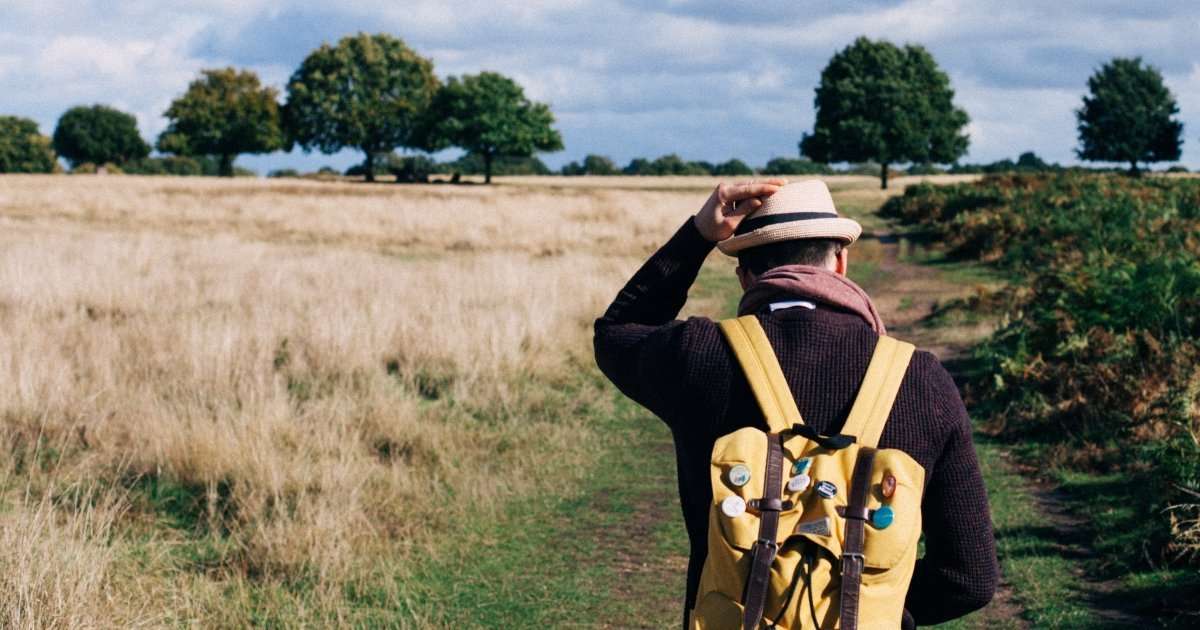
In this article
Expert guides encourage walking travellers to carry only what is truly essential, even risking the possibility that something might be forgotten, rather than filling their pack with everything that "might possibly be useful".
An overly heavy backpack, in fact, is not only uncomfortable and cumbersome, but often diminishes the pleasure and sense of the journey itself. When preparing, it's better to follow the principle of choosing fewer items and the lightest possible ones.
Despite this valuable advice, the reality is that most of us, when beginning our walking experience, often leave home with a heavy load on our shoulders and endless doubts in tow:
- "...have I packed everything?
- what might I need?
- what if something happens...?".
Paying attention to what goes in your backpack is indeed essential for those who choose to travel on foot, but sometimes we overestimate its importance. With time, in fact, you realise that many things aren't truly indispensable, and you can move forward with far less.
Not sure which backpack to use for your walking journey? Read the article
Our daily baggage
Abandoning or discarding things that belong to us, however, isn't always easy or straightforward. When we're immersed in preparations, from our first purchases onwards, or even during an already-begun journey, what truly guides our choices are our habits, our beliefs and the way we understand life.
We carefully select everything that can satisfy and meet our daily needs, then add what might be useful in any possible circumstance.
More or less unconsciously, alongside our shampoo or sleeping bag, we also pack our mental patterns, our learned behaviours, the habits we usually rely on to live and relate to others, and therefore to defend and protect ourselves, without considering whether they're truly necessary to carry with us.
From the simplest needs, like wearing makeup, sleeping without too much noise or eating at regular times, to more significant matters, like needing to control everything, suffering from vertigo or lacking points of reference.
Deciding to leave something behind often means asking ourselves to set aside everything associated with it: experiences, emotions, thoughts, sensations, fears that make up, in effect, the symbolic baggage that accompanies us through our everyday journey.
A burden that, even though it sometimes exhausts us, we constantly carry on our shoulders because,
despite everything, it reassures us.
Embracing the unexpected
Instead, we should try to follow the advice and take only what is truly essential, without fear of being unprepared. We should try to eliminate, to empty, to let go.
Accept that many things we carry with us are probably old and worn out, no longer serve us, don't help us, and may even hinder us: habits, quirks, judgements, memories...
We should trust our innate inner resources, our capacity for adaptation, our courage and hope, our curiosity, our kindness, and freely leave everything else at home, secure in the knowledge that through these qualities we'll be able to face anything.
After all, the unexpected is part of every journey, and precisely because it's unpredictable, we'll always find ourselves in a situation where we don't have that one thing that would have been useful but which we hadn't thought of.
Why not seize the opportunity to shed the weight, create space, change what no longer works, to transform, to discover that you can be different, to find new ways of facing life, to feel wonder and perhaps then prepare your next journey asking yourself enthusiastically "did I leave everything behind?".
Share
apiediperilmondo by wayure
New articles on walks, trekking and hiking trips. Free, no spam.
Redazione
La redazione di Apiediperilmondo. Guide, itinerari e storie nate camminando: consigli pratici, cammini in Italia e nel mondo, letture e spunti per chi viaggia a piedi.
Profilo e tutti gli articoli di Apiediperilmondo