Trekking in Hong Kong: Beyond the Airport Layover
Planning a few days in Hong Kong between flights? This former British colony offers surprising trekking adventures for every level. Discover why Hong Kong deserves far more than a quick stopover.

In this article
Hong Kong (香港, Hong Kong in Cantonese, Xiang Gang in Mandarin; "fragrant harbour") has been a special administrative region of China since 1997. It is home to 7 million inhabitants spread across just 1,100 km² (roughly one-third the size of the Aosta Valley). 93.6% of the population is of Chinese origin, predominantly Cantonese-speaking, like the neighbouring Guangdong region.
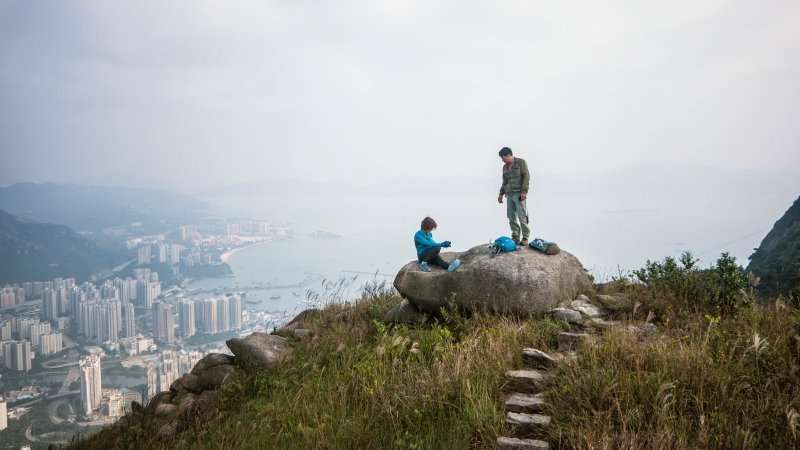
Described this way, the idea of trekking in Hong Kong might not immediately jump out as obvious. Perhaps it helps to know that Hong Kong sits just below the Tropic of Cancer, that less than 25% of the territory is urbanised, and that 40% is reserved exclusively for parks and nature reserves. That paints a rather different picture, doesn't it?
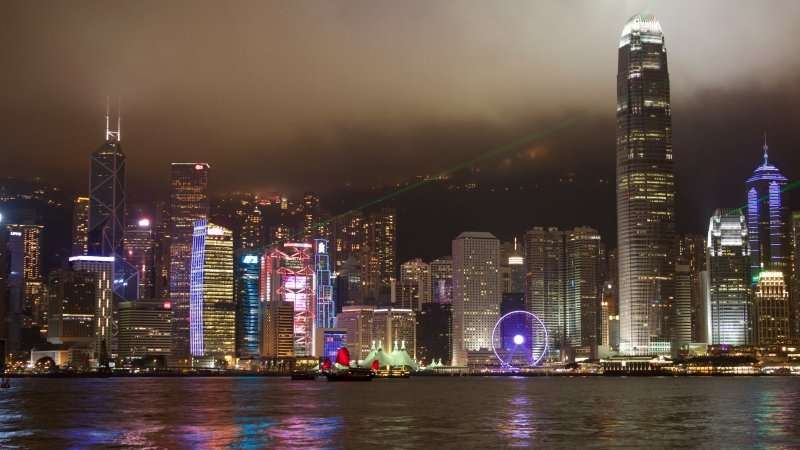
Hong Kong is above all an important business hub, but its history and geographical landscape have ensured that nature has always held significant importance. Today, beyond being a destination for business, shopping, and entertainment, it stands as a truly compelling option for one or more days of trekking along trails that feel worlds away from the chaos of Queens Road and the markets of Kowloon.
Hong Kong's vegetation suffered severe damage during World War II, when Japanese forces repeatedly attacked the territory. At war's end, the government launched a forest restoration programme that proved remarkably successful, and today trekking has become the star attraction in these recovered landscapes.
Why Trek in Hong Kong
Certainly, Hong Kong isn't the first destination that springs to mind when you think of trekking. You'd be mistaken. There are many reasons why this city deserves consideration as a premier destination for low-altitude trekking:
- The trails are easily accessible independently: Hong Kong's metro network, supplemented by bus or taxi services where needed, makes it simple to reach and return from walking routes;
- The ease of getting to and from trails allows you to organise your days by walking during the day and returning to the city in the evening to enjoy everything it offers, plus you'll walk lighter without overnight gear;
- The trails are exceptionally well-maintained: Hong Kong is a small, prosperous city—two qualities that ensure particular attention to often-neglected aspects like rural hiking paths;
- Locals are passionate about trekking but not overwhelmingly so: trails are busy enough that you'll never feel alone, yet rarely crowded (with the exception of Dragon's Back; see Hong Kong Trail);
- English is widely spoken: most people living in Hong Kong, especially on Hong Kong Island, speak English, ensuring safety and ease of communication. All signage is in English;
- Finally, Hong Kong offers trails that open onto the sea roughly 80% of the way, providing extensive vistas and picture-postcard views with the lush green of the islands set against brilliant blue waters.
Trekking Options in Hong Kong
Hong Kong spans Hong Kong Island, the financial and historic heart of the city, Kowloon and the peninsular territories, largely residential and commercial, and 200 islands of varying sizes, some inhabited (the largest being Lantau, home to the airport). Hong Kong's highest point is Tai Mo Peak at 957 metres.
Trekking options in Hong Kong are abundant. Most are nature-immersed trails without infrastructure—a feature that makes Hong Kong unique: a city where you can reach completely undeveloped, traffic-free zones in remarkably little time. Hong Kong Island is crossed only by coastal roads or buried tunnel sections that don't disturb the forest.
This is largely due to the territory's geographical formation: Hong Kong Island, like the other islands, features highly undulating terrain that has been difficult to develop, leaving extensive forest intact. Additionally, the forests host major water reservoirs (called "water reservoirs") that supply the population. Hong Kong has always struggled with water availability, as it's not rich in lakes or underground freshwater reserves: 70% of its water is therefore imported from the neighbouring Guangdong province. Toilet water comes from sea-water desalination, distributed through a separate pipeline system. Fresh water is stored in reservoirs capable of holding up to 586 million cubic metres.
One final critical point to bear in mind: the city is very small and largely self-insufficient (producing virtually nothing in food or manufacturing), so its population must match actual carrying capacity. Developing new urban zones would automatically increase residential population while simultaneously decreasing the current (astronomical) property values. The people of Hong Kong are determined to avoid this at all costs.
Trekking trails are scattered throughout the territory. On the peninsula (from Kowloon northwards through the New Territories to the Guangdong border), you'll find interesting nature trails, including reclaimed wetland areas and bird-rich natural parks. On the islands you can identify several trails in seldom-visited areas, far removed from urban glitz, including the Lantau Trail. The true star of Hong Kong trekking is Hong Kong Island, which for convenience and variety represents the perfect destination for an exceptionally rewarding Hong Kong trekking experience.
Hong Kong Trail
The flagship multi-day trek is undoubtedly the Hong Kong Trail. Open to the public since 1985, it can be completed in 3 days for a total of 70 km of actual walking (rather more than the advertised 50 km, though this doesn't account for transfers to/from the trail and such). The total elevation gain, demonstrating the island's undulating nature, is just over 4,000 metres.
The trail runs almost entirely on unpaved paths used exclusively by walkers. The entire route is well-marked with directional signs and, at roughly 500-metre intervals, numbered position markers.
Important: there are no refreshment stops, toilets, or assistance points along the route. However, shelters are frequent for use during rain or pleasant picnicking. Some trail sections are more easily accessible and thus frequented by locals for short walks, but for much of the journey you'll be immersed in nature without artificial sounds. Generally, you'll see far more monkeys than people.
The trail runs west to east, from Victoria Peak on the island's north-western side to Big Wave Bay on the eastern coast. The official sections progress 1-8 in this direction. This way, if you wish, you can enjoy a refreshing swim at journey's end.
We recommend trekking in reverse, from Big Wave Beach to Victoria Peak, so you can approach the city gradually and complete the adventure with breathtaking panoramic views of Hong Kong and its skyline. The choice is yours. The description that follows proceeds in reverse; the official website (see Useful Links) contains the sections in canonical order. The trail isn't difficult to navigate in either direction, and the effort required is roughly equivalent.
Day 1
Sections 8 – 7 – 6
Distance: 27 km
Total Elevation Gain: 1,116 m
Total Elevation Loss: 1,121 m
Section 8 features the famous Dragon's Back, a ridge path at 284 metres offering 360-degree views of Mount Collinson, Wan Cham Shan, Mount Parker, Redhill Peninsula, Stanley, Tai Tam Harbour, Shek O Peak and Shek O. The Dragon's Back section, multiple times awarded as one of the world's finest scenic trails, takes its name from the sinuous path's resemblance—from above—to a Chinese dragon's body. Section 8 continues along a trail flanked by frequent quartz veins.
Section 7 begins with a descent of 700 steps to To Tei Wan, a beach hosting a boat and catamaran yard. A picnic with sea views comes highly recommended. The trail continues along the network of channels connected to the Tai Tam Tuk dam, ending at Tai Tam Road.
Section 6 continues along the Tai Tam water reservoir, through a path sheltered by lush forest. The section ends at Quarry Gap on Mount Parker Road, 3 km from Tai Koo metro station.
Day 2
Sections 5 – 4 – 3
Distance: 25.2 km
Total Elevation Gain: 1,586 m
Total Elevation Loss: 1,637 m
Section 5 of the Hong Kong Trail begins with an ascent of Mount Butler (436 metres) reached by climbing 599 steps. In Asia, ascents to higher peaks rarely follow switchbacks. Instead, steps are preferred—the steeper the better. It's a common characteristic you simply cannot avoid. From here, you enjoy views of Tai Tam Reservoir, Lamma Island, and Hong Kong Island's southern coast. The trail then continues mostly along a ridge passing the Jardine's Lookout, a scenic viewpoint (433 metres) located at Hong Kong Island's geographic centre, affording panoramas of Victoria Harbour, Central, Causeway Bay and Fortress Hill. The path then leads toward Wong Nai Chung Gap Road, entering a residential area.
Section 4 begins with Black's Link, an asphalt road flanked by luxurious villas with views. The trail then winds through diverse forest where you'll find the fragrant aquilaria tree (Aquilaria sinensis), from which Hong Kong derives its name. Aberdeen Harbour, on the island's south side, was once the world's premier port for trading this prized wood. The path is dotted with English-built stone bridges and runs along yet another reservoir, the Aberdeen Reservoir.
Section 3 begins by skirting the Aberdeen Upper and Lower Reservoirs. Following streams like the Keung Fa Kan, the trail eventually reaches Peel Rise.
Day 3
Sections 2 – 1
Distance: 17.6 km
Total Elevation Gain: 1,364 m
Total Elevation Loss: 1,235 m
Section 2 of the Hong Kong Trail begins at Peel Rise and runs almost entirely around the Pokfulam Reservoir (built in 1860). The path is often shaded and at certain points offers glimpses of Hong Kong's panorama.
Section 1 partly coincides with a forest path leading to the asphalt Lugard Road at Victoria Peak, constructed over a century ago. The final stretch is often crowded with Victoria Peak visitors but remains thoroughly pleasant. Upon reaching Victoria Peak's shopping complex, you return to the city via the steep Old Peak Road descent. These final kilometres aren't technically part of the original Hong Kong Trail, but you certainly won't let a final (albeit very steep!) downhill defeat you!
When to Go
Hong Kong enjoys a tropical climate characterised by mild winters and hot, humid, rainy summers. Temperatures never drop below freezing. While the city is visitable year-round without issue (many pedestrian passages are covered and travel happens via taxi or metro), trekking is best organised between November and April.
The winter and spring months offer the mildest temperatures (around 15°C in winter, 25°C in spring) and lowest rainfall probability. Summer, though not excessively hot, becomes oppressive due to extreme humidity levels that will make your Hong Kong trekking less enjoyable (though never impossible!)
What to Bring and What to Watch Out For
Since these are day walks, you needn't be overly meticulous with your pack, but certain items are essential:
- Sunscreen;
- Lightweight but covering clothing;
- Abundant water—you'll have virtually no opportunity to purchase it along the entire route;
- Food: there are no shops at any point on the trail;
- Insect repellent;
- Waterproof jacket;
- Navigation tools—either a GPS device or a simple smartphone app (the official Hiking Hong Kong website recommends several useful apps; see Useful Links).
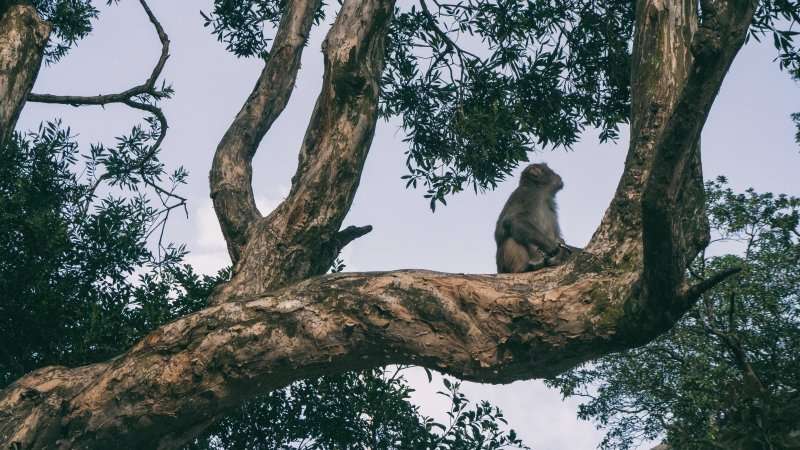
The trail presents no particular dangers, except for monkeys who'll happily steal anything from your hands. For this reason, especially in clearly monkey-inhabited areas, avoid keeping essential items (phones!) or necessities (water bottles, food) in hand or side pockets. Monkeys are clever: they'll approach seemingly indifferent, then snatch what they deem a missing piece for their theft collection. Beyond that, they're harmless—just annoying.
General Information About Hong Kong
Hong Kong began being inhabited in the 700s. It was a remarkably interesting commercial outpost—a characteristic that has shaped and continues to shape the city's history. Arabs arrived first, then Europeans (Macao became a Portuguese colony in the 16th century), and naturally the Chinese.
In 1683 the English arrived, already established in India and interested in trading silk, porcelain, and tea. During this period, China showed little interest in European goods, so the trade balance heavily favoured foreigners.
However, a commodity arrived from India that proved catastrophic: opium. The Empire's silver reserves dwindled dangerously, demanding intervention. Between 1839 and 1842, the so-called First Sino-British War (more explicitly the First Opium War) erupted, won by the English and concluded with the Treaty of Nanking: China lost its commercial monopoly and was forced to open five ports (Canton, Xiamen, Fuzhou, Ningbo, Shanghai) to the English, who would not, however, be subject to Chinese law. Simultaneously, Hong Kong was ceded to the British Crown "in perpetuity" from 26 June 1843 onwards.
English territorial holdings increased over time: the Second Opium War (1856-1860), also won by the English, brought the Kowloon Peninsula and Stonecutter Island; the 1898 Beijing Convention transferred the so-called New Territories to English control.
From this point, Hong Kong regularly attracted waves of Chinese migrants fleeing the 1911 Revolution, the 1937 Japanese invasion (which reached Hong Kong by 1941), and finally the 1949 Communist Revolution. Many fleeing in 1949 were wealthy and brought their assets, providing the foundation for Hong Kong's economic resurgence.
Deng Xiaoping's "open door" policy in China (1973) also benefited the British colony, which quickly became the gateway to the Orient.
However, the question of Hong Kong's ownership remained unresolved: only Hong Kong Island and Kowloon were held by the English "in perpetuity," while the New Territories (where most of the population lived) had to be returned. In December 1979 the "Sino-British Joint Declaration on the Question of Hong Kong" was therefore signed, declaring the colony would be returned to China, which would govern it under the "one country, two systems" principle for 50 years. And so it came to pass: on 30 June 1997, Hong Kong was officially returned and became the Hong Kong Special Administrative Region (SAR).
After the severe financial crisis and avian flu outbreak of the early 2000s, Hong Kong has developed impressively but still faces numerous unresolved issues, including the population's call for greater democratisation and relations with China regarding the planned return scheduled for 2047.
How to Spend Your Remaining Time
Hong Kong is a relatively small city, yet offers tremendous variety, allowing you to spend 3-4 days without ever being bored. No visa is required for short stays, and the currency in use is the Hong Kong Dollar.
The city's heart is undoubtedly Central, the portion of Hong Kong Island overlooking Victoria Harbour and Kowloon. The main streets, Queens Road and Des Voeux Road Central, are shopping destinations and pleasant despite being crowded and heavily trafficked. Des Voeux Road also features a tram line
Share
apiediperilmondo by wayure
New articles on walks, trekking and hiking trips. Free, no spam.
Redazione
La redazione di Apiediperilmondo. Guide, itinerari e storie nate camminando: consigli pratici, cammini in Italia e nel mondo, letture e spunti per chi viaggia a piedi.
Profilo e tutti gli articoli di Apiediperilmondo