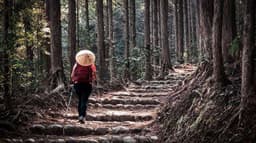
Trekking in China
Discover epic trekking adventures across China's most stunning landscapes. From misty mountains to ancient pilgrimage routes, explore remote trails where tradition meets wilderness.
A Piedi Per Il Mondo

[av_layout_row border=” min_height_percent=” min_height=’0′ color=’main_color’ mobile=’av-flex-cells’ id=”]
[av_cell_two_third vertical_align=’top’ padding=’10px,30px,0px,60px’ background_color=” src=” attachment=” attachment_size=” background_attachment=’scroll’ background_position=’top left’ background_repeat=’no-repeat’ mobile_display=”]
[av_one_full first min_height=” vertical_alignment=’av-align-top’ space=” margin=’0px’ margin_sync=’true’ padding=’0px’ padding_sync=’true’ border=” border_color=” radius=’0px’ radius_sync=’true’ background_color=” src=” attachment=” attachment_size=” background_position=’top left’ background_repeat=’no-repeat’ animation=” mobile_display=”]
[av_image src=’https://res.cloudinary.com/dwmblksgg/image/upload/v1779845708/apd/2017/07/Trekking-in-cina-Lijiang.jpg’ attachment=’17523′ attachment_size=’full’ align=’center’ styling=” hover=” link=” target=” caption=” font_size=” appearance=” overlay_opacity=’0.4′ overlay_color=’#000000′ overlay_text_color=’#ffffff’ animation=’no-animation’ admin_preview_bg=”][/av_image]
[av_heading tag=’h1′ padding=’10’ heading=’Trekking in China ‘ color=” style=’blockquote modern-quote’ custom_font=” size=” subheading_active=’subheading_below’ subheading_size=’18’ custom_class=” admin_preview_bg=” av-desktop-hide=” av-medium-hide=” av-small-hide=” av-mini-hide=” av-medium-font-size-title=” av-small-font-size-title=” av-mini-font-size-title=” av-medium-font-size=” av-small-font-size=” av-mini-font-size=”]
Beyond glittering metropolises and factories, China offers unique opportunities to connect with nature and discover a more authentic version of the Middle Kingdom
[/av_heading]
[av_textblock aalb-admin-input-search=” size=” font_color=” color=” av-medium-font-size=” av-small-font-size=” av-mini-font-size=” admin_preview_bg=”]
China is an enormous and highly diverse country. It spans from the eastern coast, home to many of the most important cities, to the mountain ranges of the centre and west, desert regions of the north, and tropical forests of the southwest. There's something for everyone. A trip to China is incomplete without venturing deeper and meeting some of the dozens of ethnic minorities that make up the Chinese people. Many of these communities inhabit regions with unique environmental characteristics and exceptional natural beauty—ideal destinations for distinctive trekking experiences. It's an excellent way to enrich your journey and discover the more authentic side of China.
Trekking options in China, the Middle Kingdom as the Chinese call it, are numerous and diverse. You simply need to identify which option appeals to you most and fits best with your travel plans.
Among the most compelling destinations, the Five Sacred Peaks represent a blend of nature and local culture. These were the most important mountains—places where emperors journeyed on pilgrimage. In short, a safe bet. The list includes: Mount Tai (Shandong), Mount Hua (Shaanxi), Mount Heng (Hunan), Mount Heng (Shanxi), and Mount Song (Henan).
There are also other classifications, primarily associated with Taoism and Buddhism. Beyond these locations, certain regions lend themselves particularly well to being explored on foot: Sichuan, Yunnan, and Tibet.
Some areas have earned UNESCO World Heritage recognition in recent decades. Many have become protected nature parks that are well-organized and heavily visited during local holidays. Fair warning…
[/av_textblock]
[av_heading tag=’h2′ padding=’10’ heading=’ Easy Trekking in China ‘ color=” style=” custom_font=” size=” subheading_active=” subheading_size=’15’ custom_class=” admin_preview_bg=” av-desktop-hide=” av-medium-hide=” av-small-hide=” av-mini-hide=” av-medium-font-size-title=” av-small-font-size-title=” av-mini-font-size-title=” av-medium-font-size=” av-small-font-size=” av-mini-font-size=”][/av_heading]
[av_image src=’https://res.cloudinary.com/dwmblksgg/image/upload/v1779845720/apd/2017/07/Trekking-in-Cina-Huangshan2.jpg’ attachment=’17518′ attachment_size=’full’ align=’center’ styling=” hover=” link=” target=” caption=” font_size=” appearance=” overlay_opacity=’0.4′ overlay_color=’#000000′ overlay_text_color=’#ffffff’ animation=’no-animation’ admin_preview_bg=”][/av_image]
[av_textblock aalb-admin-input-search=” size=” font_color=” color=” av-medium-font-size=” av-small-font-size=” av-mini-font-size=” admin_preview_bg=”]
Below are some of the best destinations for easy-level trekking, typically doable in a couple of days and easily accessible. The provinces are listed in parentheses (note the similarities in names!).
- Huangshan (Anhui): Yellow Mountain is one of China's most famous destinations (the crowds prove it!). It's been a UNESCO World Heritage site since 1990. The climb to the summit can be challenging, especially navigating thousands of visitors (most unprepared or ill-equipped), but the experience is incredibly rewarding. Huangshan comprises 36 granite peaks reaching 1,800 metres, with spectacular effects particularly when mist rises around them. The nearby city is easily accessible by high-speed train or flight;
- Jiangxi Province:
- Wuyuan: A beautiful rural area not far from Shanghai, easily reached by high-speed rail—a practical solution for this part of China without excessive travel time. While popular with tourists, local hikers rarely venture between villages, so once you leave the main areas you should find tranquility;
- Sanqing Shan: This national park sits in a mountainous zone 150km southeast of Jingdezhen, China's porcelain capital. A UNESCO World Heritage site since 2008, it offers various routes dotted with Taoist temples and rhododendron plants. The mountain reaches 1,817 metres; from either entrance, you can take a cable car to access higher sections with accommodation options. The nearest train station is Yu Shan;
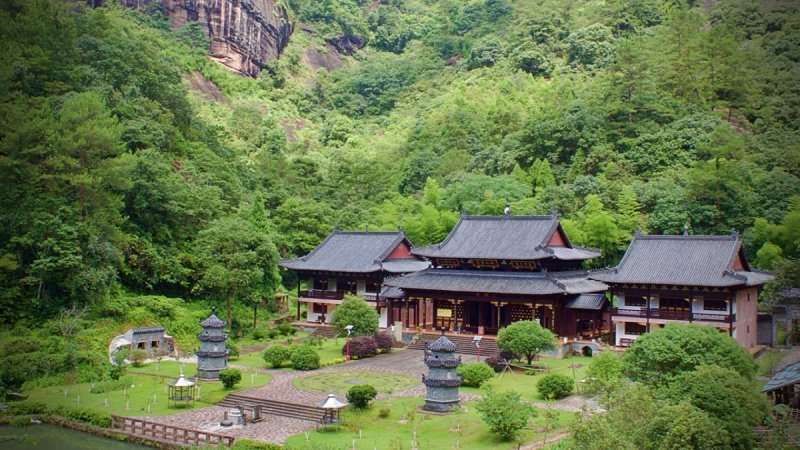
- Wuyi Shan (Fujian): Wuyi Shan is renowned in China for producing rock oolong tea, a premium semi-fermented variety. This UNESCO Heritage site (since 1999) has become a favourite destination for domestic tourism and is well-equipped with easy high-speed rail and flight access. It offers pleasant trekking routes through scenic peaks and lush tea plantations. Accessible year-round, but particularly lovely in spring and autumn; summer can be excessively hot, rainy, and humid;
- Mount Tai (Shandong): A sacred Taoist mountain and one of the Five Sacred Peaks mentioned earlier. Easily accessible from Tai'an city (which has a high-speed rail station). A UNESCO World Heritage site since 1987, the ascent consists of staircases covering 1,300 metres elevation gain. As a famous Chinese destination, expect crowds, though this ensures constant water and snack supplies along the way;
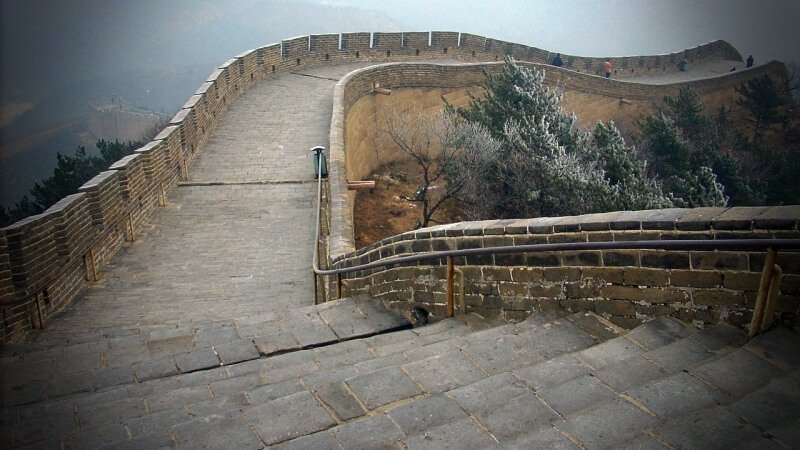
- The Great Wall (Liaoning, Hebei, Tianjin, Beijing, Inner Mongolia, Shanxi, Shaanxi, Ningxia, Gansu): Visiting the Great Wall, a UNESCO World Heritage site since 1987, can range from a few-hour day trip from Beijing (particularly at Badaling) to a far more rewarding multi-day adventure with overnight camping. Some sections suit trekking better than others, such as Mutianyu to Jinshanling, Jinshanling to Simatai, and Gubeikou to Jinshanling. While easily accessible from the capital, other sections are closer to well-connected cities served by trains and flights, so it's worth evaluating the most practical approach for each section;
- Mount Hua (Shaanxi): One of the Five Sacred Peaks and also a sacred Taoist mountain, Hua Shan sits near Xi'an. Reaching 2,154 metres, it offers various trekking options, four of which lead to the summit (if 4,000 steps appeal to you…). Two via ferrata routes are also open. Caution: some sections are dangerous with steep drop-offs and minimal protection. The most practical way to reach Hua Shan is by high-speed train from Xi'an (30-45 minutes);
- Countryside around Yangshuo (Guangxi): In one of the favourite spots for international travellers, Yangshuo is reached by a few hours of scenic boat travel from Guilin, sailing through the distinctive karst landscape of the Li River. Yangshuo sits amidst countryside offering various walking options, including routes along the Li River (particularly the section between Yangdi and Xingping). Another local option is walking through the terraced rice paddies of Longji, home to the Yao and Zhuang minorities. Since the terrain is largely flat, cycling is also a viable alternative.
[/av_textblock]
[av_heading tag=’h2′ padding=’10’ heading=’ More Adventurous Trekking in China ‘ color=” style=” custom_font=” size=” subheading_active=” subheading_size=’15’ custom_class=” admin_preview_bg=” av-desktop-hide=” av-medium-hide=” av-small-hide=” av-mini-hide=” av-medium-font-size-title=” av-small-font-size-title=” av-mini-font-size-title=” av-medium-font-size=” av-small-font-size=” av-mini-font-size=”][/av_heading]
[av_image src=’https://res.cloudinary.com/dwmblksgg/image/upload/v1779845710/apd/2017/07/Trekking-in-Cina-Yunnan.jpg’ attachment=’17522′ attachment_size=’full’ align=’center’ styling=” hover=” link=” target=” caption=” font_size=” appearance=” overlay_opacity=’0.4′ overlay_color=’#000000′ overlay_text_color=’#ffffff’ animation=’no-animation’ admin_preview_bg=”][/av_image]
[av_textblock aalb-admin-input-search=” size=” font_color=” color=” av-medium-font-size=” av-small-font-size=” av-mini-font-size=” admin_preview_bg=”]
For more adventurous trekking in China requiring greater preparation and coordination, venture to the country's western regions. For these expeditions, hiring a local guide is almost always essential:
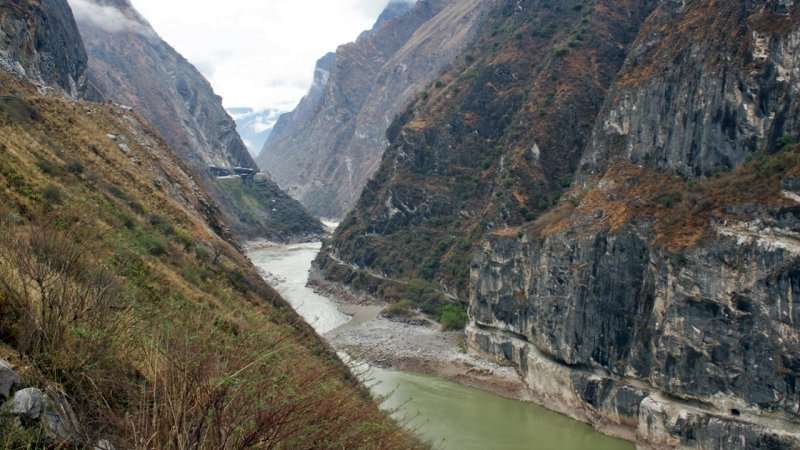
- Yunnan: Yunnan in southwest China is the ultimate trekking destination. Options are plentiful and diverse, as are the region's geography and ethnic communities:
- Tiger Leaping Gorge: One of the world's deepest canyons, traversable on foot via a 2-day trek. Unlike other destinations, it's relatively well-equipped (you'll find signage and accommodation options), making it fairly straightforward to organize (though you'll need a vehicle for transport, which can be arranged locally). Caution: poor weather can make it dangerous, so check conditions before starting. Spring (April-May) is ideal: earlier it's too cold, and later it becomes too rainy;
- Xishuangbanna: China's southernmost zone, bordering Thailand and Myanmar, features distinctly tropical scenery—complete with elephants. Accessible by flight to Jinghong. With local guide assistance, the terrain permits multi-day trekking among ethnic minority villages, an inviting alternative to the crowded resort circuit.
- Sichuan: Like Yunnan, Sichuan offers excellent trekking in close contact with nature and local ethnic communities. Given its geographic position (on the plateau leading to Tibet), winters are severe—visit only between June and October.
- Siguniang Shan: Mount Four Girls, near the provincial capital Chengdu, reaches 6,250 metres. A highly-rated route is Rilong County to Changping to Yakou County to Bipenggou (approximately 3 days);
- Daocheng: Valleys and snow-capped peaks on a roughly 3-day trek from Daocheng to Yading, immersed in pristine wilderness;
- Emei Shan: This sacred Buddhist mountain is a renowned pilgrimage and tourist destination—considerably less wild than other provincial locations. A UNESCO World Heritage site since 1996 (paired with the nearby Leshan Giant Buddha, definitely worth visiting). The summit reaches 3,099 metres. You can climb to the peak in two days (staying overnight at temples) or one day starting from higher up. Watch out for the rather too-clever monkeys! If walking isn't appealing, a cable car is available. Late spring is ideal;
- Tibet: Apart from altitude considerations, Tibet is ideal for the most adventurous trekking. Options abound with spectacular views of the highest and most mythical mountain range—the Himalayas. Consult a local agency to identify the most suitable option for your fitness level. Generally, plan a trip between June and October;
- Three Gorges Dam: The Yangtze River landscape here is arguably the most panoramic stretch of this great river. The dam itself represents one of the world's most controversial projects involving China in recent decades. You can still trek the riverside slopes, with popular options including: Wushan to Daxi (25km), Peishi to Wushan (28km), and Sandouping to Xindui (27km). Best visited April through November;
- Kanas Lake (Xinjiang): In the far north of the Xinjiang Autonomous Region—a world apart from mainstream China—Kanas Lake offers compelling trekking options. You must be well-equipped and work with a local guide (find one in Kashgar or Urumqi) for transport and provisions. You'll likely need special permission to enter the lake area, not difficult to obtain but requires advance request. Climate is particularly harsh, so access is restricted to July-September;
- Qinghai Lake (Qinghai): China's largest saltwater lake, the Qinghai borders Tibet with a predominantly Tibetan culture. Trek around its shores to experience the abundant birdlife and local communities. June-August is optimal.
[/av_textblock]
[av_heading ```
Share
A Piedi Per Il Mondo
New articles on walks, trekking and hiking trips. Free, no spam.