Pulo di Molfetta: Ancient Sinkhole of History and Nature
Just 2km from Molfetta in Bari province, Pulo di Molfetta is a remarkable convergence of archaeology, history, and natural beauty. This unique sinkhole reveals layers of human settlement spanning millennia, making it an essential stop for walkers seeking authentic cultural and geological wonders in Puglia.

In this article
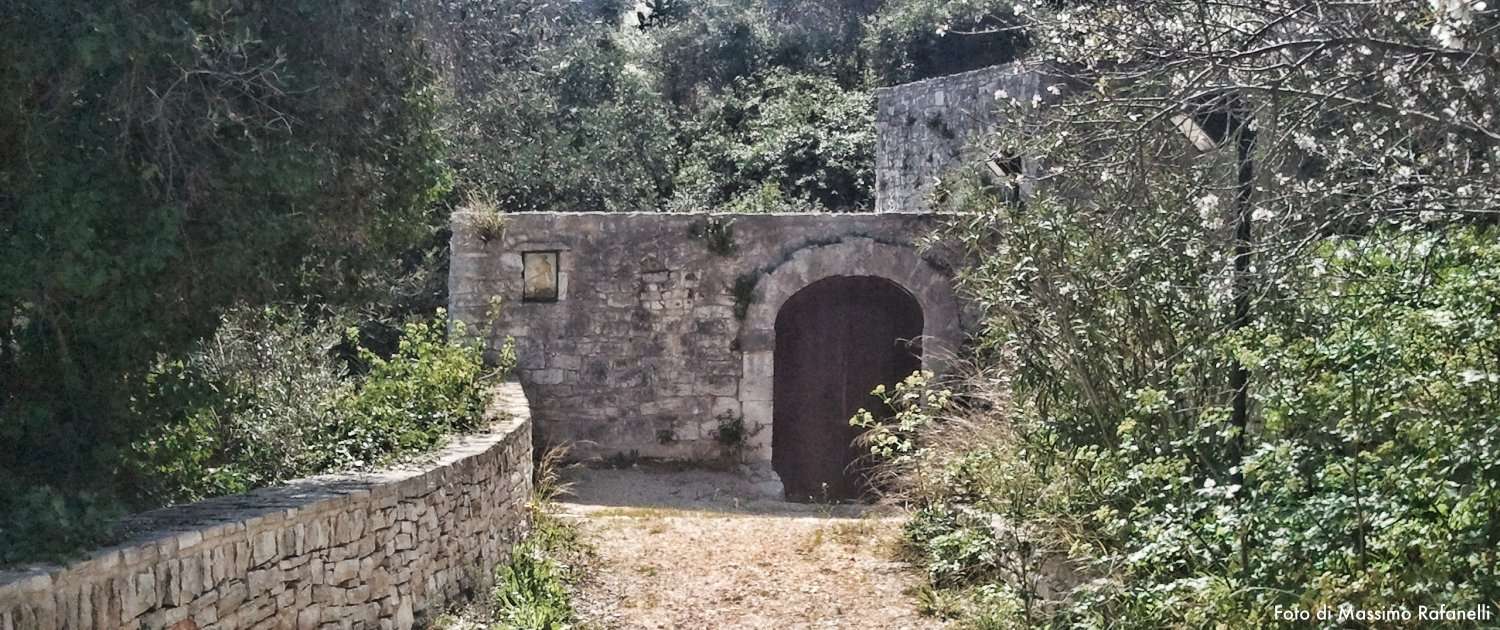
About 2 km from Molfetta, in the province of Bari, lies what is known as the Pulo di Molfetta.
It is a sinkhole, or rather a Cretaceous-era depression formed in the ground, oval in shape here and measuring 600 m in perimeter and 30 m in depth.
What the Pulo di Molfetta sinkhole looks like
Along the vertical walls of the Pulo di Molfetta you can notice the presence of several caves, which, positioned at various elevations, are partly connected to one another. These caves formed hundreds of thousands of years ago, when water flowed abundantly through them. Its force, combined with carbon dioxide, eroded the rock, creating not only these caverns but actual channels within the ground.
Particularly striking is the Grotta del Pilastro, a cavern carved out entirely except for a rock pillar that rises at its centre.
Human settlements 7,000 years ago at Pulo di Molfetta
During the twentieth century, remains of human settlements dating back to the Neolithic period were discovered. The finding of hut foundations in the fields just outside the sinkhole testifies to the presence of a village as far back as 7,000 years ago.
Animal remains and millstones suggest this was a community devoted to farming and animal husbandry. The sinkhole was frequented for hunting, obtaining drinking water, and gathering for religious and other events in the caves.
In the village, right next to the hut foundations, more than 50 pit graves were discovered, a true necropolis.
Among the finds there are also numerous fragments of pottery. These display a type of decoration typical of the period known as "raw impression", so distinctive that it gave rise to the term "Molfetta type".
Monastery of the Capuchin friars
On the western rim of the Pulo di Molfetta stands the Sancta Sanctorum monastery, built in 1536 to house a community of Capuchin friars. For about 40 years they used the sinkhole for cultivation, prayer and probably to bury their dead. This would be the only explanation for the presence of an ossuary containing the remains of six people in the cave known as "No. 1".
A saltpetre works for gunpowder
Inside the Pulo di Molfetta there are many structures that can be attributed to the old Bourbon saltpetre works. But what exactly is a saltpetre works? It is a factory for the extraction and processing of nitrate, indispensable for the production of gunpowder.
In the second half of the eighteenth century, Abbot Fortis and Canon Giovene discovered a large number of nitrate efflorescences inside the sinkhole's caves.
This discovery prompted the Bourbon government to authorise the construction of a saltpetre works, attracted by the multiple military applications.
With the French Revolution first and then Napoleonic decrees, interest in the saltpetre works declined rapidly and the structure fell progressively into ruin.
Nature at Pulo di Molfetta
Beyond the archaeological and historical importance of the site, the sinkhole is also a nature reserve of exceptional value. It features both indigenous plants and plants introduced by humans over the millennia.
Crops that were first herbaceous (legumes and cereals) and then arboreal (vines, almond trees, olive trees, pomegranate trees, prickly pear, etc.) have progressively altered the original vegetation.
Today you can find species typical of the Mediterranean scrubland, varying depending on whether you are on the north or south slope.
The site is not only rock and plants, but also wildlife. Five species of bats have been identified, along with mammals, falcons and lizards.
Archaeological site of Pulo di Molfetta
The archaeological site of Pulo di Molfetta closed to the public in 1980, due to stability issues following the Irpinia earthquake. It was not until the excavation campaigns of 1997-2003, promoted by the Superintendency of Archaeological Heritage of Puglia, that the site was recovered and enhanced.
Share
apiediperilmondo by wayure
New articles on walks, trekking and hiking trips. Free, no spam.
Co-fondatrice, Apiediperilmondo
I've been organising walks since I discovered that walking slow is the fastest way to know a place. I take care of every logistical detail so you can focus only on the steps ahead.
Profilo e tutti gli articoli di Deborah