The Via Francigena from Siena to Rome
Twelve transformative days walking towards Rome on Italy's most beloved pilgrimage route. From the rolling hills of Val d'Orcia to the sacred steps of St. Peter's Basilica.
A Piedi Per Il Mondo
In this article
Table of Contents
- Start Point: Siena
- Distance: 270 km
- Difficulty: T/Hiking
- Stages: 12
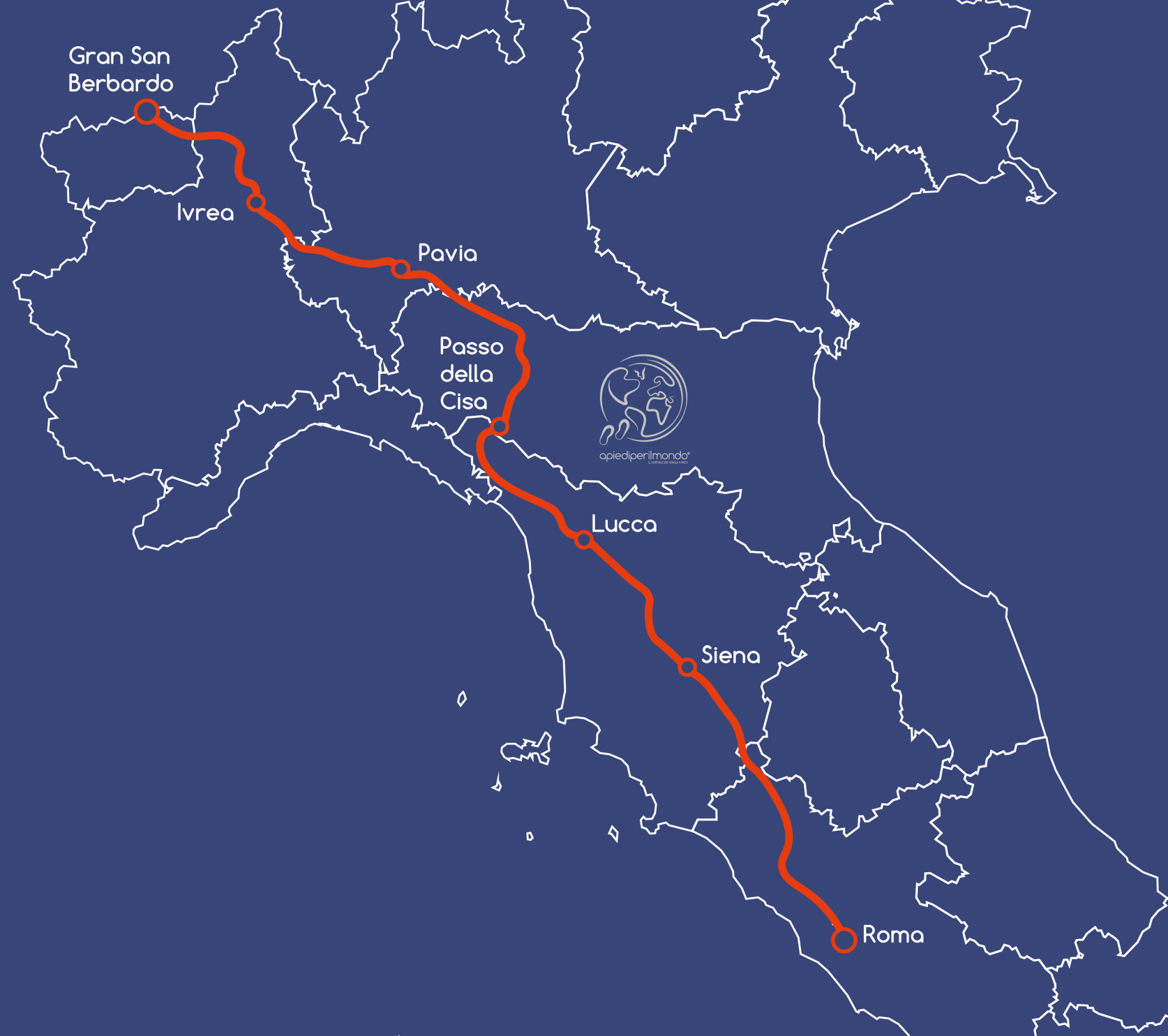
Stretching 270km, the Via Francigena from Siena to Rome can be completed in less than two weeks. In twelve days, you have time to discover this historic route and savour the long-awaited arrival in Rome.
The first days are characterized by the quintessential Tuscan landscape with rolling hills and solitary cypress trees, medieval villages perched to dominate the territory, and rows of prized wine vines. Then you enter Lazio where elevation changes become less demanding, yet natural and artistic beauty continue to surprise you with every step.
The initial stages are quite physically demanding, with constant ups and downs and climbs at journey's end. Towns like San Quirico d'Orcia and Radicofani leave lasting impressions as hidden gems along the Via Francigena. Much of the route follows unpaved surfaces, white gravel roads between estates and wineries, with only minimal asphalt sections.
Acquapendente welcomes pilgrims into Lazio with the stunning crypt of the Holy Sepulchre church. The following day brings you to Bolsena, where you can enjoy a swim in the famous lake. Montefiascone with its Fortress of the Popes, and Viterbo with its Papal Palace, remind you that you are approaching Rome.
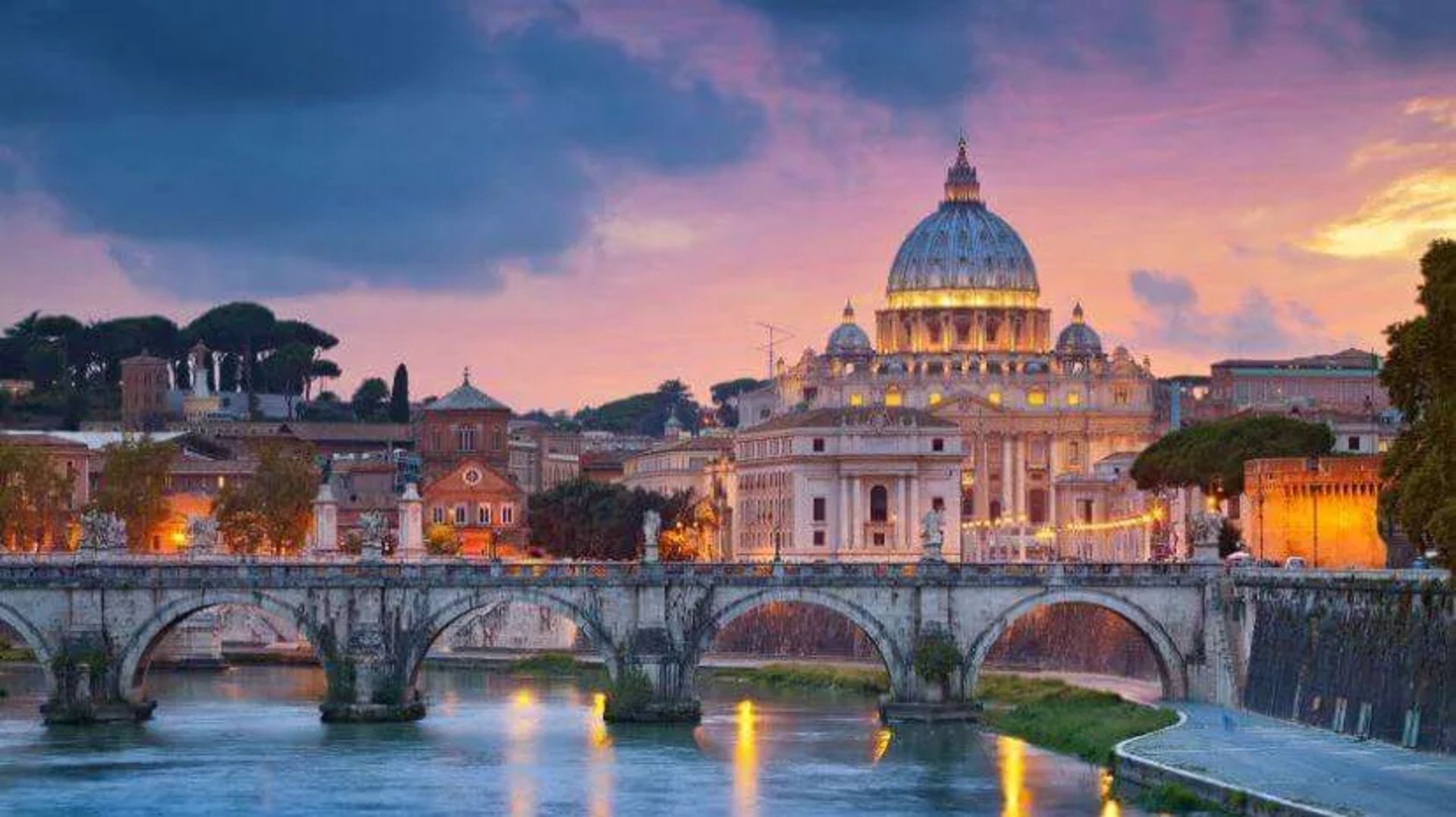
The final days take you through various parks and waterfalls until you reach the gates of the Eternal City, where the last effort rewards you with one of the finest views along the entire Via from the summit of Monte Mario.
Having Rome at your feet warms the soul, and arriving as a pilgrim adds profound meaning to a city that needs no introduction.
Want to start from Lucca? Read our article on the Via Francigena from Lucca to Siena.
Trail Difficulty
The main challenge on this section of the Via Francigena from Siena to Rome is the demanding climbs, especially during the initial days. Reaching San Quirico d'Orcia and Radicofani requires good physical fitness.
It's essential to carry extra water supplies, as there are long stretches without settlements along the route. On hot days, a hat is highly recommended. Trail markers and waymarks clearly indicate the path at every junction and turn, so you can enjoy the journey with complete peace of mind without constantly consulting a guidebook or GPS.
Where to Stay
The towns and cities you pass through are major tourist attractions, so accommodation is not a concern. A network of pilgrim hostels has developed along the route, allowing walkers to experience authentic pilgrimage hospitality. Hotels, B&Bs and guesthouses increasingly cater to pilgrims, so whether you prefer budget-friendly options or greater comfort, you'll find suitable accommodation matching your preferences.
What to Eat
The Via Francigena from Siena to Rome passes through two distinct regions, offering abundant traditional cuisine to taste. In Tuscany, in the Val d'Orcia area, you must try Pecorino di Pienza cheese or Cinta Senese cured meats.
A signature pasta dish of this region is pici (thick handmade noodles) served with Chianina beef ragù or wild boar ragù. The famous Chianina steak, renowned throughout Tuscany, is one of the finest meat dishes you'll encounter at evening restaurants.
In Lazio, the cuisine is more diverse, especially as you approach Lake Bolsena. You'll find lake fish soups like "sbroscia" from Bolsena, hearty acquacotta or pignataccia from the Viterbo area, progressing to iconic Roman dishes like tonnarelli cacio e pepe, spaghetti alla carbonara, or authentic saltimbocca.
A special mention deserves wine, as the Via Francigena passes below the hills where Montalcino sits, home to Italy's most celebrated wine, Brunello. Along the route, you can stop at local wineries for brief tastings that enhance your day.
Via Francigena Stages from Passo della Cisa to Lucca
Siena —> Ponte d'Arbia 26 km
Ponte d'Arbia —> San Quirico d'Orcia 29 km
San Quirico d'Orcia —> Radicofani 32 km
You leave Siena through Porta Romana and soon reach the stunning Certosa monastery, now a luxury hotel. The route continues on quiet secondary roads without traffic, and looking back, the entire city skyline creates a breathtaking sight.
At Isola d'Arbia there's the last opportunity for supplies; today's stage is quite demanding, especially on hot summer days, so stock up on food and extra water. From here, alternating between white gravel roads and short asphalt sections, you reach the Grancia di Cuna, an ancient fortified farmstead beyond which begins the day's highlight: a long white gravel road through fields on the famous Senese ridges.
Depending on the season, colours shift from spring green to summer ochre baked by the sun, to autumn grey of overturned clay. You pass through small rural hamlets like Greccio and Quinciano, then briefly take an asphalt road before returning to a long unpaved path beside the railway that leads to Ponte d'Arbia, your day's destination.
Leaving Ponte d'Arbia, you immediately climb a hill overlooking the village. You descend to enter Buonconvento, a charming medieval hamlet whose name itself suggests its historic role as a wayfarers' stop for the night.
You exit along a gravel road that leads to the foot of Montalcino, with panoramic views across surrounding hills to Monte Amiata in a truly breathtaking landscape. Long vineyard rows and ancient cellars accompany pilgrims toward Torrenieri, where you can stop for lunch and refill water supplies—it's the last village before day's end.
From Torrenieri, continuous gentle ups and downs on a quiet, lightly-trafficked asphalt road lead to San Quirico d'Orcia. The village is enchanting and a major tourist destination in Val d'Orcia, so finding evening accommodation is straightforward.
The third day features significant elevation changes and can be split into two stages for less experienced walkers. Those familiar with the Camino de Santiago might find it reminiscent of the stage to O Cebreiro. Both share simila
Share
A Piedi Per Il Mondo
New articles on walks, trekking and hiking trips. Free, no spam.
Discover our itineraries
in Italy.
Via di Francesco from Assisi to Rome
Via Francigena from Lucca to Siena
Via degli Dei in 7 stages
Want a tailor-made itinerary?
Plan your trip