
Camino de Santiago Etiquette: Essential Rules for Respectful Pilgrims
Being a pilgrim is more than wearing a backpack and carrying a staff—it's about embracing the values and unwritten codes that make the Camino a sacred journey for all who walk it.

In this article
Table of Contents
More and more people are discovering the joy of walking pilgrimages, some following the various Caminos de Santiago, others treading the beloved and increasingly popular Via Francigena. Since many of these walkers are not accustomed to this style of travel, they sometimes lack the sensitivity and common sense needed to behave appropriately in certain situations.
The sheer number of pilgrims crowding these routes makes matters even more challenging, forcing us daily to contend with the rudeness and bad manners of those who wrongly believe they own the world.
One of the things we love most about pilgrimage walking, whether undertaken for religious, spiritual, cultural or sporting reasons, is the freedom to enjoy what the path offers us—a FREEDOM we must embrace as a gift and share with those who accompany us on this journey or who play a part in our walking. In essence, being free while respecting others!
Because RESPECT is one of the fundamental values of our social life, a principle that sadly seems increasingly lost among those who fill this great and wonderful world.
The Camino and the act of walking become excellent tools for making this value truly our own, for giving it genuine meaning rooted in daily life. If we all managed to develop greater awareness of how our behaviour impacts others and cared for them as much as we care for ourselves, we could return home not only with beautiful photos and souvenirs, but also with a rich inner baggage to share and pass on to others.
Here, then, is a decalogue of the most important rules on the Camino de Santiago, essential guidelines for becoming the fellow pilgrim everyone would want walking beside them.

How does the donativo system work in Camino albergues?
One of the most important rules on the Camino de Santiago that I feel compelled to highlight concerns the value of the "donation."
We at A piedi per il mondo spend considerable time on various pilgrim routes and regularly hear complaints from indignant hospitaleros, as well as from seasoned pilgrims frustrated by the increasing number of opportunistic and unscrupulous pilgrims. I know that people are not born bad or rude, and that such behaviour is often shaped by society and personal experience, but this doesn't mean we should feel entitled to treat those we don't know disrespectfully. You never know who is on the receiving end of your poor behaviour and what emotional reactions your words and actions might trigger. There are far too many people who believe everything is owed to them and that they deserve special treatment.
The crucial point, the concept that must sink into everyone's head, is that NOTHING IS OWED TO US!
It happens, especially at parish albergues—donation-based hostels—that some pilgrims (not just Italians) arrive, enjoy full accommodation with communal dinner and breakfast, and leave without donating even a single euro.
DONATION IS NOT FREE!! And I must emphasise this! There are people who work, who generously give their time so that others can complete a pilgrimage—volunteers who offer their smiles and kindness to everyone who walks through that door. These people (hospitaleros) risk their own finances because of exploitative pilgrims who prefer to spend that money at the bar.
The hospitalero wakes early, prepares breakfast for everyone—whether 3 or 50 people—and after everyone has left, spends hours cleaning and preparing the albergue for the next arrival of pilgrims, all of this completely free of charge. They are volunteers who depend on the financial support of those they welcome to pay their bills, purchase cleaning supplies, and buy food for pilgrim dinners and breakfasts.
Yes, the offering is voluntary, but that doesn't mean leaving only the 5-cent coins left from your supermarket change. Each of us should place a hand on our heart and ask: what is the true value of what I have just received?
– I was welcomed
- I had a hot shower
- I slept under a roof
- I was given dinner
- I was given breakfast
If you received the same treatment at a hotel or mountain refuge, it would cost at least €30.
It's a reality that donation-based albergues are struggling more and more to survive, which is paradoxical considering this is precisely where the true spirit of community and generosity that characterises the Camino de Santiago truly breathes.
We often hear people boasting about completing the Camino for less than €15 a day, and I can't help but ask: at whose expense? This isn't about judging how someone chooses to walk the Camino, but simply pointing out that it's wrong to constantly live off the backs of others, especially those who generously share their time and money with strangers.
How should you behave in a Camino de Santiago albergue?
First, let's understand what an albergue is.
An albergue is an accommodation facility along the Camino de Santiago and comes in three types:
- Parish Albergue (Albergue Parroquial)
- Municipal Albergue (Albergue Municipal)
- Private/Tourist Albergue (Albergue Privado/Turístico)
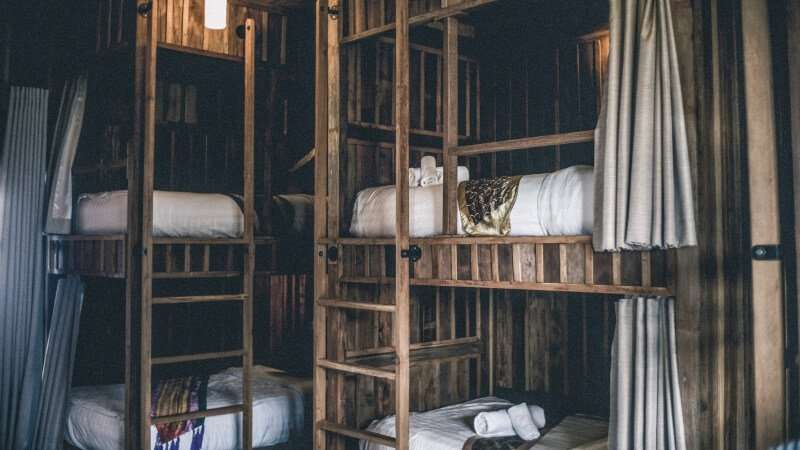
The parish albergue is a hostel run by the local parish and is typically donation-based. You will receive a bed, a hot shower, communal dinner—to which you're expected to contribute with a small task—and breakfast. You sleep in dormitories on bunk beds.
The municipal albergue is a hostel run by the local council, with a minimal charge of €5-7. Typically you'll get a bed and shower access. You sleep in dormitories on bunk beds.
The private/tourist albergue is a hostel or guesthouse run privately and costs more, ranging from €10-30 depending on location. The price usually covers only accommodation, which often includes clean sheets and towels—unlike the others. For a small extra fee, most offer breakfast, dinner and other amenities. Double rooms with private bathrooms are also available.
Now let's explore how you should behave in albergues.
What is the pilgrim's passport and why is it required?
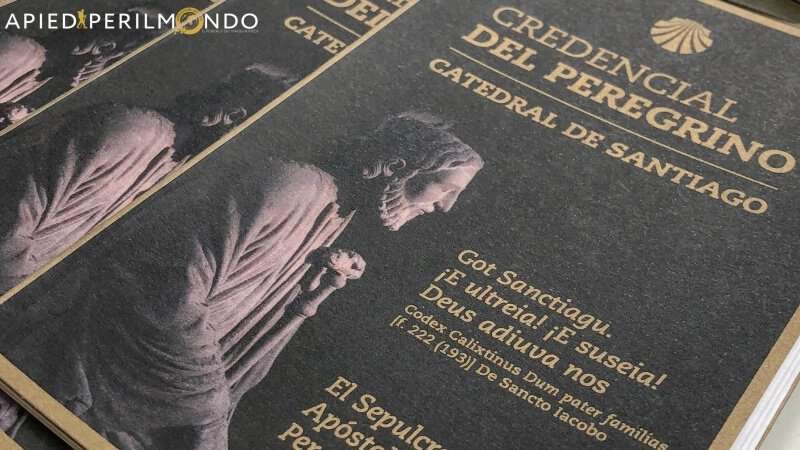
One of the Camino de Santiago's essential rules is that pilgrims must carry a credential or acceptable substitute document. To access albergues, you must present your credential—the pilgrim's passport—on arrival.
Unless you're staying at a tourist albergue, you cannot access pilgrimage hostels without a credential and cannot receive the discounted pilgrim rate.
Though some "clever" pilgrims think they can use albergues for a budget vacation in Spain, the reality is it's practically impossible.
Why is nighttime silence the main rule in albergues?
An albergue is not your home; you cannot do whatever you please as if you were alone. Once again, one of the Camino's most important rules comes into play: respect for others.
When you arrive at an albergue and enter a dormitory, take a moment to check if others are there and whether they might already be resting. If they are, please behave respectfully and considerately toward their need for rest.
Share
apiediperilmondo by wayure
New articles on walks, trekking and hiking trips. Free, no spam.
Co-fondatore di Apiediperilmondo e Wayure | Camminatore, imprenditore, costruttore
A hundred times the Camino de Santiago. Eight times the Kumano Kodo. Dozens of times the coasts of Portugal, then the Via Francigena, Ireland, England, Normandy: every walk you find here I have done on my own two feet, in every season, alone and with private groups and companies. I do not offer a single step I have not walked.
Profilo e tutti gli articoli di VincenzoDiscover our itineraries
in Camino de Santiago.
Camino de Santiago from Sarria - Last 100 km
Portuguese Way from Tui - Last 100 km

Camino Primitivo from Lugo - Last 100 km
Want a tailor-made itinerary?
Plan your trip