Mountains and Progress
A thoughtful exploration of mountain tourism's future. A mountain dweller shares his perspective on balancing development and preservation while trekking the Alpine Way.

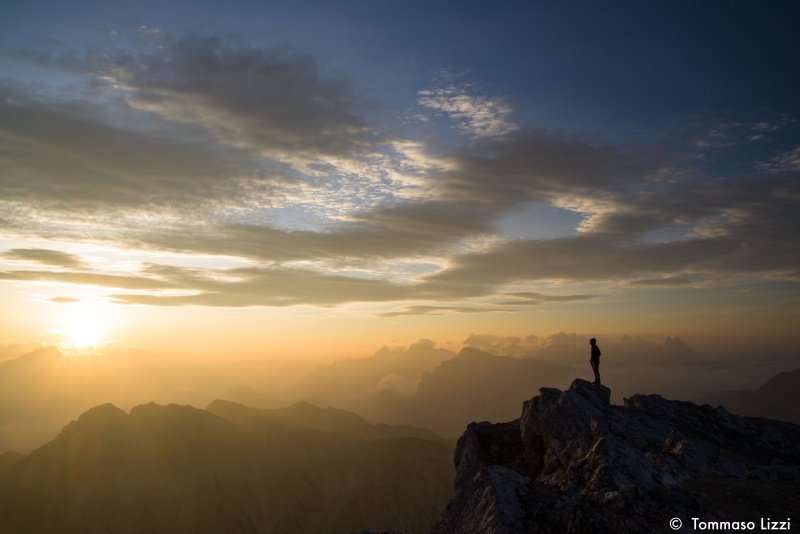
It's been over a month and a half since I set out on the ambitious journey to traverse the entire Alpine Arc on foot, following what's known as the Via Alpina. As of today, Tuesday 12 July 2016, I have completed more than a third of the route I planned.
I'm sitting at a table, gazing through large windows at clouds chasing and piling up over the mountains surrounding the refuge. It's raining with strong winds, and at times the fog is so thick I can see nothing but grey mist. The refuge where I'm staying is called Rif. Ponte di Giacchio and sits in the Fundres Valley on the border between Trentino and Austria.
It's a luxury refuge, completely new, rebuilt in 2015 to celebrate its 100 years of service in the mountains. The interiors are all polished light wood and guests can enjoy every conceivable comfort.
In Fundres Valley I'm staying in a luxury refuge. At 2,500 metres altitude, the mountains beyond the windows, yet it feels like I'm in a city hotel with every comfort available. Where exactly am I? No books to read by the fire, no card games or mountain songs. No warm welcome with a genuine smile.
I look around, inside and outside the building. Sitting here, despite being over 2,500 metres above sea level, I don't feel in the mountains. Looking out, I can see trails, rocks, peaks and valleys, but again it feels like I'm in a city hotel. Enormous windows frame a panorama that usually fills me with joy and passion, yet now it stirs nothing in me—only apathy.
Inside the spacious hall sit other guests; some savour finely-crafted pasta dishes, others stare at their mobile phones, the owners wait to pocket the money from bills. Where have the mountain books gone to leaf through by a fire? Where are the cheerful groups playing cards and singing? Most importantly, where has that pleasant, friendly and warm feeling that a mountain refuge should provide gone? Where exactly am I?
These five-star hotels are not refuges but industrial establishments. Money is their only intention.
This is not a welcoming refuge, but an industrial establishment with money-making as its sole purpose, squeezing the most from the raw material—which, sadly, is us walkers and mountain enthusiasts. I wasn't welcomed with warmth and a smile, but met with a cold menu listing prices and consumptions.
I've stayed in many of these refuges during my journey through Slovenia, Italy and Austria, and my feelings have always been the same. It seemed like being in a five-star hotel with every comfort. Going to the mountains has always represented a way for me to understand and test my capacity for adaptation, my open-mindedness and physical strength, and it's always sparked in me that sense of freedom and belonging to nature that few other places can provide. I measure myself against the forces of nature and don't seek comfort; instead, I immerse myself in a wild and sometimes inhospitable world.
Going to the mountains means adaptation, open-mindedness, physical strength; it's freedom and belonging to nature. You don't seek comfort but warm hospitality. Values still found in family-run refuges, managed by people who love the mountains in every aspect.
I'm not opposed to progress and modernisation, but I believe alongside them must continue to exist and be respected those values and principles that have always characterised the mountains. Values we still find in those family-run refuges, managed for decades by the same people, folk who love the mountains and everything that comes with them—people who haven't been seduced by the power of money, but who've built their integrity through hard work and pure passion for the places they protect and steward.
Fortunately, many such refuges still exist, and they're the ones least frequented by tourists, because they lack the comforts increasingly more people seek. In these refuges, however, every walker is warmly welcomed with a smile, with love and passion. Stories are told and listened to. These are places where everyone feels at home, where the freedom and purity of the mountains permeates the souls of those lingering in the evening to laugh and joke with fellow "mountain lovers" over a glass of good wine offered by the house.
I'm convinced that mountain environments must be respected and valued by maintaining those principles that distinguish the spirit of the mountains and the nature that surrounds them.
Messner and Corona denounce excessive mountain crowding
This goes hand in hand with discussions emerging lately among mountain purists and enthusiasts: the problem of the Passes, particularly the Dolomites, easily accessible and constantly swarmed by enormous crowds of tourists, especially in summer.
Mauro Corona and Reinhold Messner have openly addressed this problem—the excessive noise caused by thousands of cars and motorcycles clogging mountain roads during warm months—proposing valid solutions and alternatives, ranging from closing passes during certain hours to motorised vehicles, charging transit tolls to reduce numbers, or closing them entirely on certain days of the week.
I completely agree with closing the Passes to private motor vehicles during alternate time slots or even entire days.
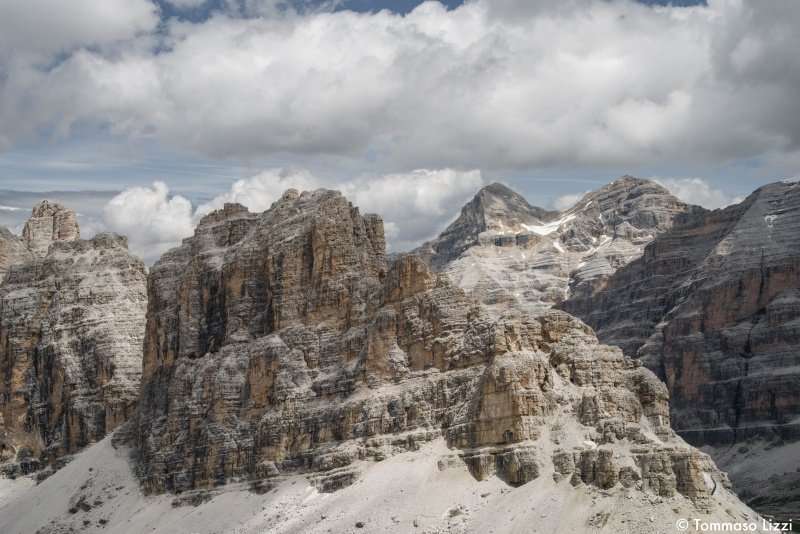
During the Via Alpina, I chose several alternative routes, one being the famous Alta Via Numero 1. I walked only a few days along this renowned trail, specifically from Lake Braies to Rifugio Lagazuoi, just above Cortina d'Ampezzo. Three days along what I'd call a mountain "motorway," with thousands of people, thanks to the easy accessibility of refuges via various cable cars and funiculars, crowding the trails and valleys everywhere.
The noise of motorcycles and cars mingles with the disrespectful chatter of tourists who don't understand the deeper value of the mountains. Long and serious reflection must find swift answers to this situation, so that silence and respect for the mountains can prevail.
The silence that normally dominates the Passes is constantly disturbed and ruined by the endless stream of motorcycles and cars arriving by the hundreds at car parks and sometimes even to the refuges themselves. Young people in mountain gear, while others in shirts with girls in stilettos. What disgusted me most was the amount of litter I collected and carried down the valley during those 3 days.
Lately there's also much talk about the closure of the famous Staunies Cable Car, also in Cortina d'Ampezzo, which leads directly to Rifugio Lorenzi, from which numerous famous via ferrata routes depart, including the renowned Via Dibona.
Many people on various social networks have expressed their despair at being unable to attempt these via ferratas, but the fact is these routes and the refuge remain perfectly reachable with a couple of hours of walking and effort.
The newspapers read these days: "Rifugio Lorenzi closes due to cable car closure," but then I must ask: are we sure this is a refuge or are we talking, as before, of an "industrial establishment" whose sole purpose is making money?
Some, following Mauro Corona and Reinhold Messner's statements, have expressed their disdain by claiming closing the Passes would be selfish and somehow racist; perhaps these people don't enjoy sweating or walking. In conclusion.
Does high mountain really need this radical progress and modernisation that adds every possible comfort? Is it truly possible to describe the desire to preserve its values and principles as "racist" and selfish? Let's all ask ourselves some questions: why do we feel the desire to go to high mountains? Do we really need all these comforts?
If the answer is yes, I'd spontaneously respond: "go to the beach!"
Share
apiediperilmondo by wayure
New articles on walks, trekking and hiking trips. Free, no spam.
Redazione
La redazione di Apiediperilmondo. Guide, itinerari e storie nate camminando: consigli pratici, cammini in Italia e nel mondo, letture e spunti per chi viaggia a piedi.
Profilo e tutti gli articoli di Apiediperilmondo