Epiphany in Spain: The Day of the Three Kings
January 6th marks Spain's most enchanting celebration: Epiphany, when the Three Kings arrive with gifts and magic fills the air for millions of children across the nation.

In this article
In Italy we have La Befana and in Spain they have the Three Kings.
The legend
According to legend, the Three Kings travelled towards Bethlehem following a star, which lit their way to the newborn baby Jesus.
Upon arrival, each of them presented a gift: Melchior brought gold, Caspar brought frankincense and Balthazar brought myrrh.
Every year, close to Christmas, children begin to write letters to one or all three of the Kings.
In these letters, children tell the Kings how well they have behaved during the past year and ask for the gifts they would like to receive on January 6th. It is believed that the better behaved the child has been throughout the year, the better the gift they will receive that morning.
But all children also know that if they have misbehaved, they risk receiving a lump of coal (nowadays, this coal is nothing more than a block of sugar painted black).
The Three Kings travel every year on camels from the East to visit all the children. When they arrive in Spain, each of them rides through all the towns and cities to listen to the children's wishes and receive their letters.
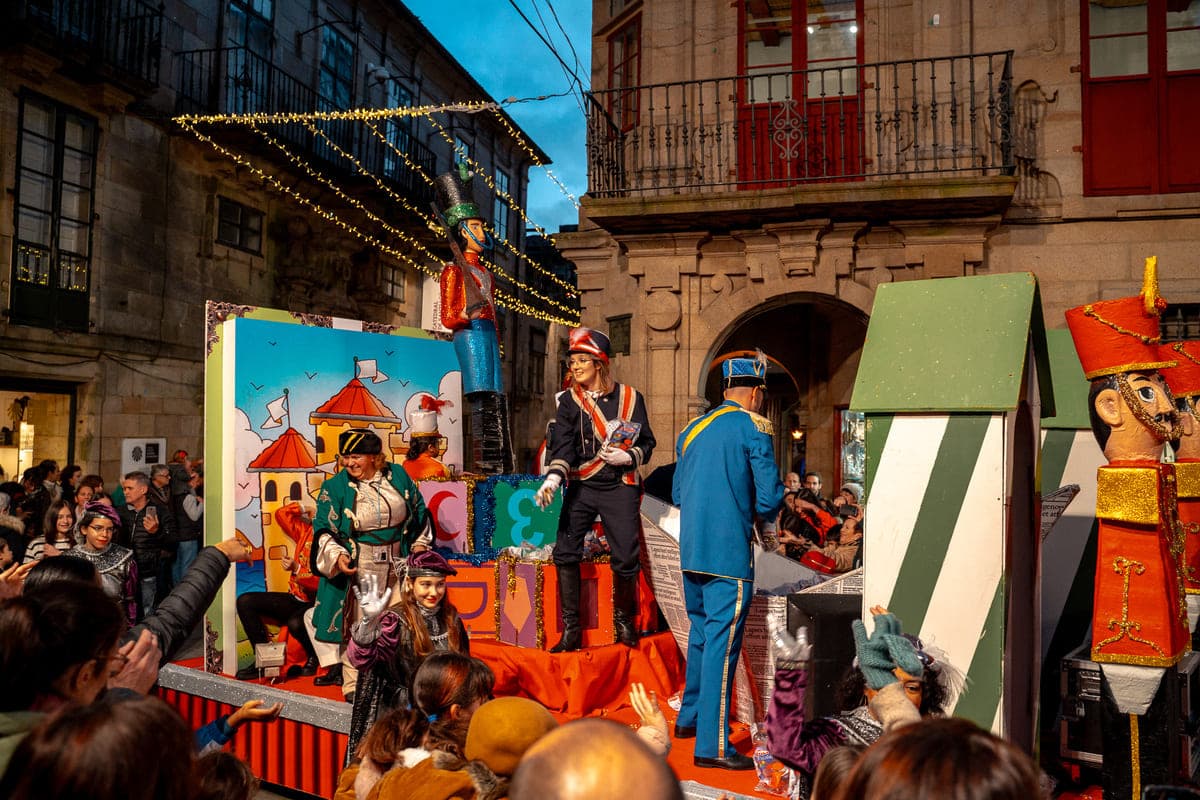
On the night of January 5th, after watching the Kings' parade in the city, children rush home to clean their shoes and position them in a good spot in the living room. This way, the Kings will know whose gift to leave where.
Since they come from very far away and the Kings have much work to do during the night between January 5th and 6th, all families have the custom of leaving them some water, nougat or milk to recover their strength and that of their camels.
So when morning arrives on January 6th, Kings' Day, the children in every home rush excitedly to the place where they left their shoes, eager to discover what gift the three Kings from the East have brought them.
Moreover, everyone discovers with joy that there is no water left and that the nougat has been eaten, a sign that the Kings have recovered their strength well to return home. On this day, joy fills every house and ensures that, little by little, everyone knows that Christmas has ended... at least until next year!
The "historical" origins of the Three Kings
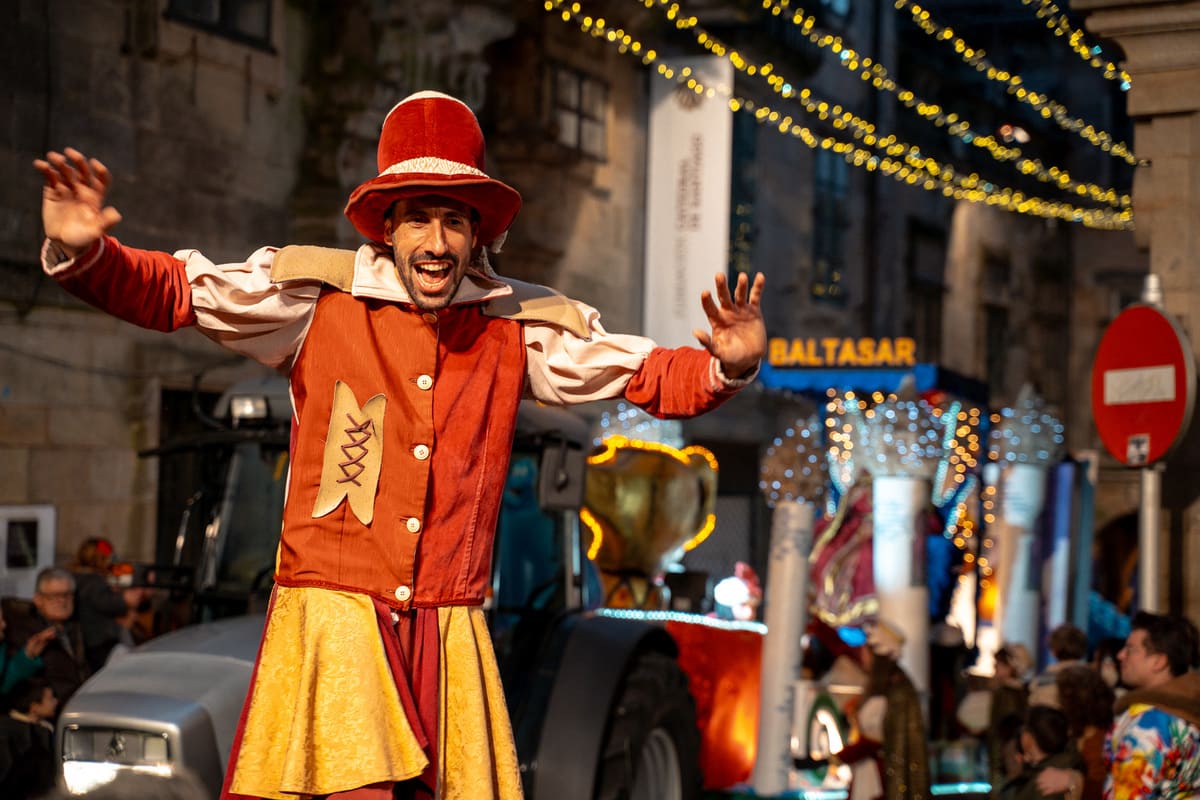
To understand the fascination that the Kings' Day holds in Spain, we must step back and delve into historical, artistic and, of course, religious references.
The first source to consider is the Gospel. It tells the story of some wise men (a word that over time became "magi" and which we explain a bit further on) who came from the East to worship the newly born king of the Jews.
While searching for the baby Jesus, they encountered Herod, who asked them to inform him if they found the child (for anything but festive reasons, since his intention was to kill him), which they, understanding the situation, did not do.
They also warned those present at that modest nativity scene that Herod was searching for the child and that they should flee to save themselves.
It is essential to emphasize that the term "magus" should be interpreted as a wise man or astrologer, in the sense of a specialist of the heavens.
From the third century onwards, the term "magus" aroused suspicion since magic, both white and black, was considered a dubious practice. For this reason, in popular culture, the magi were elevated to the status of Kings.
Furthermore, there is an exceptional work that speaks of them: the so-called "Adoration of the Three Kings" (12th century), a fundamental work in the history of Spanish literature as it is the oldest theatrical text preserved in Castilian language.
The work features Melchior, Caspar and Balthazar, not defined as "kings" but as "steleros," that is, astrologers.
Italy, the place that portrayed the Three Kings in art
Want to see the Three Kings? Know what they looked like? Here are some "artistic" clues to see how they have been represented over the centuries.
In the Catacombs of Priscilla, located in Rome, you can admire a fresco dating back to the second and third centuries. In the Greek chapel of this place, there is a representation of three figures approaching the Virgin Mary, holding baby Jesus on her lap.
In the Church of Sant'Apollinare Nuovo, in the Italian city of Ravenna, there is a frieze that again presents the three figures.
Dressed in clothes of Eastern inspiration, in the upper part of this artistic element you can see three inscriptions that identify the names by which the wise men are known to this day: Melchior, Caspar and Balthazar.
This is not the only document providing evidence that these are the names of the Three Kings. There is, in fact, a text of Armenian origin (an apocryphal gospel) in which the names of these three figures, fundamental characters in Christian mythology, are very similar to those used nowadays: Baltazar, Melkon and Gaspard.
As we mentioned at the beginning of this article, Kings' Day in Spain is the most special and magical day of the year, not only for children but also for adults, who participate in this legend with the same enthusiasm as the youngest.
If you want to experience Kings' Night in Spain, you can decide to walk the Camino de Santiago during the Christmas season, giving yourself a truly unique experience! We look forward to seeing you next year 😉
Share
apiediperilmondo by wayure
New articles on walks, trekking and hiking trips. Free, no spam.
Redazione
La redazione di Apiediperilmondo. Guide, itinerari e storie nate camminando: consigli pratici, cammini in Italia e nel mondo, letture e spunti per chi viaggia a piedi.
Profilo e tutti gli articoli di Apiediperilmondo