Camino de Finisterre and Muxia
A transformative 120 km journey through wild Galician landscapes to the legendary end of the world—where ancient pilgrims once stood at the edge of the known earth.

In this article
Table of Contents
Trail Facts: Camino de Muxia and Finisterre
- Starting Point: Santiago de Compostela
- Ending Point: Muxia or Finisterre
- Distance: 120 km
- Terrain: Asphalt – Trails – Dirt paths
- Difficulty: Tourist-Friendly Hiking
- Estimated Time: 4 days
- Best Season: Year-round
- Waymarking: Yellow arrows and scallop shells
A More Intimate and Solitary Journey
Whether heading to Finisterre, Muxia, or both, the pilgrimage from Santiago to the Galician coast is a truly unique experience that embodies the finest essence of all the kilometres walked before.
Although their numbers have grown in recent years, few pilgrims choose to continue beyond Santiago to the ocean.
The trail becomes an intimate, introspective experience, bringing us closer than ever to the true essence of walking.
Those who started from the Pyrenees, Navarre, or even La Rioja might recall that early feeling when pilgrims were few and authenticity filled the air. But this is different.
Those who strap their backpack on again at Santiago and continue walking are richer, fuller, wiser people than they were at Saint Jean Pied de Port. And it's self-awareness that makes the difference.
Santiago marked the end of an incredible experience, where the key word was RENEWAL.
The Finisterre trail represents rebirth—a more intimate understanding of ourselves and our actions.
The silences are savoured as never before, the peace, and the sound of our own thoughts finally able to travel uninterrupted. Everything feels like the final, wisest phase of a cycle.
The Camino de Finisterre and Muxia is a deeply personal experience that, unlike the Jacobean Routes, retains strong mystical elements tied to its pagan past.
What the Finisterre and Muxia Trail is Like
The Galician landscapes you may be accustomed to—thick forests and dense vegetation—become a memory here. Perhaps it's the proximity to the sea, but you'll walk mostly through agricultural fields and rolling green hills, accompanied by grazing livestock common to these areas.
Streams and rivers appear, but in open spaces surrounded by low grass. The ocean, with its fishing villages and charming coastal towns, is a rewarding sight after all those kilometres, and its fragrance is truly intoxicating.
The elevation gains present no significant challenges. There are no steep climbs, but continuous gentle ups and downs that nonetheless add up by day's end.
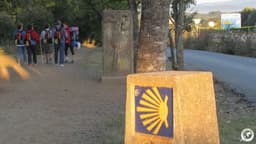
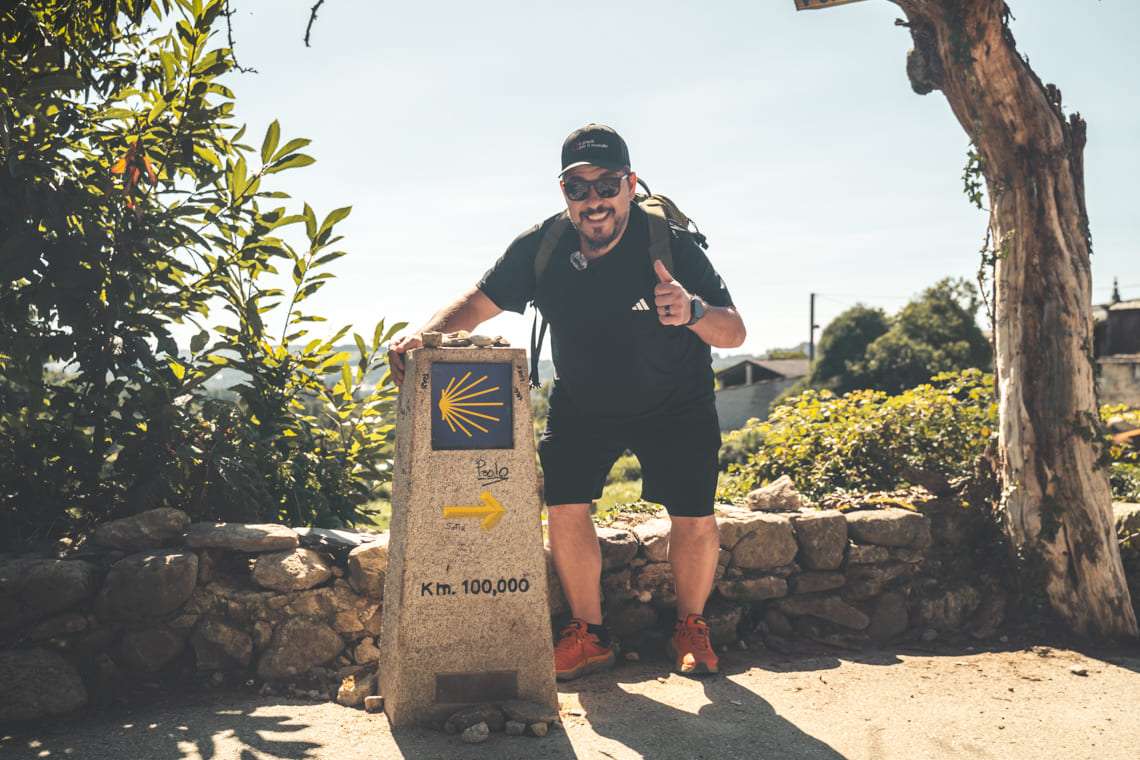
Waymarking is excellent from the start, with both yellow arrows and stone markers (mojones) indicating remaining kilometres.
Towns are few and very small. They're mostly rural pueblos centred on a main street, featuring typical country architecture. Stone-walled houses blend harmoniously with the surrounding landscape, creating a truly enchanting atmosphere.
Along the route, bars and refreshment stops are limited, so make the most of the few you encounter.
History of the Finisterre and Muxia Trail
The Camino de Finisterre and Muxia is not a Jacobean route, and Santiago is not the destination but the starting point.
Its roots reach back to pre-Christian times, when Finisterre—known to the Romans as Finis Terrae—and Muxia represented the end of the known world, the westernmost edge where one could witness the final sunset.
Some believe this is the origin of the name "Costa de la Muerte" (Coast of Death), referring to the death of the sun or the known world.
Today we associate it with the treacherous waters and sheer cliffs that caused countless shipwrecks and deaths, but a more ancient meaning cannot be excluded.
It's likely that by the 10th century, as pilgrimages began, those reaching Santiago would continue to the Galician coast to contemplate the world's end.
Faced with this "pagan" phenomenon, the Church appropriated these places and Christianised them. The 12th-century Codex Calixtinus firmly linked Finisterre and Muxia to Saint James's evangelisation of Spain, establishing the foundation for authentic pilgrimage.
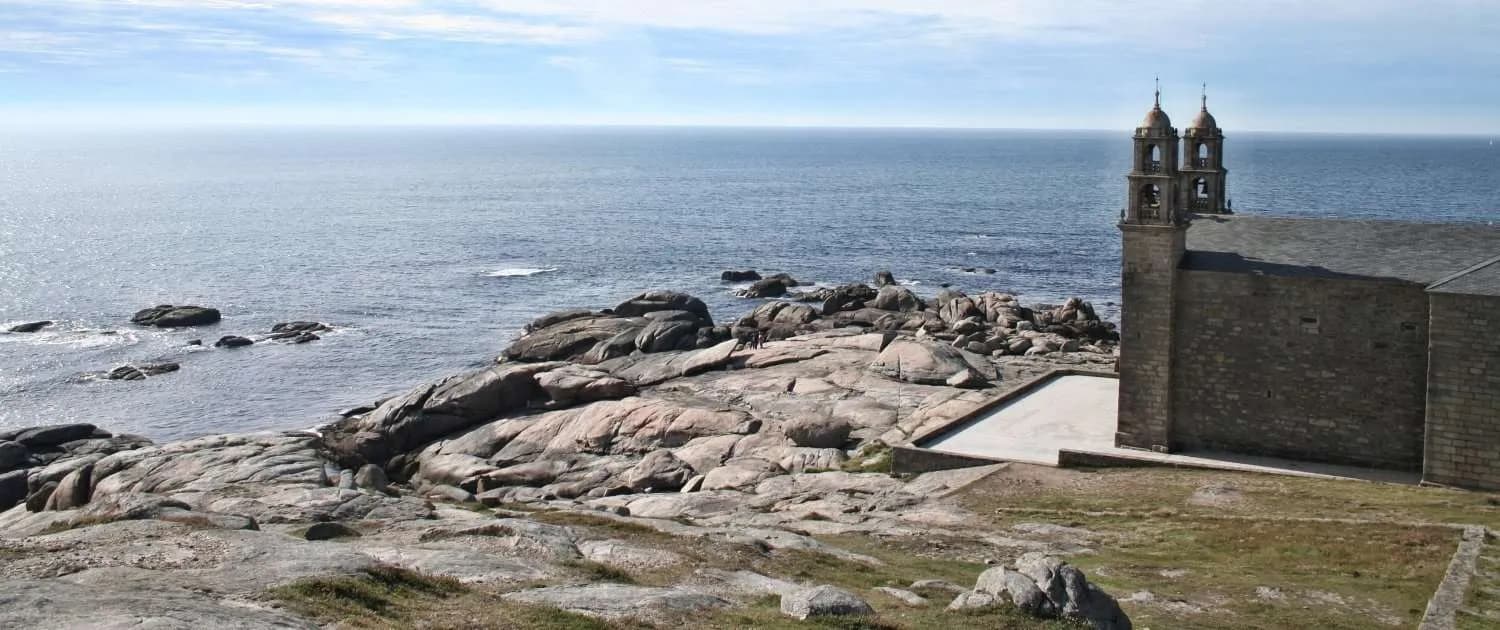
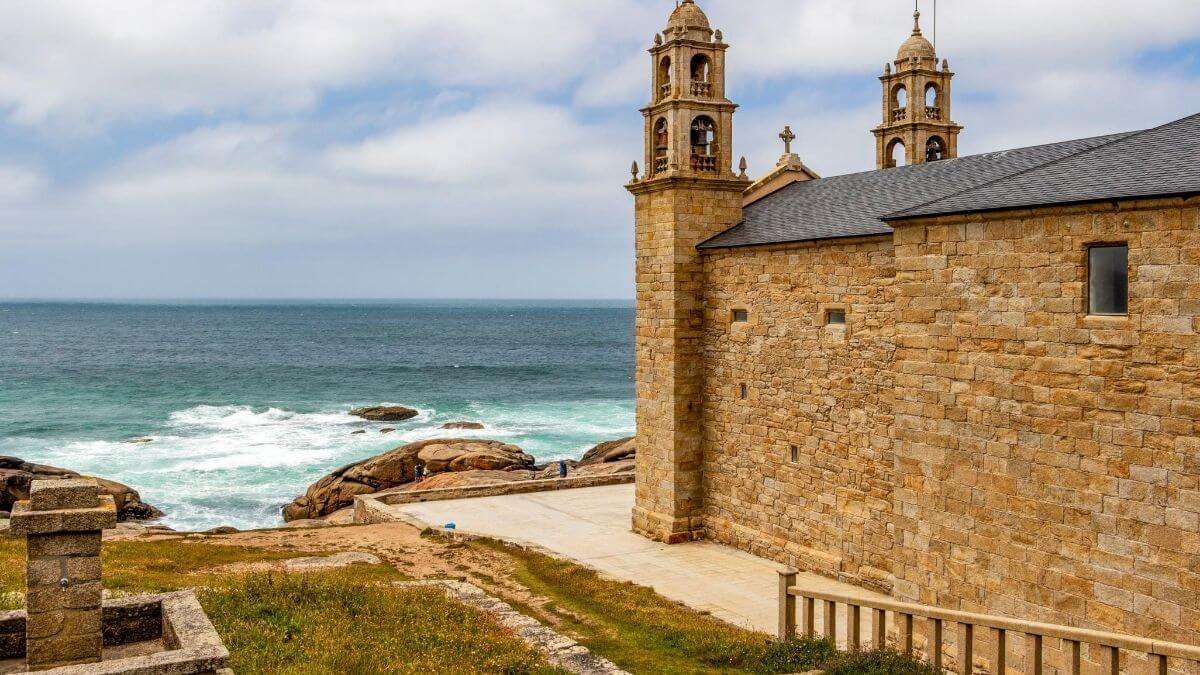
The Sanctuary of the Holy Christ was erected at Finisterre, while the Sanctuary of the Virxe da Barca (Our Lady of the Boat) was built at Muxia. The latter stands where, according to tradition, the Virgin Mary appeared to Saint James aboard a boat to offer him encouragement in his preaching.
Despite Christianity's profound influence on this trail, Finisterre and Muxia retain a powerful mystical appeal, still ideally connected to the pagan gods of sun and earth.
Trail Stages: Finisterre and Muxia
The Camino de Finisterre and Muxia covers nearly 120 km, typically divided into 4 stages. After the first 60 km travelled together, a junction near Hospital—about 5 km beyond Olveiroa—forces you to choose between Muxia (right) or Finisterre (left).
A further 30 km section connects these two destinations, completing the journey.
Stage 1 | Santiago to Negreira 22 km
The trail begins at Santiago Cathedral, specifically from Plaza de Obradoiro. Taking Rúa das Hortas, you quickly leave the city behind. The cathedral spires tower over Compostela in the distance, gradually disappearing over the hills as you move forward.
From here on, only nature and small villages.
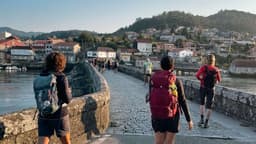
Notable among them are Aguapesada, with its medieval bridge, and Ponte Maceira, one of the trail's most beautiful villages. The Tambre River's banks are connected by an exquisite bridge, originally Roman and rebuilt in the 12th century, then reformed again centuries later. Beside the river, three perfectly preserved mills complete a harmonious scene of architecture blending seamlessly with nature.
You then reach Negreira, the largest town you'll encounter before reaching the coast. The O Cotón palace is particularly striking—a medieval fortress featuring walls, towers, and porticoes, flanked by the Chapel of San Mauro.
In one of its squares, the Monument to the Emigrant depicts a family man forced to leave for the New World seeking work—a reality these communities truly experienced in the past.
Stage 2 | Negreira to Olveiroa 33 km
From Negreira onward, the Finisterre and Muxia route occasionally follows the ancient Camino Real. This is evident from place names like Camiño Real and Portocamiño.
This region is known for significant straw hat production and distinctive vernacular architecture.
The Horreos (grain stores) here are unusually large and elaborately constructed—essential for storing grain away from moisture and animals in such a rural setting.
You'll pass the A Fervenza reservoir before arriving in Olveiroa, a small village with minimal services that marks the end of this stage.
Stage 3a | Olveiroa to Finisterre 32 km
At Hospital, about 5 km from Olveiroa, a waymarker displays two spray-painted inscriptions marking the junction between the Muxia and Finisterre routes.
To head to Finisterre first, follow the left arrow and continue straight through rolling hills until the sea comes into view. As you approach the coast, you'll pass through Cee, a fairly large village, and Corcubión, an attractive seaside town with a charming harbour, lovely seafront, and white houses with distinctive red roofs.
Finisterre
Finisterre lies beyond the long Langosteira Beach, perched on a dramatic promontory. The town centre is well-equipped and inviting. The 12th-century Church of Santa Maria de Areas houses a crucifix statue of Christ dating to the 14th century. Legend claims it washed ashore during a storm, some say landing on an ancient pagan sun altar that Saint James destroyed during his evangelisation efforts. A major celebration of the Christ takes place during Holy Week.
The harbour area is among the most beautiful, filled with restaurants and bars serving excellent seafood. A small path leads to the opposite shore of the bay to Mar de Fora Beach. Here, the sea—unprotected by the bay's embrace—is wild and untamed. Evenings see numerous bonfires lighting the shore, gathering places for those seeking company and celebration.
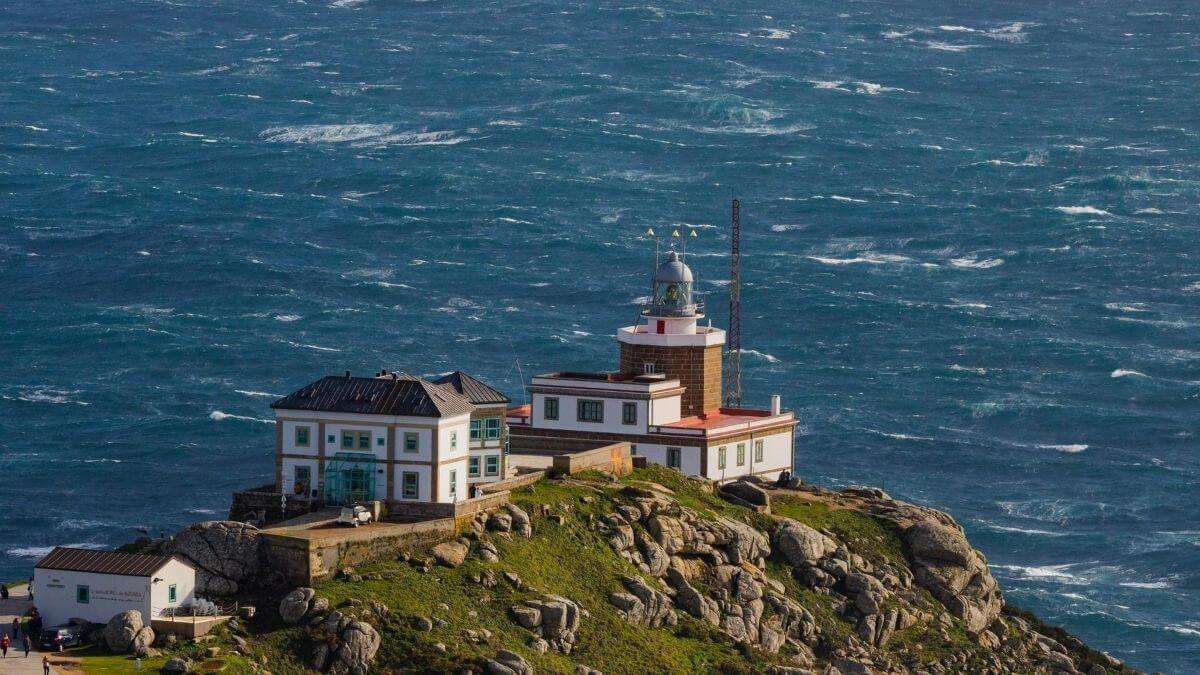
A visit to the lighthouse is essential. About 3 km away, you can reach it by following the paved road from town or taking a dirt trail up Monte de Facho. The panorama is breathtaking, offering sweeping views of the entire promontory.
Share
apiediperilmondo by wayure
New articles on walks, trekking and hiking trips. Free, no spam.
Co-fondatrice, Apiediperilmondo
I've been organising walks since I discovered that walking slow is the fastest way to know a place. I take care of every logistical detail so you can focus only on the steps ahead.
Profilo e tutti gli articoli di DeborahDiscover our itineraries
in Camino de Santiago.
Camino de Muxia and Finisterre
Camino de Santiago from Sarria - Last 100 km
Portuguese Way from Tui - Last 100 km
Want a tailor-made itinerary?
Plan your trip