Book Review: 'A Fortune-Teller Told Me' by Tiziano Terzani
A masterpiece of travel literature, Tiziano Terzani's 'A Fortune-Teller Told Me' chronicles an epic year across Asia in search of lost rhythms—a profound journey away from modern civilization's relentless pace.

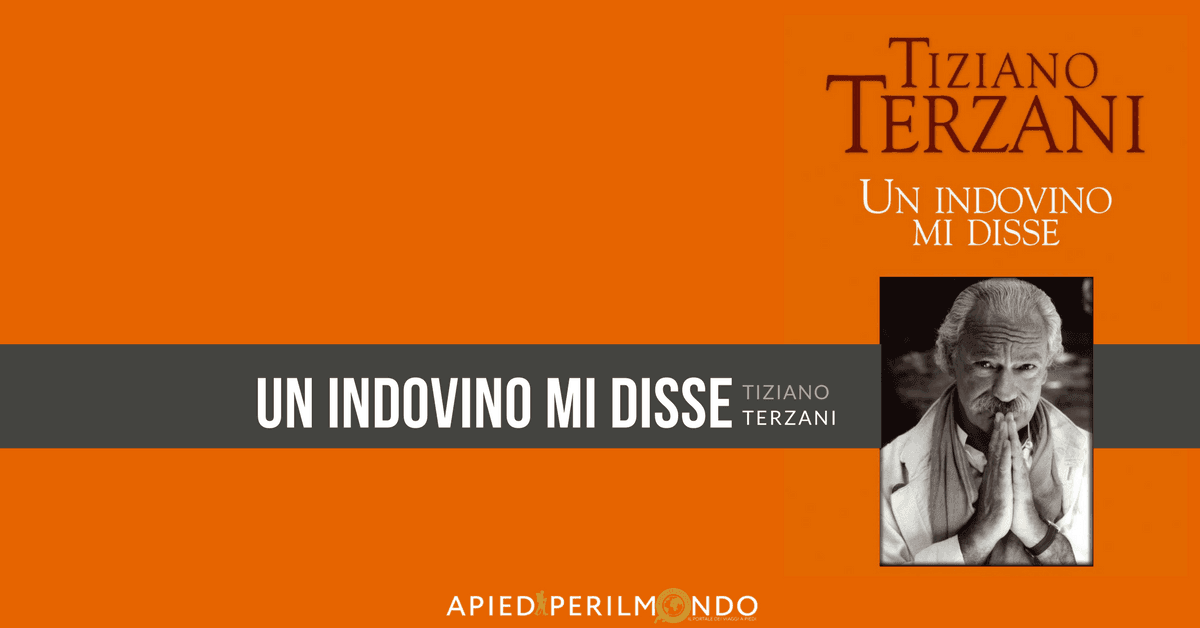
Book Review: "A Fortune Teller Told Me"
A masterpiece of travel literature, Tiziano Terzani's "A Fortune Teller Told Me" recounts an extraordinary year spent in Asia, seeking lost rhythms and freedom from the relentless pace of modern civilization
"It was a magnificent decision and 1993 turned out to be one of the most extraordinary years of my life: I should have died, but instead, I was reborn."
Tiziano Terzani Tweet
"Travel only makes sense if you return with some answers in your suitcase," Leopold said. "You travel so much—have you found any?"
Terzani summoned his courage and decided to use this unique period to document the stories of ethnic Chinese throughout Southeast Asia for the German newspaper Der Spiegel, for which he was Asia correspondent. This would be the official "excuse" to justify his choice to honour the prophecy.
It's clear the writer was seeking a fresh challenge, a different way of seeing the world, observing countries and people at a pace that allowed for genuine understanding.
Terzani also promised himself that wherever he travelled that year, he would seek out the most renowned local fortune teller, the village sage, the most respected mystic—just to glimpse what fate had in store.
Thus began an epic year of rediscovering his beloved Asia. A choice born from the desire to reclaim his life, his rhythm, refusing to surrender to the frantic, chaotic pace of modern civilisation.
Rediscovering borders, crossing frontiers, bridging exhausting distances: slow travel offers harmony and awareness because it allows us to recover a fragment of freedom we've lost amidst duty-free shops, check-in announcements, and polite landing music.
From Laos to Vietnam, from Cambodia's first democratic elections to the opening of the first overland route linking Thailand and China through Burma, through legendary Bangkok—a Florence on the Trans-Siberian Railway—and culminating in a journey from Europe back to the Orient, sailing from the Mediterranean across the Indian Ocean and through the Strait of Malacca to Singapore aboard a weathered container ship.
"What I couldn't shake off was the haunting memory of that enormous mass of desperate, bewildered, greedy and angry humanity I had left behind, from Vietnam to China, from Mongolia to Russia. Had I flown, I would never have witnessed it."
Despite his promise not to fly, Terzani never stopped being a journalist, managing always to arrive where he needed to be.
An idea that delighted him and allowed him to rediscover that instinctive need to challenge himself, to face difficulties head-on, perhaps to test his own mettle and arrive with greater joy at his destination.
Life is strange—a kind of illusion, a continuous metaphor, a permanent state of instability. And if you're someone who starts asking questions, who harbours doubts even about simple things, something shifts: you're no longer the same because you discover new shadows and lights.
Maybe you then search for answers to those simple questions, but you don't find them, and so comes first an unease about the world and all around us. If you're not strong enough, if you don't feel strong enough, those answers might be sought through uncomfortable and difficult paths.
Travel, instead, is the best solution—to learn and understand without prejudice while remembering who we are and why we're seeking those answers. This was Terzani's choice.
Returning to his second promise—to meet the most famous mystic in each place—whenever he encountered a monk, a sage or an enlightened soul, he tended to recognise himself in their words. But he realised it was almost natural to make reality fit the prophecy; it was like making rhymes with a fortune teller.
This aspect matured and evolved throughout the book, leading Terzani to learn something more, to take further steps in his personal journey.
"I spent the afternoon inputting notes on my computer, reading the unposted love letters of a former English governor, and listening to the sea and the crows. I was happy. I was alone, and I found solitude to be magnificent company."
A journey free from daily routine, serving only one's conscience, with a mind uncluttered by exhausting thoughts and free to savour the world's joys and nature's gifts. A recurring theme throughout the book.
Perhaps the mechanism of happiness—I'm speaking of simple, genuine happiness—broke down when most people distanced themselves from nature. How can you grow and live happily without the rhythm of animals and plants woven into your daily life?
Can you be happy without hearing the splash of a river or stream? Without a vast meadow of wildflowers where you can witness dawns and sunsets? Without the ability to observe nature and learn from it—what would life become?
I find this series of questions deeply troubling because I believe many, too many, have forgotten these values and aren't even trying to recover them.
This book is a wellspring of inspiration because it teaches so much: to let time flow without anxiety, to wander and explore your thoughts, to rediscover the joy of travel, surrendering yourself to places and people, experiencing them fully.
"I travelled slowly and revelled in it. I had time again to look, to truly feel the places."
Share
apiediperilmondo by wayure
New articles on walks, trekking and hiking trips. Free, no spam.
Redazione
La redazione di Apiediperilmondo. Guide, itinerari e storie nate camminando: consigli pratici, cammini in Italia e nel mondo, letture e spunti per chi viaggia a piedi.
Profilo e tutti gli articoli di ApiediperilmondoDiscover our itineraries
in Camino de Santiago.
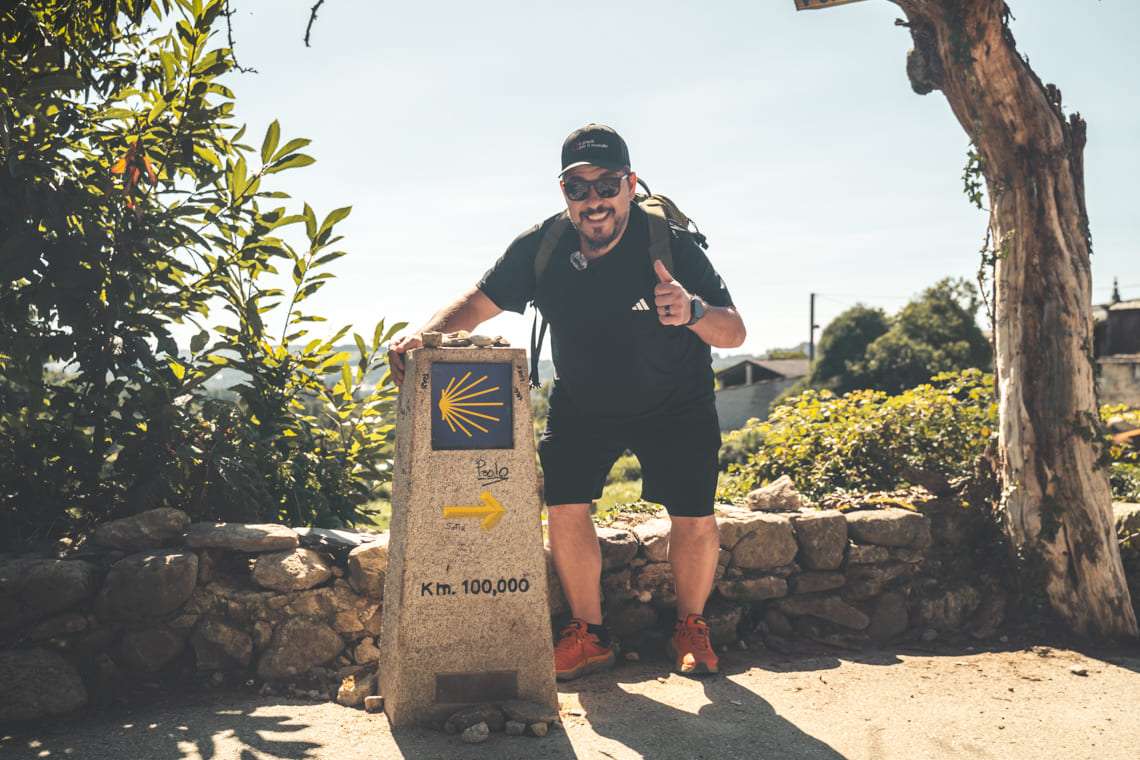
Camino de Santiago from Sarria - Last 100 km
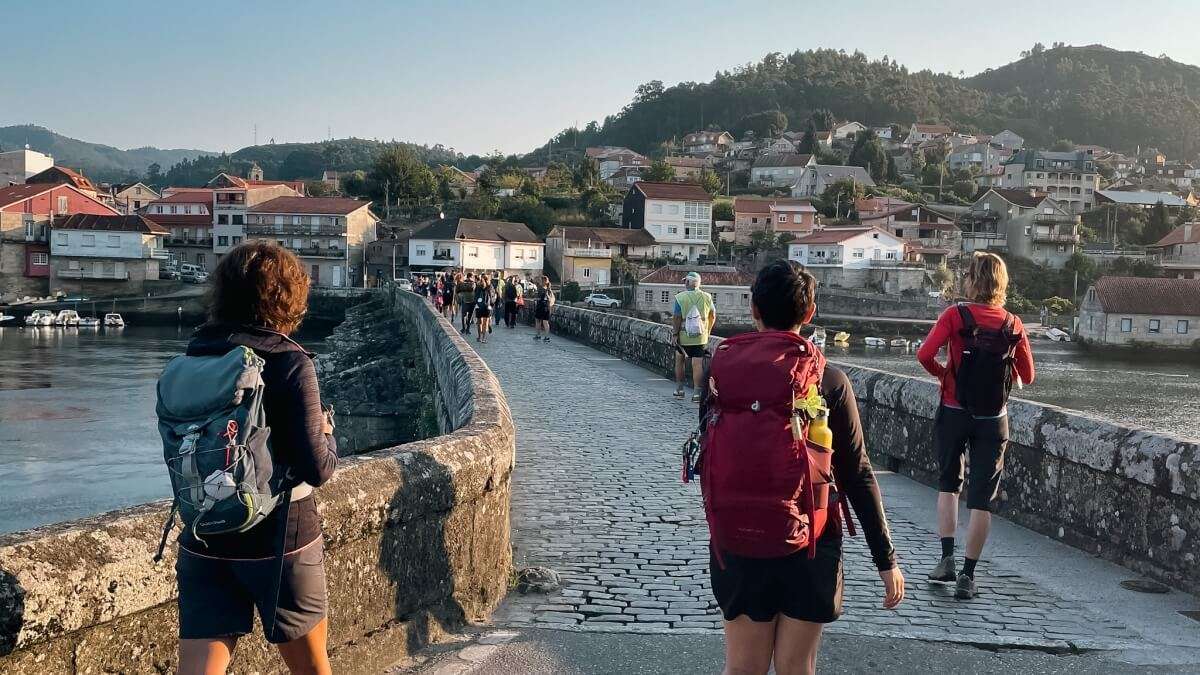
Portuguese Way from Tui - Last 100 km

Camino Primitivo from Lugo - Last 100 km
Want a tailor-made itinerary?
Plan your trip