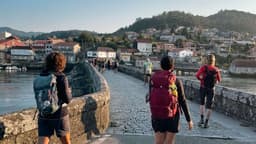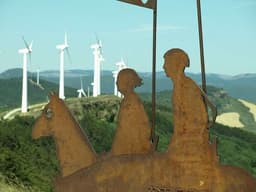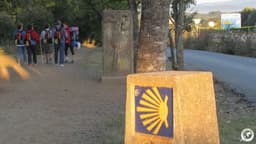
Why Do We Walk? Discovering Our Ancient Path
Explore humanity's timeless relationship with walking—from our earliest footsteps to modern pilgrimage. Uncover the deeper reasons why we're drawn to the open road.
A Piedi Per Il Mondo

In this article
Walkers have inhabited the world since the beginning of time. Men and women who travel on foot across short distances or vast journeys, driven by desires that extend far beyond the simple need to move from one place to another on Earth.
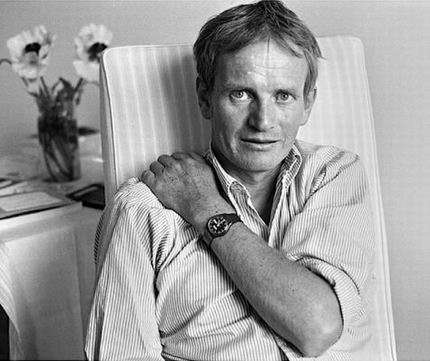
Bruce Chatwin photo
Bruce Chatwin, the renowned British writer and traveller, teaches us that in the Tibetan language, the word (a-Go ba), meaning "human being," carries the significance of "wanderer," "one who migrates." In fact, nomadism was humanity's first form of society, born from the primitive need to find new pastures for livestock and hunting grounds.
With the spread of agriculture, human communities became settled, yet they never ceased travelling—they simply began to do so for reasons unrelated to survival or necessity.
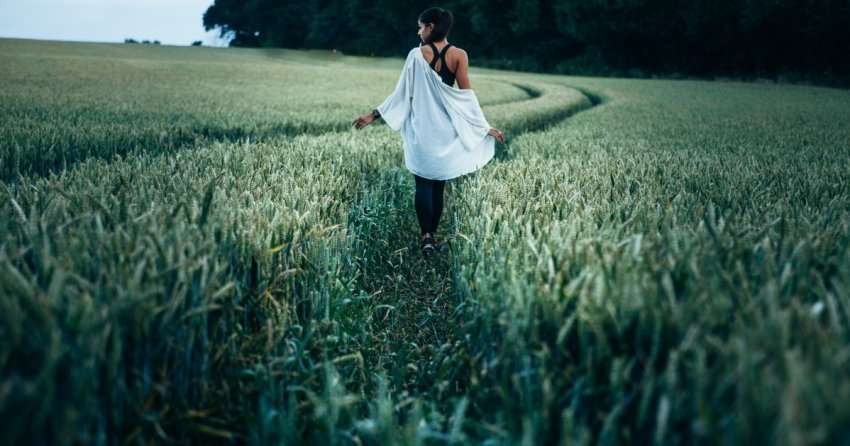
A Brief History of Walking
Throughout history, the reasons that have compelled men and women to walk have been diverse, often reflecting the needs and aspirations of their era.
Classical philosophers and thinkers walked in search of truth, debate and discourse, yearning for answers. They did so in cities, along streets, in public squares, among the people, sometimes posing as wandering mendicants, barefoot, with little more than a piece of cloth on their shoulders and a nearly empty travelling bag. Their walking was at times impatient, at times deeply contemplative—the journey of those seeking direct contact with reality in all its force, those desiring to observe, analyse and question.
Curious explorers and adventurers, eager to discover different cultures and ways of thinking, ventured to distant lands and wild places. They investigated new destinations, gathered knowledge, read extensively, covering countless kilometres with an endless appetite for wonder and adventure.
Artists, writers and musicians travelled to stimulate imagination, find their muse, compose, create, and transform words, forms and colours. A daily exercise, essential for the mind and senses, undertaken either in solitude, completely immersed in nature, or in the company of friends and strangers. Walking became a profoundly educational experience, a sentiment eloquently captured in the words of Jean-Jacques Rousseau.
"I have never thought so much, lived so much, never been so fully myself, if I may say so, as during the journeys I have made alone and on foot."
The Meaning of Walking Today
Once walking ceased to be primarily a means of transport in search of survival, it began to be associated with a different dimension—one less material and more inward-focused.
A renewed relationship with nature emerges, and walking becomes a possible vehicle through which to escape daily routines and discover a new spirituality, distinct from religious practice.
Those who walk experience freedom—they can go where they choose, forget their obligations, flee the constraints of work, and even transgress, breaking definitively with systems that don't feel theirs, sometimes experiencing complete renunciation.
Those who walk heal their suffering and pain, cultivate silence and solitude far from city noise, gossip and headlines, but also from the internal chatter with which we judge ourselves and others.
Those who walk feel the need to slow down, to challenge the belief that speed helps us gain time. Rather, it is through living slowly that days feel longer, more lived, in every single moment.
Then there are those who walk to assert their rights, like Gandhi or Martin Luther King, to promote ideals of independence, to honour their word through the experience of hardship and endurance.
In walking we naturally seek wellbeing and happiness: through encounters with others, the warmth of the sun on our skin, the scent of the sea, and the simple joy of fully experiencing our own presence.
We are walkers from birth. Walking holds such profound significance across all centuries and traditions that its metaphor is deeply embedded in our collective imagination: life itself is fundamentally a journey, towards a destination, where each step is an exploration and discovery of the world and of ourselves.
Share
A Piedi Per Il Mondo
New articles on walks, trekking and hiking trips. Free, no spam.
Turn this inspiration into a real journey.
Tell us about your dream walk: we will build the itinerary together.