The Via Vigilius Trail – Lana to Trento
Discover an extraordinary 110-km pilgrimage through the Val di Non, tracing the sacred path of the Via Vigilius between Alto Adige and Trentino. A journey blending spiritual heritage with Alpine beauty.

In this article
TECHNICAL DATA
Starting Point: Lana
Ending Point: Trento
Distance: 110 Km
Terrain: Asphalt – Mountain Trails – Dirt Road
Difficulty: Hiking Grade E
Estimated Duration: 8 days
Best Season: May – October
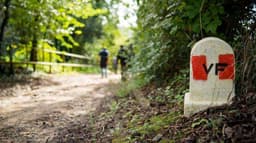
Waymarking: Via Vigilius and red-white stripes
Imagine finding yourself in a place where calm and serenity reign, surrounded by nothing but nature and peace. A spot immersed in unspoiled wilderness, among conifer forests and towering mountains. A long-distance walk where you'll discover magnificent and ever-changing locations each day, savour local dishes, admire the art and culture of its villages, and experience time in a completely new way.
The Via Vigilius is all of this and much more. It is a captivating 109.2 km walking journey that crosses the entire Val di Non valley in 8 days, from Mount San Vigilio to Trento.
Created to retrace the path of Saint Vigilio during his evangelization work in the late 4th century when he was Bishop of Trento, the trail holds profound significance for the people of Trentino-Alto Adige that goes far beyond its natural beauty—it embodies the essence of pilgrimage in honour of their region's patron saint.
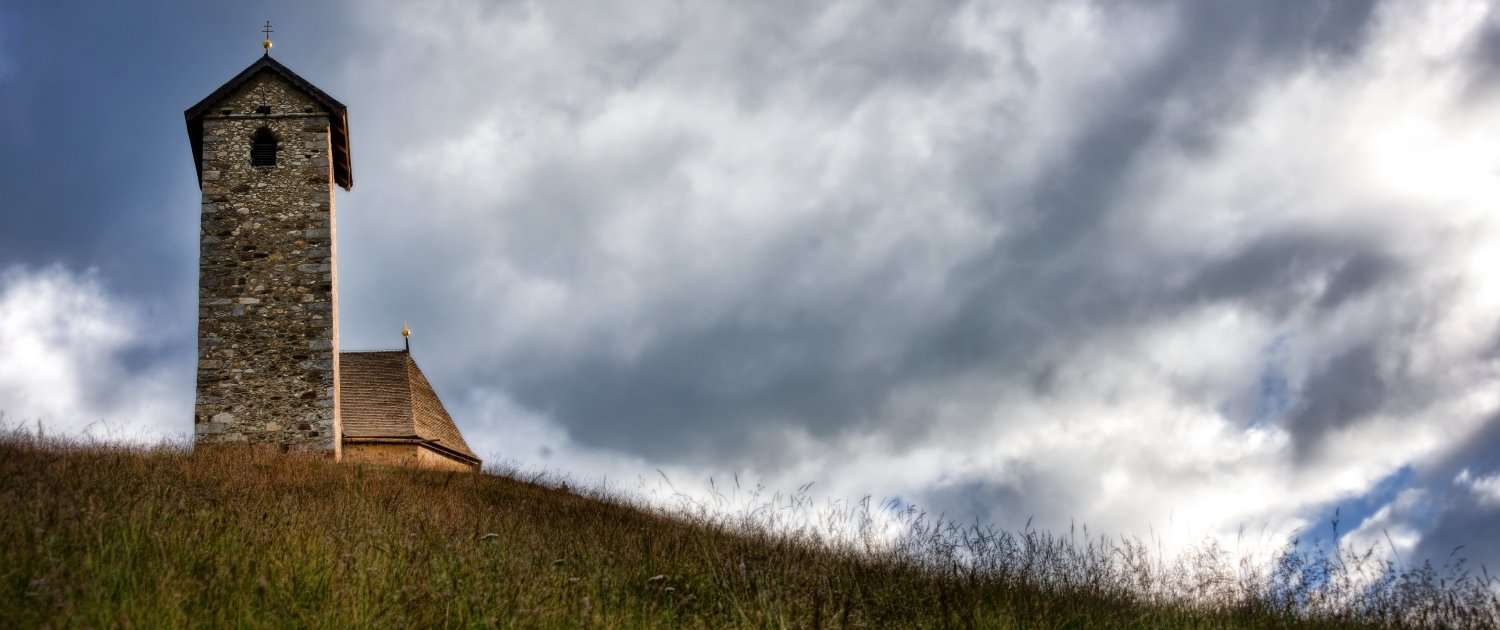
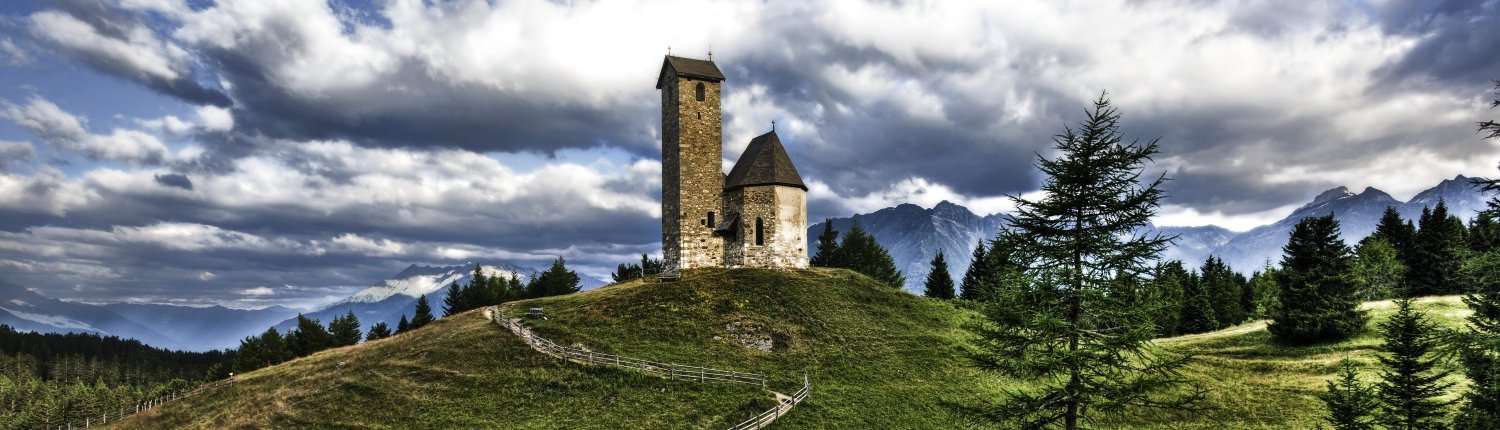
Many sites along the route are linked to his name, such as Mount San Vigilio, or the Church of San Vigilio, which at 1,770 m marks the highest point of the walk. It is precisely here, the medieval boundary of the Trento diocese, where your journey begins.
The Via Vigilius Concept
The trail's creators have divided the route into 8 stages, carefully chosen based on distance, elevation changes, and settlements offering convenient overnight stops. They have also incorporated public transport options into the itinerary—both conventional services like buses and trains, as well as unique alternatives such as the cable car connecting Pavicolo to its lower valley zone, or the particularly striking one dating from the 1970s without intermediate support towers, linking Monte to Mezzocorona.
These well-served locations prove invaluable for walkers experiencing difficulties during the trek or those choosing to complete only certain stages.
The Route
The Via Vigilius runs almost entirely on mountain trails, secondary roads and forest tracks covering a total of 86 km. Only short stretches use asphalt, with rare sections on busy roads. The route presents no major technical difficulties, except for a brief exposed section near Baito degli Aiselli heading towards Vigo di Ton, requiring extra caution.
Particularly enchanting is the stretch connecting Lago Smeraldo with the village of Fondo: a spectacular "gorge walk", or Valle dei Mulini, a 300 m long, 60 m deep canyon carved by the Sass stream. Accessible via a series of suspended walkways, it guides you past an ancient washhouse, a restored mill, and a Roman bridge.
Modern night-time lighting makes this section accessible even at dusk, a wonderful opportunity to experience the lake's tranquillity after sunset.
The elevation changes represent the main challenge. With 6,970 m of ascent and 7,090 m of descent ahead, the figures might intimidate, but remember you'll never tackle them all at once. You can follow the suggested stages or design your own, tailored to your needs and abilities. Prior training is naturally advisable to ensure you're properly prepared.
Waymarking and Refreshment Points
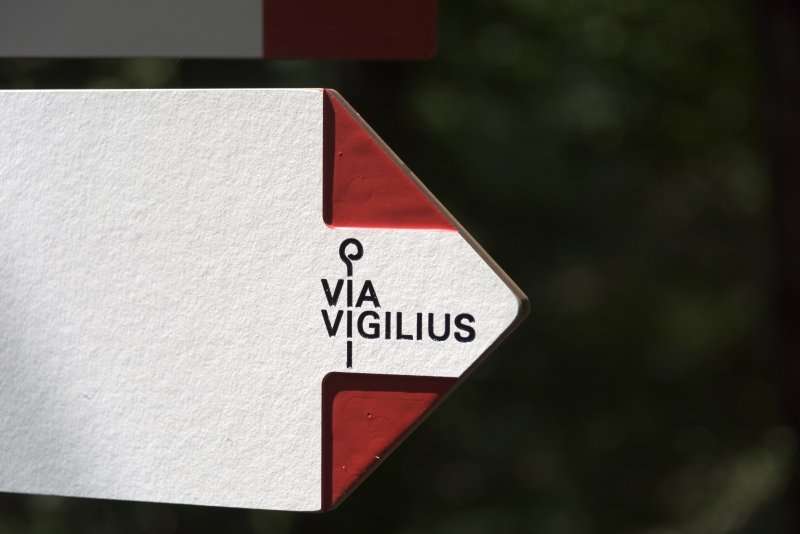
As a recently established route, full waymarking is still being completed throughout the trail. If you're planning to walk it soon, visit the Via Vigilius website to download complimentary GPS tracks and detailed route descriptions with comprehensive waymarking information and navigation guidance.
If you're considering walking during warmer months, have no concern—within weeks, wooden signs featuring the Via Vigilius logo will guide you along the entire path.
Despite traversing quite isolated sections, you never stray far from inhabited areas for long. Whether mountain huts, hospices, refuges, trattorias or simple bars, you'll always find opportunities to refuel with a sandwich or hot meal—perhaps polenta, canederli or strangolapreti (local pasta specialities).
The extraordinary culinary and wine heritage of these areas adds tremendous value to your journey. Every dish showcases genuine local ingredients: cured meats, cheeses, beef, and an impressive selection of apples.
Landscapes Along the Via Vigilius
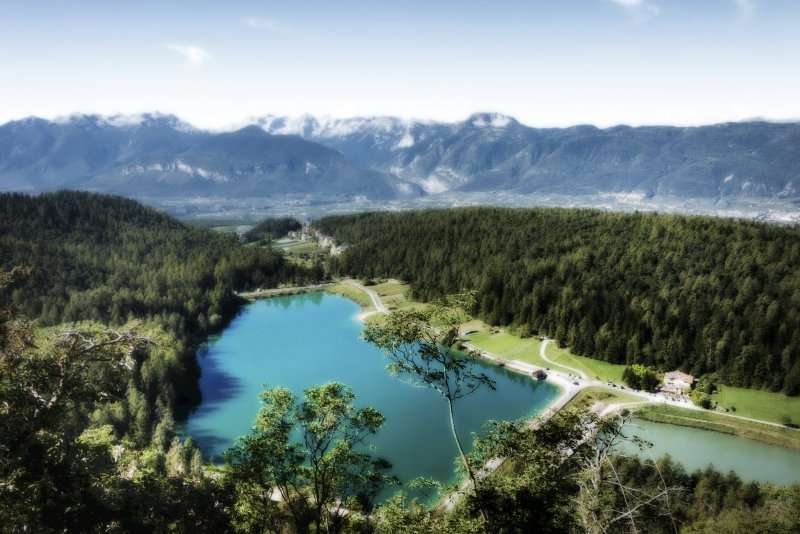
Endless apple orchards accompany you for many kilometres along a Via Vigilius equally blessed with larch and fir forests, meadows, pastures, hills, vineyards, rivers and dramatic gorges. The landscape unfolds along the route revealing magnificent views of the Venosta Valley, the Tessa Group and the Adamello Brenta mountain range, complemented by numerous lakes, each with its own unique story.
Lake Zoccolo, for instance, an artificial reservoir with an impressive dam, conceals 12 traditional farmhouses beneath its surface; Lake Tret, above Senale – San Felice, marks the border between Alto Adige and Trentino; Lake Smeraldo takes its name from the distinctive emerald hue it assumes during summer when conifer reflections dance across its waters; and the Lamar Lakes, nestled in woodland, are of extraordinary beauty.
A journey absolutely worth undertaking.
History of the Via Vigilius
The Via Vigilius retraces the path of Vigilio, Bishop of Trento, during his evangelization mission in the second half of the 4th century.
Roman-born but Trento by adoption, Vigilio received this important appointment from the then Bishop of Milan, Ambrose, who at that time oversaw the Church's work in northern Italy on the Pope's behalf. Since large portions of the Val di Non valley remained unevangelised, Vigilio sought Ambrose's assistance, who entrusted him with three missionaries from Cappadocia (modern-day Turkey) to support the Bishop of Trento in his struggle against paganism.
Sisinnius, Martyrius and Alexander quickly embraced Vigilio's approach, founded on values of friendship, charity and personal example. After a decade spent peacefully and harmoniously with the local population, religious tensions erupted in Sanzeno between a Christian and several pagans, leading to violent confrontation and the murder of the three missionaries. Yet Vigilio's resolve remained unchanged. He gathered their lifeless bodies, honoured them as martyrs, and carried them first to Constantinople, then to Milan.
Vigilio's death remains shrouded in mystery. Only a late historical account describes his killing in the Rendena Valley by pagans who allegedly stoned him with wooden clogs.
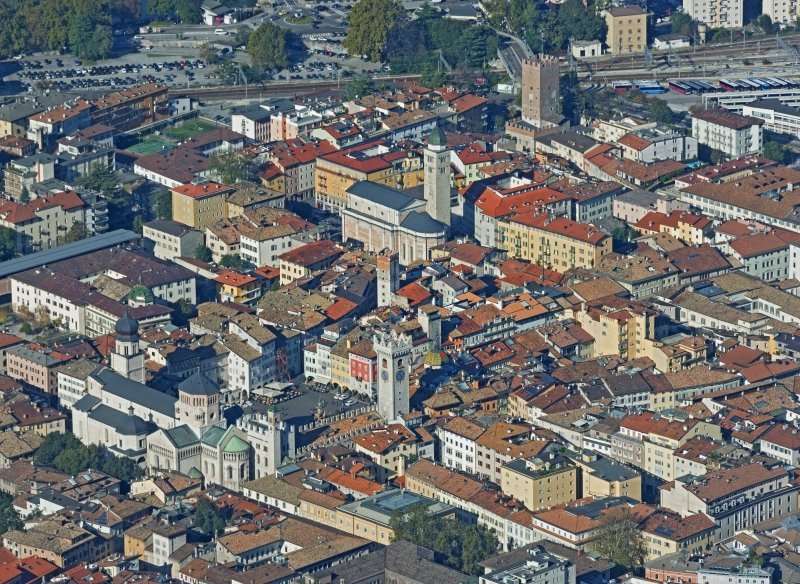
His remains rest today in the Cathedral of Trento, presumably alongside the three Cappadocian martyrs. Where this impressive structure now stands, Vigilio commissioned a basilica between the 4th and 5th centuries, likely to honour the three monks. Archaeological excavations have revealed an extensive area of the original basilica, located three metres beneath the Cathedral's floor.
History, Art and Culture Along the Via Vigilius
The Via Vigilius's beauty extends far beyond its landscapes. It is equally a journey through the people who inhabit it, the history of its places and art as its finest expression.
First, let's start with Mount San Vigilio (1,489 m), from where a trail leads to the charming little Church of San Vigilio, the medieval boundary of the Trento diocese.
This location boasts several fascinating historical details. Notably, the funicular railway connecting San Vigilio to Lana: dating from 1912, it was among the world's first cable cars designed for passenger transport. Then there are its thermal springs, exploited since the 1930s for the nearby Merano spa resort's bathing facilities. Finally, the area attracts considerable numbers of paragliding and hang-gliding enthusiasts, for whom it offers an ideal launch point.
Pavicolo (1,110 m) has become famous for its splendid traditional farmhouses (masi). Many examples remain scattered throughout the Alto Adige region—some restored and inhabited, others crumbling and abandoned. These characteristic rural buildings, constructed primarily of wood and surrounded by large land holdings, served as winter shelter where livestock was kept and fed in barns. During summer, however, the farmhouse stood empty while animals grazed in the alpine pastures.
A particularly picturesque small village, San Pancrazio is chiefly remembered for its impressive bell tower standing 56 metres high, dominating the surrounding buildings. Equally intriguing is the "house on the rock," subject of a remarkable 1882 story: that year the Valsura torrent caused a devastating valley flood, destroying everything in its path, yet this solitary house was miraculously spared—the only structure in the entire area to survive.
The Hermitage of San Romedio
The most captivating and atmospheric site remains the Hermitage of San Romedio, a complex of five stacked chapels constructed atop a 70 m high rock outcrop. Legend tells of an elderly hermit, San Romedio, who set out on horseback to meet the then Bishop of Trento, Vigilio.
During his journey, a bear attacked him: it killed his horse but, confronted with the old man, became tame and even allowed itself to be ridden all the way to Trento. Upon his return, Romedio resolved to devote his remaining years to prayer and hermitic life, accompanied solely by that bear.
Prehistory Along the Via Vigilius
Nearby, a team of archaeologists discovered in the 1970s a remarkable series of dinosaur footprints in exceptional condition. Located along a 2 km trail now called Triassik Park, they belong to ancient reptiles inhabiting this region millions of years ago, when the entire area lay underwater.
Roman Heritage
Traces of Roman occupation dot various locations throughout the region: Romeno, for instance, takes its name from the Romans who settled there; Tres served as a Roman garrison; and Vervò has recently yielded inscriptions from that era.
Religion held paramount importance, with art and Christian buildings serving as testament to this spiritual heritage.
The first example along the Via Vigilius is the Sanctuary of the Madonna of Senale: already mentioned in a 1194 document, it functioned as an Augustinian convent dedicated to welcoming pilgrims.
Equally significant is the Farmhouse of San Bartolomeo, in Romeno, which provided refreshment for travellers journeying along the Via Claudia Augustea. Here you'll also find the charming Church of San Antonio, whose exterior and interior walls are decorated with a fresco cycle depicting his life story.
World War II Heritage Along the Via Vigilius
History enthusiasts interested in World War II should not miss the Gampen Bunker at Passo Palade. This underground fortress comprises 1.5 km of galleries, constructed in 1940 on Mussolini's orders as defence against potential German attack. Hundreds of workers laboured on the project, which was abandoned after just a few months. Today a museum occupies the site, featuring mineral exhibits and wartime photographs.
Via Vigilius Stages
-
Stage 1: Mount San Vigilio – Jocher Hotel
-
Distance 2.8 km
-
-
Stage 2: Jocher Hotel – Pavicolo – San Pancrazio – Passo Palade – Senale
-
Distance 16.3 km
-
-
Stage 3: Senale – San Felice – Lake Tret – Fondo
-
Distance 17 km
-
-
Stage 4: Fondo – Hermitage of San Romedio – Sfruz
-
Distance 16.4 km
-
-
Stage 5: Sfruz – Tres – Vervò – Vigo di Ton
-
Distance 18.6 km
-
-
Stage 6: Vigo di Ton – Monte
-
Distance 8.9 km
-
-
Stage 7: Monte – Mezzolombardo – Lamar Lakes – Vallene
-
Distance 18.9 km
-
-
Stage 8: Vallene – Vela – Trento
-
Distance 11 km
-
Public Transport Along the Via Vigilius
- Pavicolo Cable Car
- Via d'Ultimo, Lana Tel. 0473.563 252
- Departures on request
- Bus Service Pavicolo – San Pancrazio
- For timetables consult the website
- Railway Between Mezzocorona and Mezzolombardo
- For timetables consult the Trento – Malè route on the website
- Bus Service Vela – Trento
- For timetables consult the website
In collaboration with

Share
apiediperilmondo by wayure
New articles on walks, trekking and hiking trips. Free, no spam.
Co-fondatore di Apiediperilmondo e Wayure | Camminatore, imprenditore, costruttore
A hundred times the Camino de Santiago. Eight times the Kumano Kodo. Dozens of times the coasts of Portugal, then the Via Francigena, Ireland, England, Normandy: every walk you find here I have done on my own two feet, in every season, alone and with private groups and companies. I do not offer a single step I have not walked.
Profilo e tutti gli articoli di Vincenzo