Book Review: A Primitive Way
By Maddalena Canepa. "Spain, 1799, Oviedo"—thus begins A Primitive Way, debut novel by Maddalena Canepa. A tale of friendship unfolding against the backdrop of an extraordinary pilgrimage route.

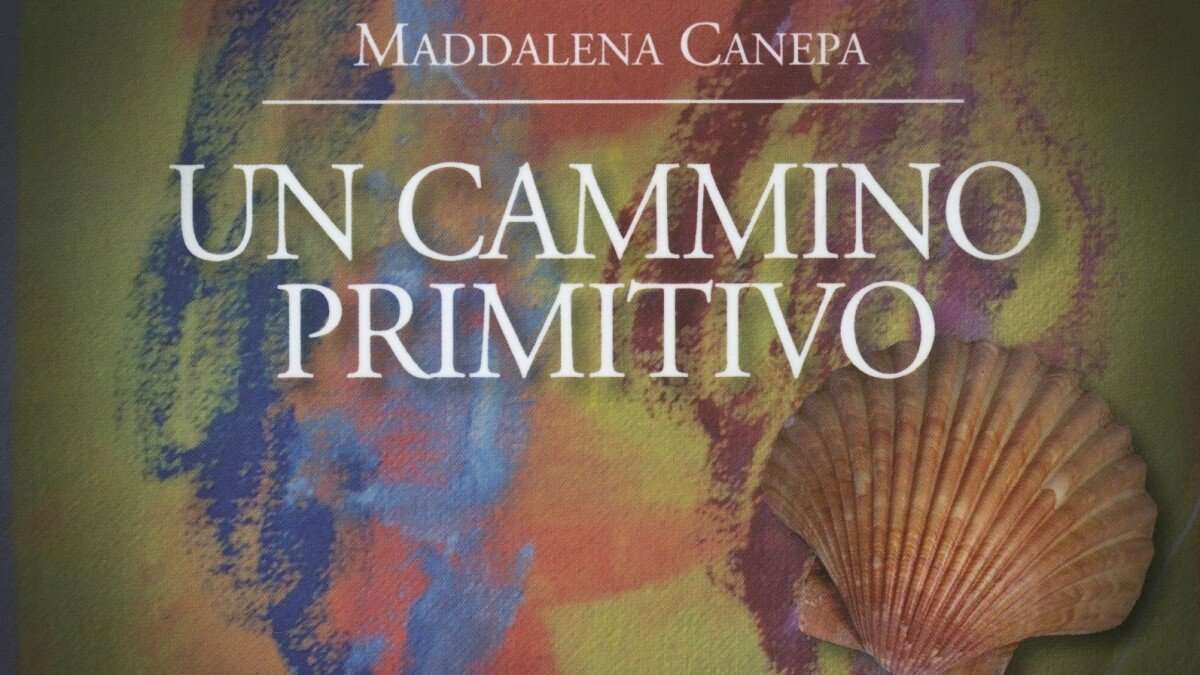
by Maddalena Canepa
"Spain, 1799, Oviedo". This is how A Primitive Way begins, the debut work by Maddalena Canepa. A story of friendship set against the backdrop of a wonderful Camino Primitivo.
"Spain, 1799
Oviedo"
This is how A Primitive Way begins, the debut novel by Maddalena Canepa.
On the dusty streets of Oviedo, two men meet in front of the Cathedral of San Salvador, equipped with "walking staff and satchel, and that gaze not present in the world because turned inward (..)". A Journey awaits them, a voyage, not religious but one of faith, "faith in the universal, in the anxious search to grasp the deepest meaning of cosmic becoming (..)".
It is a story of friendship between Ludovico and Martino, against the backdrop of the magnificent Camino Primitivo, the lesser-known sibling of the more famous French route of the Way of St. James. A tale that bears the appearance of a historical novel, and perhaps, precisely because it is not, restores real places and impressions, present in our day and alive in the memories of those who have already walked it. The pilgrim hospitality of Bodenaya, the wind turbines (transformed into windmills), Doña Herminia, the Ruta de los Hospitales, the Alto de Acebo with the breathtaking view of the Asturian hills behind it, Lugo, Melide, and finally Monte de Gozo and Santiago de Compostela—everything is described with the same scents and sensations. Certainly, Ludovico and Martino sleep in stables and old inns, seeking out fountains rather than bars, and a pen and inkwell instead of a smartphone. Yet despite living at the turn of the 1800s, they face the same challenges and ways of thinking as a modern pilgrim.
Ludovico is the true protagonist of the novel: when the author is not narrating his vicissitudes (using the third person), he tells his own story, in the first person. He is immediately struck by severe ankle pain, which will accompany him, with increasing intensity, all the way to Santiago and Finisterre. Martino bears the burden and honour of comforting him, supporting him, and encouraging him through difficult moments.
Many fellow travellers frame the story, pilgrims themselves, inspired by real people the author met during her walk. Because although disguised and interpreted in an original way, A Primitive Way remains a sort of autobiography, a transposition, at times fanciful, of her very personal experience on the Camino. Perhaps too much action and too little space for reflection make the characters too simplistic, and the closed circle that forms between Ludovico and Martino distances the reader and prevents them from becoming attached to the characters.
A painful note in this novel are the many historical inaccuracies within it. The most obvious concern, for example, the eucalyptus forest, impossible to find in 1799 since the plant, of Australian origin, was only introduced to Spain in the course of the 19th century; the Pillars of Hercules at Finisterre, when historians presume they were in the Strait of Gibraltar; the presence of a lighthouse at Finisterre, built only in 1853; or the presence of two French pilgrims undertaking to walk the Way of St. James in pieces, a bizarre idea if we consider that 1799 is still an era of slow travel and that the journey from France was still very long and arduous.
A well-written book nonetheless, flowing and easy to read. I greatly appreciated the quotations, at times poetic, from great classics of travel literature, present in the opening of some chapters. The words that best represent the spirit of the book belong to Jean-Christophe Rufin from The Immortal Way, and read as follows: "A pilgrim never arrives anywhere. He simply passes through."
So I wish to leave you with a question that accompanies the various phases of the story:
"What remains while everything changes?"
M.CANEPA, A Primitive Way, De Ferrari Edition, Genoa 2017, €11.90
Share
apiediperilmondo by wayure
New articles on walks, trekking and hiking trips. Free, no spam.
Co-fondatrice, Apiediperilmondo
I've been organising walks since I discovered that walking slow is the fastest way to know a place. I take care of every logistical detail so you can focus only on the steps ahead.
Profilo e tutti gli articoli di Deborah